 EN
 RU
 ES
 FR
 AR
 PT
 IT
 ID
 KO
 TR
 DE
 VN
 TH
 IN
 JA
 ZH
 MS

A $40 handheld label maker prints file-folder stickers at a desk. A six-color flexo press that prints fruit stickers by the million starts around £150,000. Both answer to the same name: label printing machine. That gap is not a typo. It is two industries sharing one search term, and it is the first thing to settle before any price number can mean anything.
What You Are Actually Pricing: Two Machines, One Name
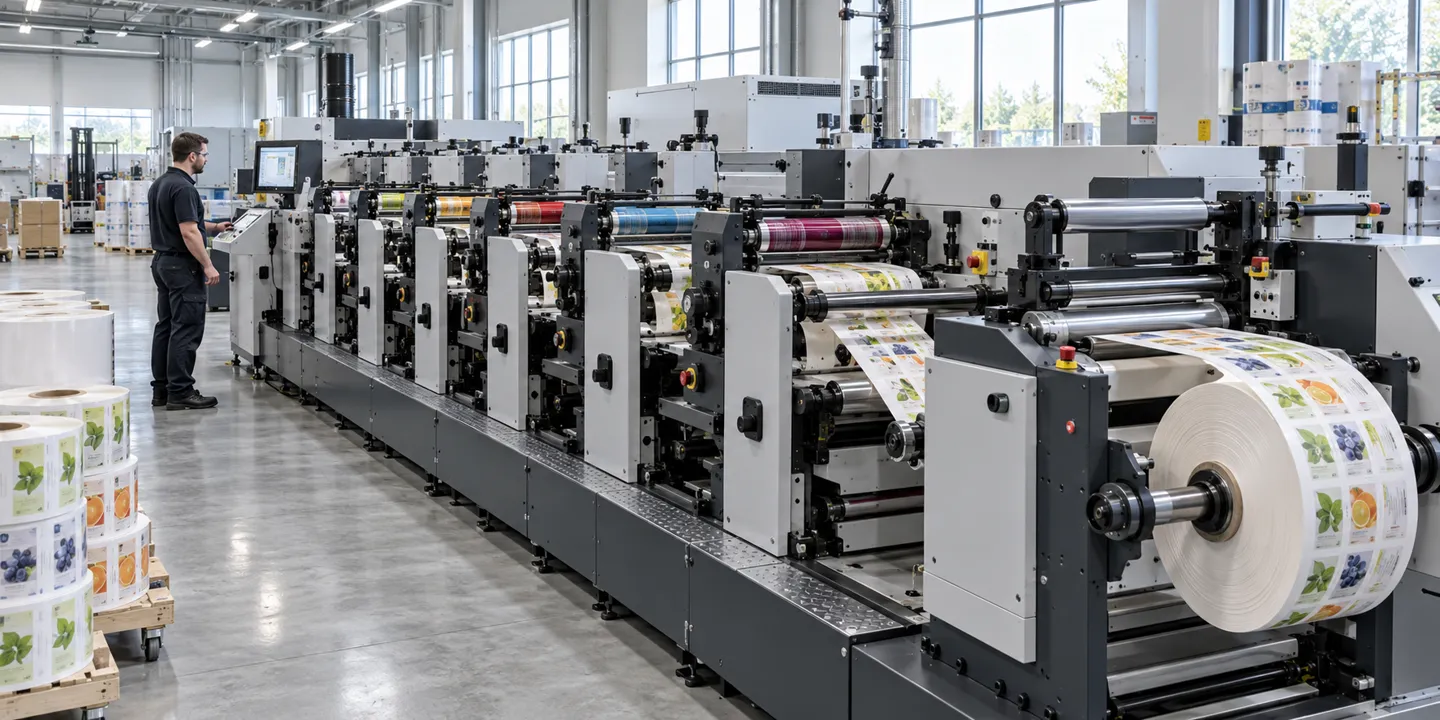
One class of machine prints labels onto products in production: narrow-web presses running flexo, intermittent offset, screen or digital engines, fed by rolls of paper and film. The other class prints labels for things you already have: office and desktop devices that make address stickers, barcode labels and shipping slips. The first class is industrial machinery. The second is office equipment. The fastest way to waste a budget is to compare a press against a printer, so place your purchase in one of three buckets before touching numbers.
Two machines, one name
Prints onto products
Narrow-web presses in flexo, intermittent offset, screen or digital. Roll-fed. Industrial machinery.
Prints for things you own
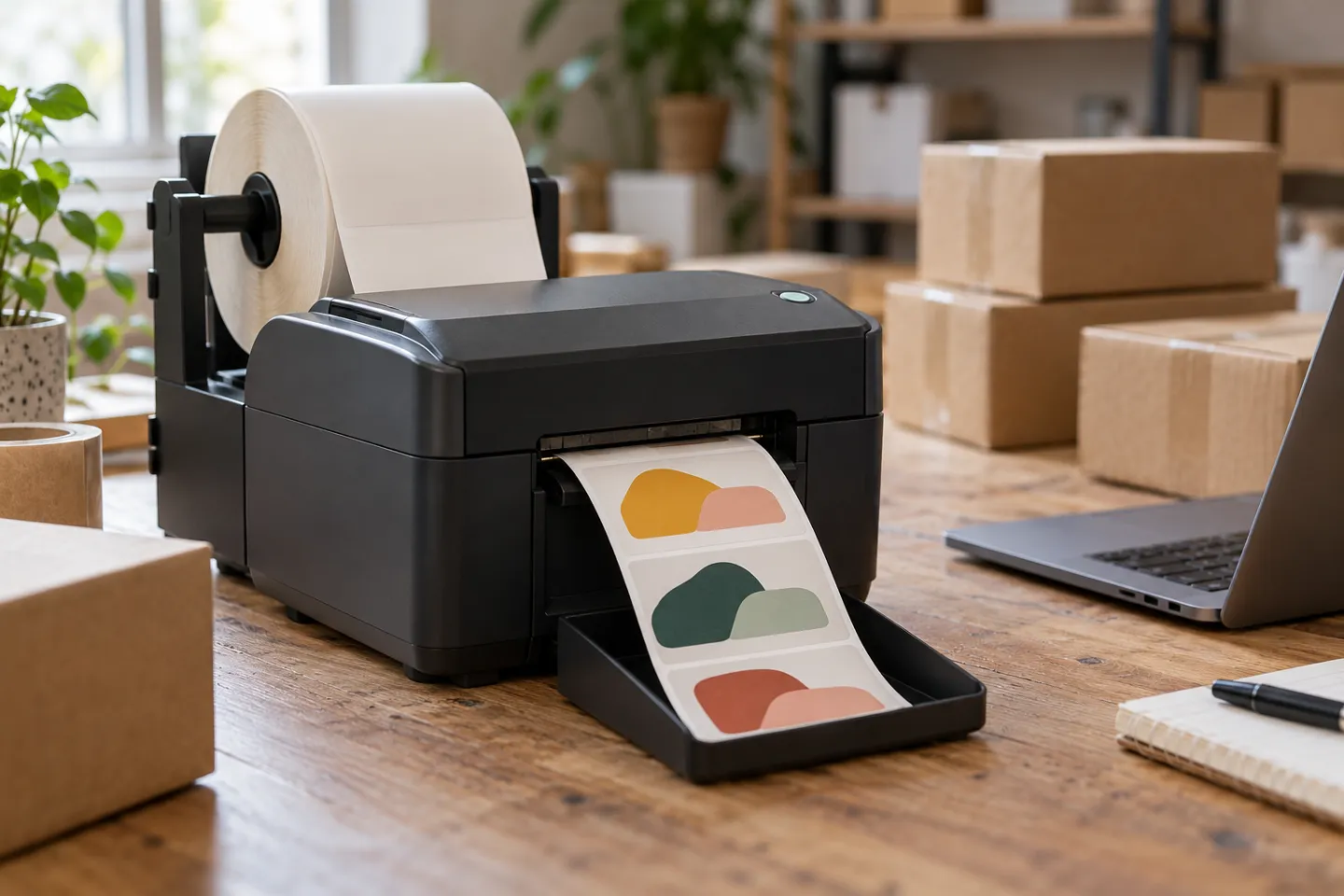
Office and desktop devices for address stickers, barcode labels and shipping slips. Office equipment.
A home or office user needs the $40-300 device and can stop reading after this section. A small business printing a few hundred labels a day fits the desktop color class: retail listings run from about $2,200 for an entry Epson ColorWorks to $14,750 for a wide Afinia model (Texas Label Printers, 2026). Wirecutter’s current top pick for the office tier costs $40 (Wirecutter, NYT, 2026). The classic advice holds for that tier: printing in house pays once volume is steady and daily; for occasional needs, buying labels printed stays cheaper. A producing converter, or a distributor supplying one, is shopping for a machine that starts around $30,000 and climbs past £300,000. Everything from here on speaks to that third bucket.
The price scatter inside the industrial class is real and measurable. Indian listings price narrow-web flexo presses in the tens of lakhs, roughly $54,000-78,000 (IndiaMART, accessed 2026). European makers describe a new six-color flexo machine at £150,000-300,000 (Focus Label, 2018). A Chinese manufacturer publishes $80,000-100,000 for an inline die-cutting flexo model (published price on the machine’s product page, 2026). The used market runs its own range, from about €41,000 to €178,000 across 157 listings at the time of writing (Exapro, accessed 2026).
Same name, four price tags
$40
desktop label maker (Wirecutter top pick)
$80,000-100,000
inline die-cutting flexo press, published price from a Chinese maker
£150,000-300,000
new six-color flexo press, Western Europe
€41,000-178,000
used label presses listed on Exapro
Hold those four numbers together, because they carry the whole point of this article: the same three words sell machines that differ in price by four orders of magnitude, and no sticker price is comparable until you fix what is being priced. The rest of this page is the fix: process first, then specs, then the costs a quote hides.
Print Process Decides the Price Band
Once you are shopping for a press, printing process is the single biggest price variable. It sets the entry ticket, the cost per label, and the batch size where each technology stops making sense. There are four processes on the label market, and two of them dominate new purchases.
Digital: lowest entry, flat cost per label
Digital label presses and industrial color printers start lower than any other production class. A retail Afinia L901 Plus lists at $14,750 (Texas Label Printers, 2026), and purpose-built digital label presses occupy the space above that, into six figures for high-end models. The economics are simple: no plates, minimal setup, so a run of 500 labels costs nearly the same per label as a run of 5,000. That same flatness becomes the weakness at scale. Ink cost per label does not fall with volume, and speed trails flexo by a wide margin. Industry blogs tied to flexo makers argue digital turns into a trap past roughly 50,000 labels per job (Henghao, 2026). Blogs tied to digital makers point back at plate and setup costs on the flexo side (SnapPress, 2026). Note whose blog says what. The honest position: neither side publishes a crossover number both accept, so test the crossover against your own batch profile, not theirs.
Flexo: the volume workhorse, priced per color
Flexo dominates label printing the way offset dominates magazines. The machine costs more up front, and every color adds a plate and a print station, so a six-color job carries real preparation cost before the first label ships. Past that threshold, the per-label cost falls steadily, which is why flexo owns medium and long runs. Speed samples in the entry narrow-web class run around 50 m/min of printing with ±0.10 mm register, the spec class serious machines publish (flexo label press specification page, 2026). Price anchors sit far apart. Western Europe: £150,000-300,000 for a new six-color machine (Focus Label, 2018). A Chinese maker publishes $80,000-100,000 for an inline die-cutting flexo press (published price on the machine’s product page, 2026). Both numbers are real. They do not describe the same scope, which is exactly the trap the later sections unpack.
Intermittent PS-plate offset: the middle path
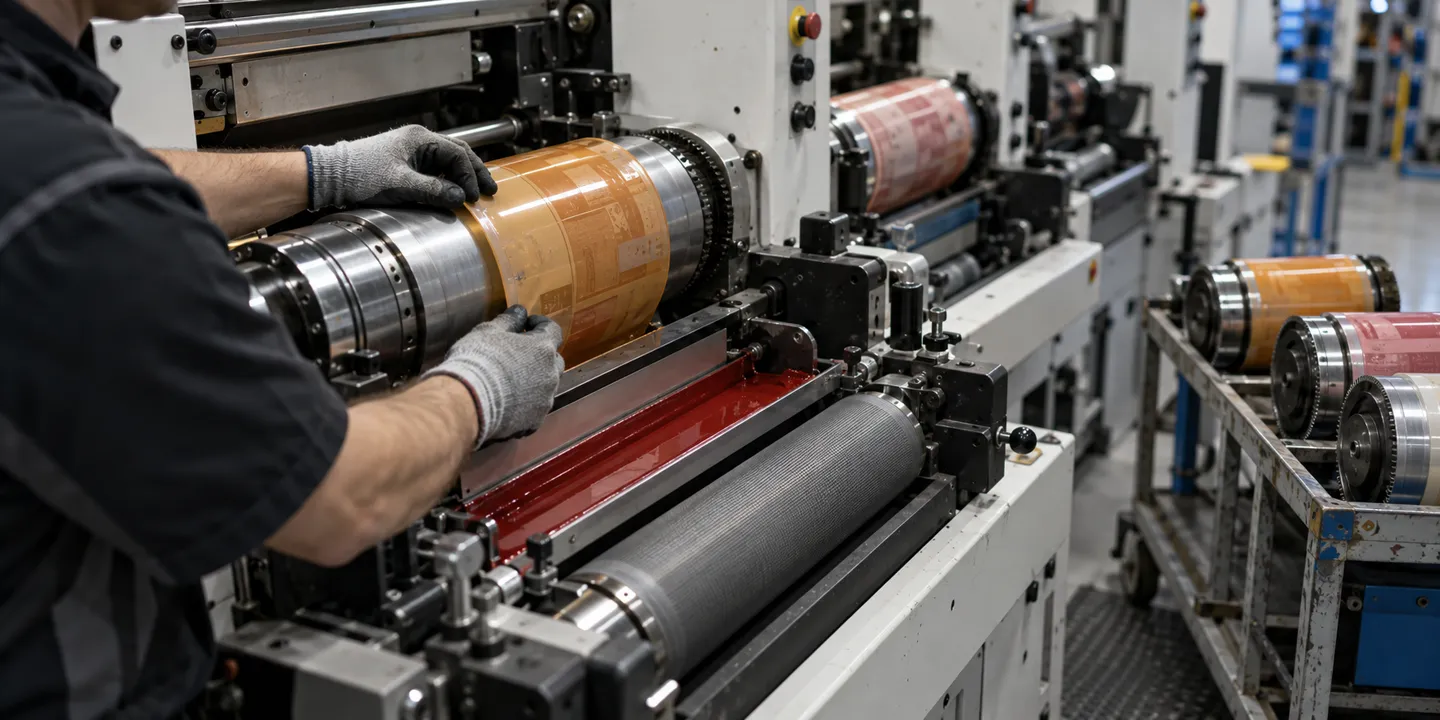
Intermittent offset presses print from conventional PS plates and stop-and-go between print stations. They cover short to medium runs with cheaper plates than flexo photopolymer, which is one reason they spread fast in emerging markets. A current 4-10 color model draws 33.6 kW without UV drying and prints at a 150 rpm class speed (intermittent press specification page, 2026). As a budget-sensitive second press, or a first press for a young converter with mixed short jobs, this class trades top speed for flexibility.
Rotary screen: the niche specialist
Rotary screen units print effects the other processes cannot: thick ink laydown, tactile varnish, conductive and specialty inks. Current machines run 10-50 impressions per minute with ±0.15mm precision. It is a paying add-on inside a label line, rarely the answer to “what does a label press cost”.
Volume decides which band you belong in, more than any brochure does. Batches around 500 labels favor digital almost every time. Around 5,000, intermittent offset and entry flexo start to compete. Past 50,000 per job, flexo usually wins and keeps winning as runs grow. Pull your last three months of order data before you compare machines, not after.
Process vs price band vs batch fit
| Process | Typical entry cost | Cost per label behavior | Wins at | Loses money at |
|---|---|---|---|---|
| Digital | $15k-100k+ | flat, ink-driven | short runs, variable data | long runs at volume |
| Flexo | $80k-300k+ new | falls with volume after plate setup | medium and long runs | short one-off jobs |
| Intermittent offset | mid band between digital and full rotary flexo | moderate, cheap PS plates | short-to-medium mixed jobs | top-speed production |
| Rotary screen | add-on unit pricing | high per label | specialty inks and effects | general work |
What Moves the Price Within One Process
Two flexo quotes can differ by a multiple, and every gap traces back to four spec levers. Understanding the levers turns a mysterious quote into a readable one.
Web width and color count
Narrow-web presses cluster around two web widths, 320 mm and 450 mm, with print widths just under that. Width drives the whole frame: unwind, print decks, drying, rewind all scale with it, so the wider frame class costs meaningfully more, not proportionally more. An added color means a full print unit: plate cylinder set, ink chamber, doctor blade, and its own drying. That is why a 1-6 color configuration (with a 4+4 split common on combo machines) prices per deck, and why quoting “6 colors” against “4 colors” across two vendors compares nothing. Register precision is the quality tell inside the spec sheet: ±0.10mm class numbers mark machines built for tight, repeatable multi-color work.
Speed class
Entry flexo runs near 50 m/min of print speed. Intermittent offset works in rpm classes, around 150 rpm of printing on current models. Full rotary narrow-web lines push toward 180 m/min, the three speed classes visible across current label press range pages (label press range, 2026). The speed number prices the drive system behind it: gear trains on entry machines, full servo drives on fast ones, and servo components from named Western brands (Yaskawa, Schneider class) are themselves a visible cost line that serious quotes disclose.
Inline finishing: the biggest hidden spread
A bare press prints a web of labels. A finished product needs die cutting, slitting, and increasingly inline inspection. Add those stations inline, and the machine price climbs; buy them as separate units, and the floor space, operators and handling between stations become your cost instead. This is where quotes diverge most. One vendor’s “$80,000 flexo press” can be a bare printer, while another’s similar-looking number includes three die-cutting stations and a slitter. Current inline die-cutting flexo models with the finishing built in publish at $80,000-100,000 (published price on the machine’s product page, 2026), which gives you a calibrated anchor for the bare-press quotes landing next to it.
Read the matrix below as a quoting tool, not a brochure: find your row, then use the check column before you accept any number.
Configuration tiers: what fits, what it does to price, what to check
| Configuration tier | Fits scenario | Price effect | Check before you pay |
|---|---|---|---|
| 320 mm web | label rolls, standard retail and logistics labels | baseline frame class | confirm your substrate rolls are 320 mm, not 300 mm legacy stock |
| 450 mm web | wider labels, multi-up layouts, future capacity | meaningfully higher frame and deck cost | price the extra width against actual layouts, not plans |
| 4-color class | simple spot-color labels | entry multi-color | confirm brand colors count: logos often need more than 4 |
| 6-8 color class | full-process labels, branding work | each color adds a full print unit | ask which colors run on the back deck (4+4 split) |
| 50 m/min class | entry flexo production | lowest flexo band | check register spec and drive type before comparing on speed |
| 150-180 speed class | contract production, long runs | servo drives and heavier frames | confirm servo brand disclosure in the quote |
| Inline die cutting + slitting | delivered-capacity line | largest single adder in most quotes | demand the itemized split: press vs finishing stations |
One boundary deserves its own sentence. A wider, faster, more colorful machine is a bigger bet. The expensive failure is buying width, colors and speed your order book never uses, and paying for that surplus every month.
From Sticker Price to Landed Cost
Sticker, quote, landed cost: three different numbers, and buyers who confuse them overpay. Work them in order.
Sticker price
The published or quoted number, before scope is fixed
Itemized quote
Every cost line priced separately: press, finishing, plates, freight, duties
Landed cost
The number you actually compare: sticker plus what the quote left out
First, know what a sticker price even is in this market. Most industrial presses carry no public price at all, because until specs are fixed, a price means nothing. The few published numbers are anchors, not offers: the $80,000-100,000 inline die-cutting flexo mentioned above is published openly (published price on the machine’s product page, 2026), and its real function is to tell you the ballpark before you start asking.
Second, place the origin tier, and read the gap correctly. Chinese new machines, Western European new machines, and Indian-market listings sit in different bands, as the four anchors in the first section showed. Nobody is selling “the same machine, cheaper”. The gap bundles configuration scope, the transparency of the electrics list, and how fast a service engineer can reach your floor. There is also a brand and service premium layered on top; treat it as a real cost line, neither zero nor everything.
Third, weigh new against used with open eyes. The used market is genuine: 157 flexo presses listed from €41,000 to €178,000 (Exapro, accessed 2026). Narrow-web label machines sit inside that range: €65,000 for a 6-color 260 mm model, €165,000 for a 330 mm line. Makers who sell new machines argue against used, and their blogs make fair points about rebuild costs creeping toward new-machine money (Focus Label, 2018). Both things are true. Used is rational for a proven standard model with a local service channel and your own mechanical skill on site. Used turns into a trap for the latest machine generations, where spare parts live in one factory’s warehouse and nobody local can commission the electronics.
Fourth, add what the quote leaves out, and only then compare. Plates, priced per color and per re-order. Installation and commissioning, travel included or not. Operator training. A first spares package. Freight, and duties if cross-border. Each line is small next to the press; together they move the real number by a margin no sticker comparison will show you. The action that protects the budget is blunt: require every quote itemized to the same list, landed cost, before ranking anyone.
KETE prices press, finishing, plates, freight and duties as separate lines: send your parameter sheet and compare the split.
Start the itemized quoteHow to Ask for a Quote You Can Compare
A comparable quote starts with the letter you send, not the vendor who answers. Put nine items on one page: web width, color count, maximum mechanical and printing speed, substrate range, die-cutting method, register spec, brand transparency on servo and control components, lead time terms, and warranty with installation scope. Send the identical page to several makers. Compare the itemized answers line by line, landed cost against landed cost, and treat any vendor who will not itemize as having answered.
The nine-line quote request
- web width (320/450 mm)
- color count and split
- max mechanical speed / max print speed
- substrate range (paper, film, synthetic)
- die-cutting method (intermittent/flatbed/rotary)
- register precision (±0.10 mm class)
- servo and control component brands
- lead time and terms
- warranty, installation and training scope
This is also the moment to pick who you ask. Our label printing machine range runs six print series from 1 to 10 colors, holding ±0.10 mm register across the class (our label printing machine range). Flexo prints around 50 m/min, intermittent offset at 150 rpm, narrow-web rotary at 180 m/min. At KETE, a quote starts with your parameter sheet. Sales and application engineers read it together and answer within 24 hours, and every machine runs a full trial on your material before shipment. The number you compare is backed by a video of your own job running. That is what a parameter-first quote looks like from the inside, and it is the standard any maker you approach should meet.
Verify Before You Pay
Between an attractive quote and a signed contract sits a short list of checks, and each one has caught real buyers out.
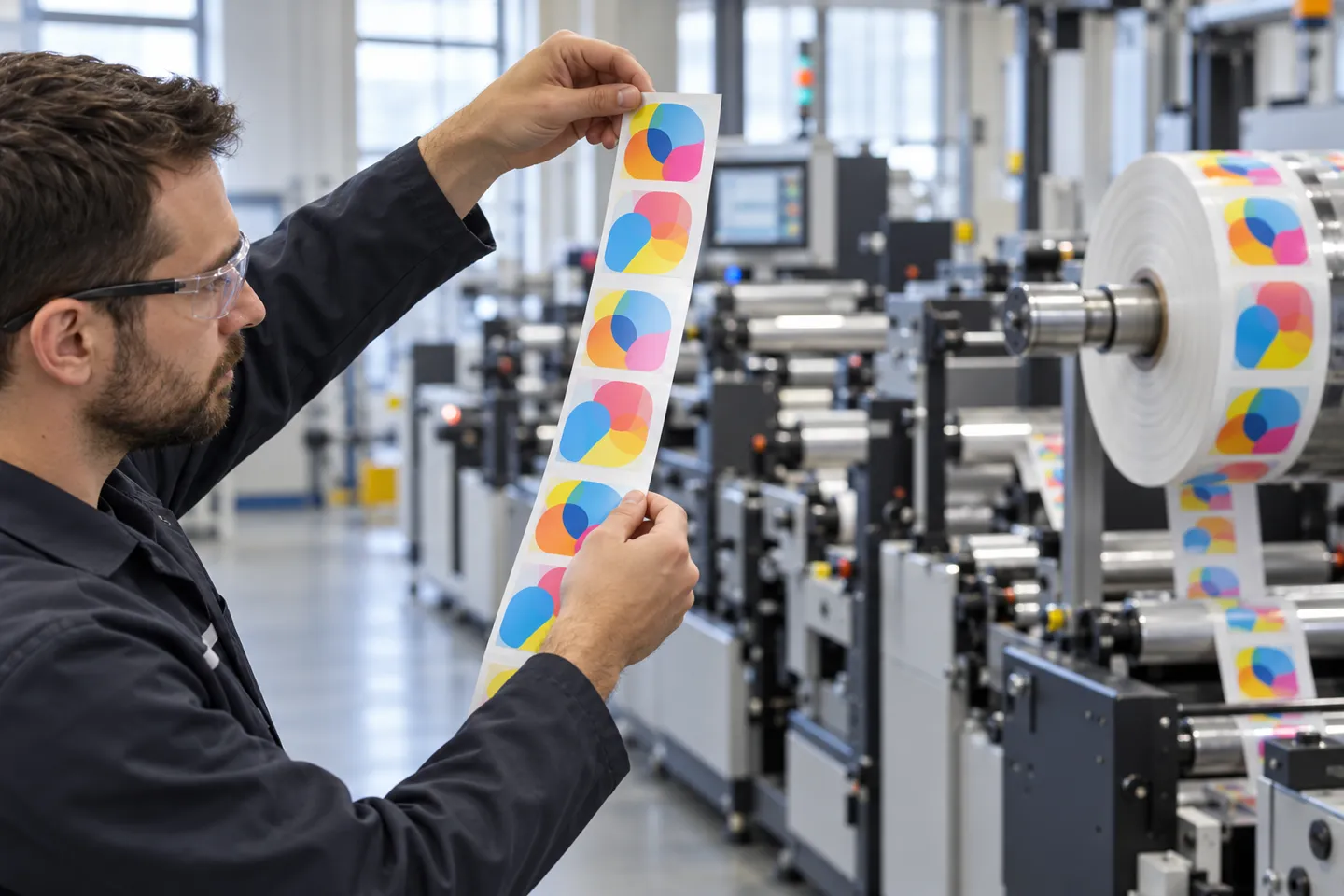
Run your own material first. A trial on the maker’s stock proves nothing about your film, your ink system or your adhesive; insist on a full test run with your substrate, watched live or on video, before money moves.
Check certificates per machine, not per factory. CE and RoHS documents exist per machine model (factory quality page, 2026), and the version that matters is the one naming the machine on your quote, for your target market.
Pin the after-sales terms into the contract: warranty length in years, remote response time, who pays the travel for installation and commissioning, and the first spares package. Published maker terms in this market run from at least one year of warranty to two years on some models (factory quality page, 2026); the number protects you only once it is written into the contract.
Ask how you will watch the build. Progress reports at set stages, photos and videos at milestones, and a standing point of contact are the difference between a supply relationship and a box that arrives one day.
Before payment, confirm
- trial run passed on your material (video or on-site)
- CE/RoHS certificate naming your machine model
- warranty years, response time and installation scope in the contract
- first spares package included
- production progress reporting schedule agreed
What This Means for a Label Business
Read the whole page back as one accounting decision. Budget a press in landed cost plus cost per thousand labels, and treat the sticker as only the starting line; the plate spend, the finishing scope and the hidden add-ons live in the first of those numbers (the sticker-to-landed chain above). The four price tags on one search term, $40 to £300,000, stop being noise the moment your own parameter sheet defines what is being priced. They become four reference points you can actually use.
So the standing advice for a label converter is the one this page has been building: lock the parameter list before the price. The same sheet goes to every maker, the answers come back itemized and comparable, and the lowest number wins only if its row of the configuration matrix matches yours. Buyers who invert that order, price first and specs later, meet the gap after delivery, when the missing die-cutting station or the two colors that needed a fifth deck turn into a second purchase or a subcontracted finishing line. Distributors run the same discipline one layer up: a spec-first quote protects the resale margin, because service scope was priced in, not discovered.
Fill the nine-line sheet from the checklist above. Send it to two makers, at least one of them publishing enough spec detail to be checked against their own machine pages. Compare landed cost to landed cost, and let the parameter sheet, not the sticker, pick the machine.
Get a Quote Built on Your Parameter Sheet
Send the nine-line sheet. KETE application engineers reply within 24 hours with itemized pricing, and your machine runs a full trial on your material before shipment.
Get your machine quoteReferences
- Wirecutter. “The Best Label Makers.” 2026. nytimes.com
- Exapro. “Used Flexo Printing Machines for Sale.” Accessed 2026. exapro.com
- IndiaMART. “Label Printing Machines at Best Price in India.” Accessed 2026. indiamart.com