ID
ID  EN
EN  RU
RU  ES
ES  FR
FR  AR
AR  PT
PT  IT
IT  KO
KO  TR
TR  DE
DE  VN
VN  TH
TH  IN
IN 
Anda sedang mencari harga mesin cetak flexo 8 warna. Dan kemungkinan besar Anda sudah menemui kendala yang sama seperti yang dihadapi setiap pembeli: tidak ada jawaban yang pasti. Angka-angka yang Anda temukan di internet berkisar dari di bawah $15.000 hingga jauh melebihi setengah juta dolar. Setiap iklan tampaknya mendeskripsikan mesin yang secara umum terdengar sama.
Kebingungan ini memang nyata, tetapi bukan tanpa alasan. Harga mesin cetak flexo 8 warna mengikuti pola yang dapat diprediksi begitu Anda memahami tiga variabel yang mempengaruhinya: arsitektur mesin, spesifikasi teknisdan negara asal.
Panduan ini merinci secara tepat berapa biaya yang harus Anda keluarkan untuk setiap jenis mesin flexo 8 warna. Panduan ini menjelaskan alasan di balik adanya selisih harga tersebut. Panduan ini juga mengungkap biaya tersembunyi yang sering kali tidak dicantumkan dalam penawaran harga dari sebagian besar pemasok. Selain itu, panduan ini memberikan kerangka kerja praktis untuk mengevaluasi penawaran harga, sehingga Anda dapat menyusun anggaran dengan percaya diri dan bernegosiasi berdasarkan pemahaman yang mendalam.
Stack, CI, atau Gearless — Tiga Jenis Mesin Flexo 8 Warna
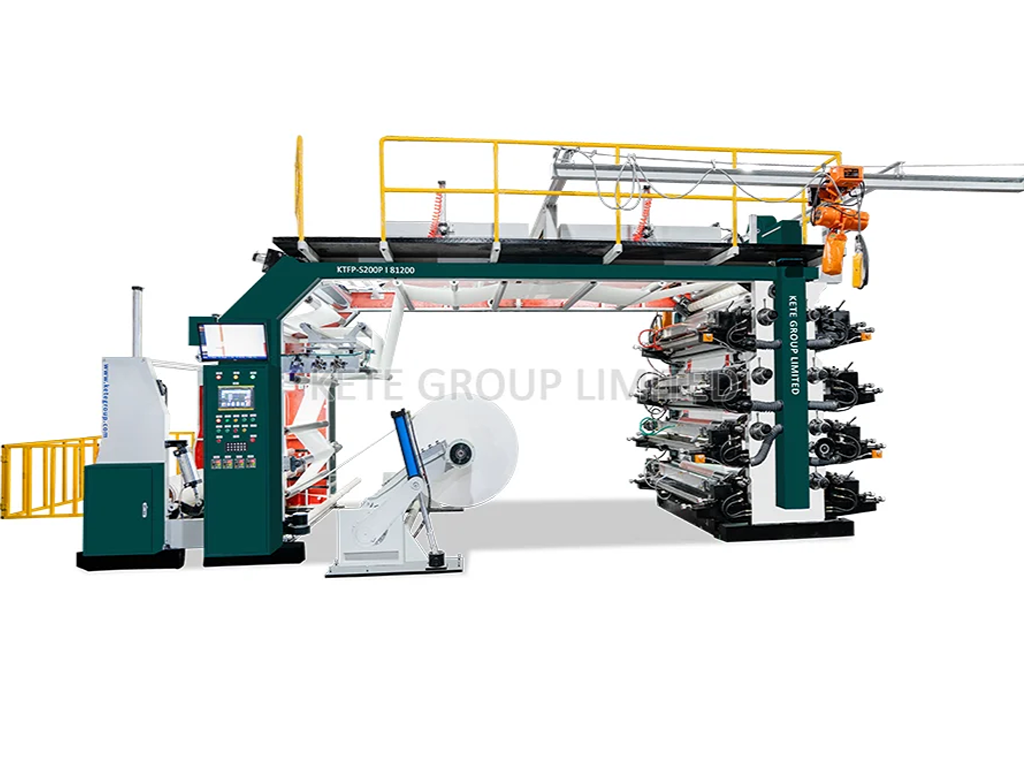
Sebelum membahas soal harga, Anda perlu memahami apa yang sebenarnya Anda beli. “Mesin cetak flexo 8 warna” bukanlah satu kategori produk tunggal. Istilah tersebut mencakup tiga arsitektur mesin yang secara mendasar berbeda, yang masing-masing berada di tingkat harga yang sama sekali berbeda.
| Jenis Mesin | Struktur Inti | Kecepatan Umum | Ketepatan Pendaftaran | Kategori Harga |
|---|---|---|---|---|
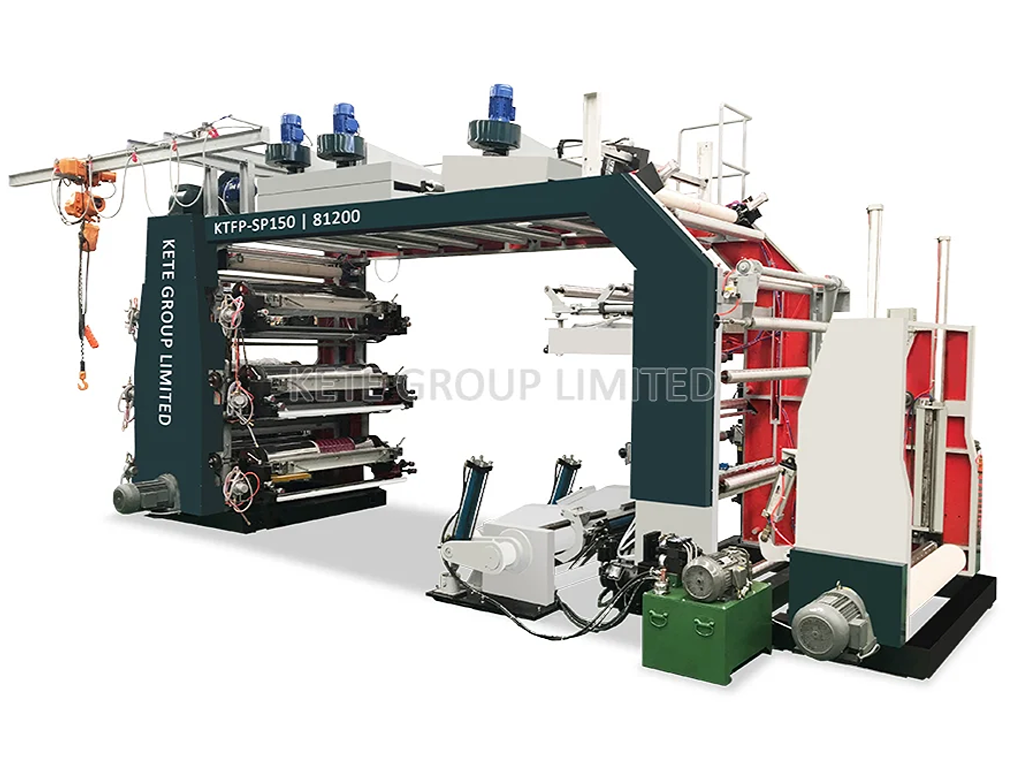
| Jenis Tumpukan | Stasiun warna mandiri yang ditumpuk secara vertikal; desain rangka terbuka | 100–120 m/menit | ± 0,15 mm | 100.000 hingga 1.000.000 |
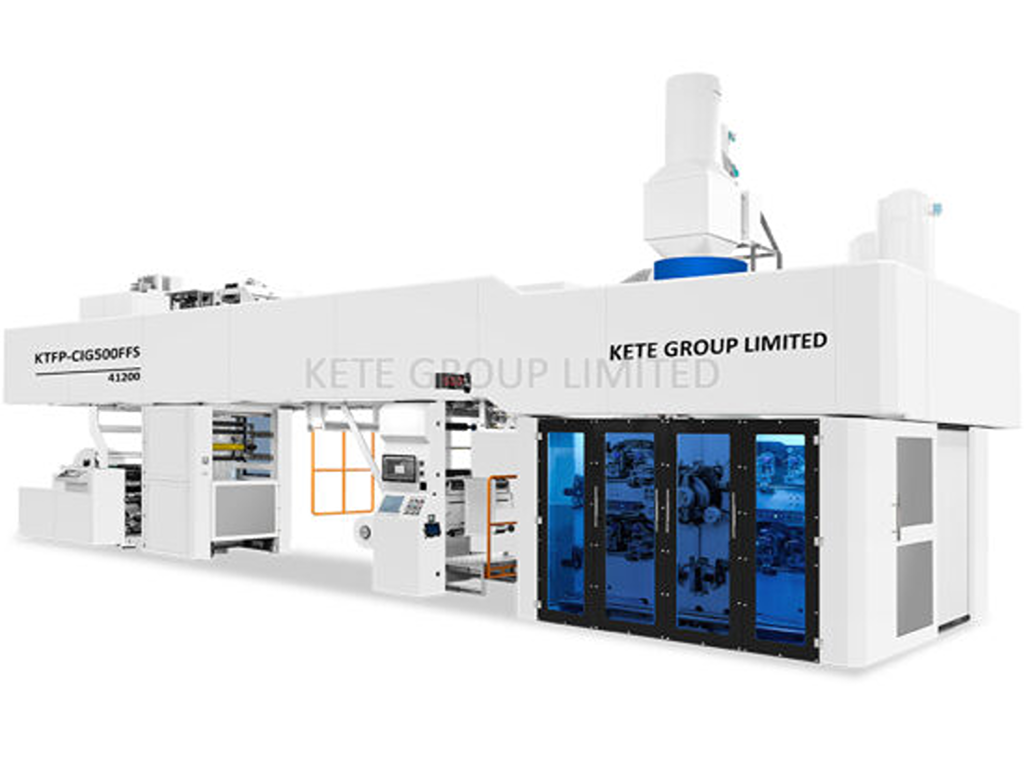
| CI (Pencetakan Terpusat) | Kedelapan warna tersebut dicetak mengelilingi sebuah drum pusat yang sama; struktur tertutup dan kokoh | 200–300 m/menit | ±0,10 mm atau lebih baik | Satu hingga empat ton per ton 180K–600K |
| Servo Tanpa Gigi | Setiap stasiun warna digerakkan oleh motor servo independen; poros penggerak elektronik | 300+ m/menit | ±0,05 mm | $500K–$2M+ |
Bayangkan seperti ini. Mesin 8 warna tipe stack adalah mesin andalan yang andal, dirancang untuk pekerjaan kemasan fleksibel sehari-hari: kantong plastik, tas belanja, dan pembungkus dasar. Mesin cetak CI adalah pilihan kelas industri untuk kemasan yang sangat penting bagi merek, di mana kesesuaian warna harus sempurna setiap saat, pada kecepatan yang lebih tinggi. Mesin cetak CI servo tanpa roda gigi adalah yang terbaik di kelasnya. Mesin ini dirancang untuk konverter yang menangani pekerjaan premium dengan variasi tinggi dan jumlah cetakan sedikit, serta membutuhkan presisi di bawah 0,1 mm dengan limbah penyetelan minimal.
Poin utama yang perlu diingat: Jika dua pemasok memberikan penawaran sebesar $25.000 dan $250.000 untuk sebuah “mesin flexo 8 warna,” berarti mereka tidak menawarkan kategori peralatan yang sama. Memahami ketiga jenis ini merupakan landasan bagi segala hal yang akan dibahas selanjutnya.
Harga Mesin Flexo 8 Warna — Angka Aktual Berdasarkan Jenis Mesin
Di sinilah niat pencarian bertemu dengan kenyataan. Berikut ini adalah kisaran harga aktual yang akan Anda temui di pasar saat ini, dikelompokkan berdasarkan jenis mesin, disertai contoh-contoh pemasok yang sebenarnya.
Mesin Flexo Tipe Stack 8 Warna — Kelas Pemula hingga Menengah ($15.000–$100.000)
Jika Anda adalah perusahaan konversi berskala kecil atau pembeli mesin pemula, kemungkinan besar anggaran Anda akan berada di kisaran ini.
Mesin pres bertumpuk buatan India termasuk dalam kisaran harga terendah. Pemasok seperti Innovative Flexotech (Ahmedabad) dan Mohindra Mechanical Works (Sonipat) menawarkan mesin flexo bertumpuk 8 warna dengan harga antara ₹12 lakh dan ₹20,5 lakh — sekitar $14.500 hingga $25.000 USD. Mesin-mesin ini umumnya digerakkan oleh roda gigi, dilengkapi dengan rol anilox logam (100–300 LPI), lebar lembaran mulai dari 500 mm hingga lebih dari 2.000 mm, serta sistem registrasi mekanis. Meskipun sederhana, mesin-mesin ini tetap mampu mencetak. Bagi para produsen kemasan di pasar yang sensitif terhadap harga yang mencetak logo satu warna dan teks sederhana pada tas belanja atau karung tenun, mesin-mesin ini mampu menyelesaikan tugas tersebut.
Mesin pres bertumpuk buatan Tiongkok meningkatkan standar mesin ini ke level yang lebih tinggi. Pada rentang $40.000 hingga $100.000, Anda akan mendapatkan rol anilox keramik dari pemasok merek Jepang (200–800 LPI), sistem kontrol layar sentuh berbasis PLC, pengaturan tegangan otomatis dengan presisi ±0,3 kg, sistem pisau pengatur yang tertutup, serta dukungan untuk tinta berbasis air, pelarut, dan UV. Lebar web berkisar antara 600 mm hingga 2.400 mm. Mesin-mesin ini mendominasi pasar ekspor kelas menengah. Mesin-mesin ini merupakan pilihan ideal bagi para konverter yang membutuhkan hasil cetak multi-warna yang andal tanpa harus membayar harga mesin kelas CI.
Yang TIDAK Anda dapatkan pada tingkatan ini: motor servo, pengendalian registrasi otomatis, atau sistem penggantian cepat berbasis selongsong. Jika fitur-fitur tersebut penting bagi operasional Anda, Anda perlu melihat kategori berikutnya.
Mesin Flexo CI Tipe 8 Warna — Kelas Menengah hingga Atas ($180.000–$600.000)
Inilah inti dari pasar flexo 8 warna skala industri, dan tentu saja ada alasannya. Mesin cetak central impression menempatkan kedelapan stasiun warna di sekeliling satu drum berdiameter besar, biasanya 1.000 hingga 1.500 mm, yang dijaga pada suhu konstan oleh sistem sirkulasi air dingin. Drum ini menghilangkan peregangan dan penyimpangan substrat yang menyebabkan ketidaktepatan registrasi pada mesin tipe tumpukan. Total indicated runout (TIR) pada drum CI berkualitas dijaga agar tidak melebihi 0,008 mm.
Produsen asal Tiongkok — terutama yang berpusat di kawasan industri mesin Wenzhou-Rui’an di Provinsi Zhejiang — menawarkan dua tingkatan harga yang jelas dalam kategori CI:
- Standar CI 8 warna: $180.000 hingga $300.000. Sistem registrasi otomatis yang digerakkan oleh roda gigi atau sistem hibrida dengan bantuan servo, pengeringan listrik/IR/udara panas, lebar gulungan biasanya 800–1.300 mm. Produk-produk ini merupakan produk terlaris bagi produsen kemasan skala menengah.
- Servo tanpa roda gigi CI 8 warna: $500.000 hingga $578.000+. Setiap stasiun cetak dilengkapi dengan motor servo independen (Siemens, Yaskawa, atau Delta), yang disinkronkan melalui poros penggerak elektronik. Silinder pelat berbasis selongsong memungkinkan pergantian pekerjaan yang cepat, sehingga mengurangi waktu persiapan hingga 50% atau lebih dibandingkan dengan pemasangan pelat tradisional. Mesin-mesin ini juga umumnya dilengkapi dengan sistem inspeksi gulungan inline dan fitur pemanggilan pekerjaan berdasarkan resep.
Sebagai gambaran, produk mesin fleksografi CI asal Tiongkok yang menempati peringkat teratas di platform B2B global adalah seri CHCI8 dari Wenzhou Changhong yang dilengkapi sistem penggerak servo penuh dan sistem selongsong, dengan harga penawaran sekitar $578.000.
Mesin Flexo 8 Warna Kelas Premium Eropa — $800.000 hingga $2.000.000+
Bobst (Switzerland), Comexi (Spain), and Windmöller & Hölscher (Germany) dominate the premium tier. These machines command a 30–60% premium over comparable Chinese CI configurations. What you pay for: decades of R&D amortization, local service networks in every major market, tighter build tolerances that translate to longer service life, and brand recognition that matters when your own customers audit your production line.
Most buyers searching “8 color flexo printing machine price” are not budgeting for European machines. But knowing this ceiling exists is useful: it makes the $200K–$500K Chinese CI range look like a rational value proposition, not an extravagant spend.
Jenis Tumpukan
100.000 hingga 1.000.000
Entry-level 8-color printing for everyday flexible packaging jobs
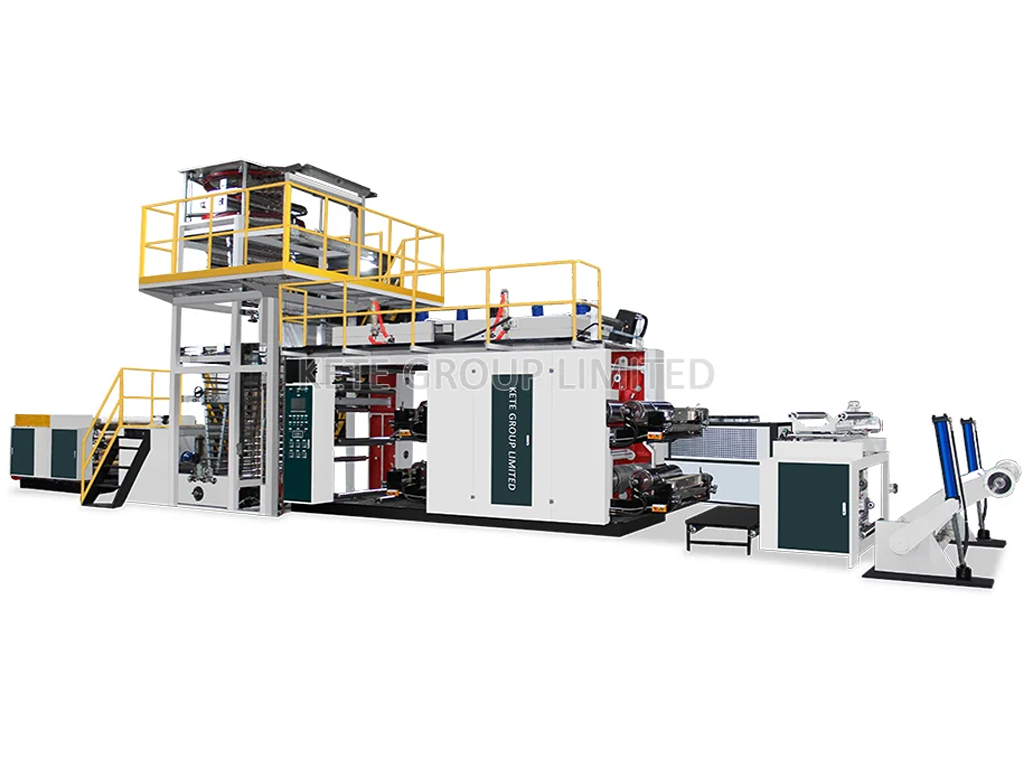
CI Type
Satu hingga empat ton per ton 180K–600K
Industrial central-impression printing for brand-critical color work
Servo Tanpa Gigi
$500K–$2M+
Servo-driven precision for high-mix, short-run premium production
Why 8-Color Prices Range from $15K to $500K+ — The Real Cost Drivers
Once you have seen the numbers, the natural question is: what exactly makes one 8-color machine cost 30 times more than another? The answer lives in three dimensions.
Web Width and Speed — The Two Multipliers That Drive Base Cost
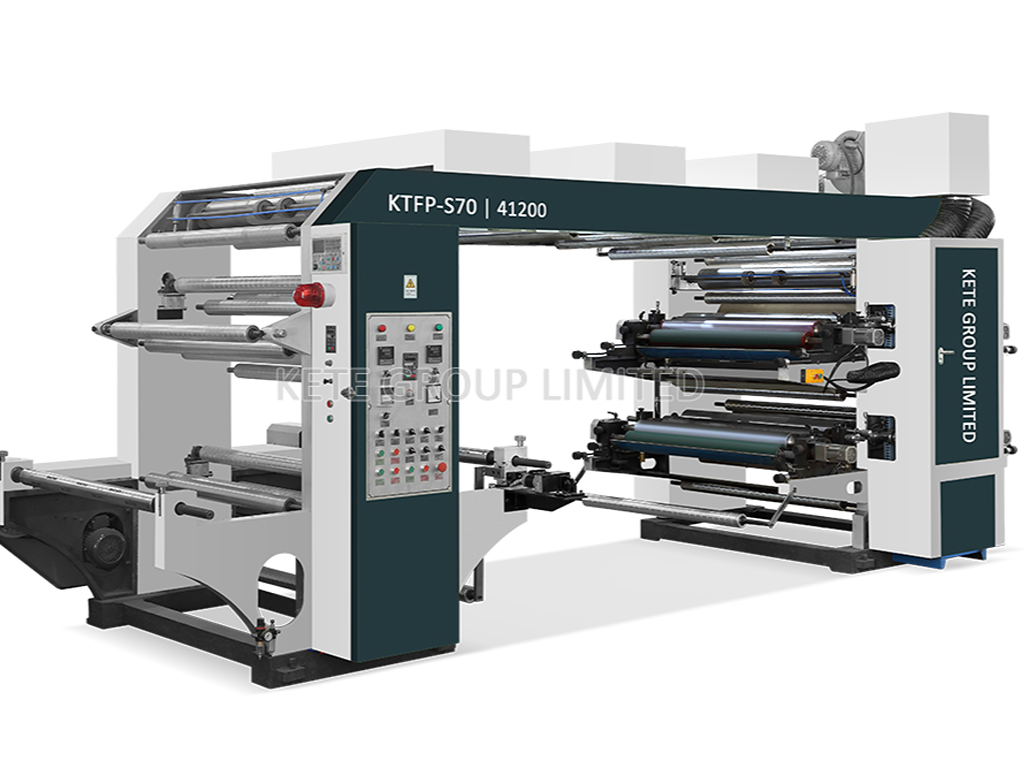
These are the most direct cost drivers, and their logic is simple physics. A wider web means every mechanical component scales up proportionally: longer rollers, heavier frames, larger drying tunnels, bigger unwind and rewind stands. Moving from a 600 mm web width to a 1,600 mm web width does not just double the material cost. It changes the machine’s structural class. The frame goes from welded steel plate to cast iron for vibration damping. The bearings upgrade from standard to precision-grade.
Speed is the second multiplier. A machine running at 70 m/min can use a basic gear drive and magnetic powder brake tension control. Push that to 200 m/min, and you need servo-driven unwind/rewind, dynamic tension control with ±0.1 kg precision, and drying systems capable of fully curing ink at speed. Push to 300+ m/min, and you are in a different engineering universe. Every rotating component must be dynamically balanced. The frame requires finite element analysis for vibration modes. The registration system needs sub-millisecond response times.
A practical example: two 8-color stack machines, both 1,200 mm web width. One runs at 80 m/min with gear drive. The other runs at 150 m/min with servo-assisted tension and high-capacity drying. The faster machine costs roughly 60–100% more. The difference is entirely in the bill of materials.
The 60–100% price difference between these two machines is entirely in the bill of materials — thicker frames, precision bearings, servo-driven tension, and high-capacity drying. You are paying for physics, not a brand name.
Automation and Component Quality — Where the Invisible Money Goes
This is the dimension that confuses most first-time buyers. Two machines can have identical-looking spec sheets: “8 color, 1,200 mm, 120 m/min.” And yet one costs $60,000 while the other costs $160,000. The difference is inside.
| Komponen | Entry Level | Premium Level | Price Impact |
|---|---|---|---|
| Drive system | Gear train, single main motor | Independent servo per station (Yaskawa/Siemens) | 3–5× |
| Pendaftaran | Manual adjustment, operator-dependent | Automatic (BST Eltromat or equivalent), closed-loop | +$30K–$80K |
| Rol anilox | Metal, 100–300 LPI | Ceramic, laser-engraved, 200–1,000 LPI (Japan brand) | 5–10× lifespan |
| Bantalan | Domestic | NSK (Japan) / ASNU (Germany) | 3–5× lifespan |
| PLC & controls | Basic touchscreen | Full HMI with recipe memory, remote diagnostics | +$10K–$30K |
A machine equipped with Yaskawa servos, BST automatic registration, Japanese ceramic anilox rollers, and NSK precision bearings throughout is not “overpriced.” Its bill of materials is physically different from the entry-level unit. The price difference reflects components you can touch, not a brand sticker.
Where It’s Made — India vs. China vs. Europe Pricing Logic
The geography of flexo press manufacturing creates a clear three-tier cost structure.
India benefits from the lowest labor costs in the industry and a localized mechanical supply chain. Indian manufacturers like Mohindra and Innovative Flexotech build functional, no-frills machines at price points no other country can match. The trade-off is component sourcing: the servos, PLCs, and precision anilox rolls in an Indian machine are typically imported. If the buyer does not specify them, they may not be included.
Cina — specifically the Rui’an-Wenzhou corridor in Zhejiang — is the global center of gravity for mid-to-high-end flexo press manufacturing. Over 100 manufacturers operate in this cluster, creating a dense ecosystem of specialist suppliers for every component. This agglomeration effect, combined with China’s 13% VAT rebate on machinery exports, produces what is arguably the best price-to-performance ratio in the world for CI and high-end stack presses.
Eropa (Switzerland, Spain, Germany) anchors the premium tier with fully integrated local service networks, longer mechanical service life, and brand equity that matters for converters supplying multinational brand owners.
If you are buying an 8-color CI press and your budget is under $500,000, China is the rational sourcing destination. The machine quality at the top tier of Chinese manufacturing is genuinely competitive. The price is typically 40–60% less than a European equivalent.
Beyond the Invoice — Hidden Costs That Determine Your Real Investment
Here is the number that no supplier’s product page will tell you: a $50,000 8-color stack flexo machine will typically cost you $65,000 to $85,000 to have running on your factory floor in the first year. Over five years, the total cost of ownership will be two to three times the purchase price.
This is the section where most online content stops. It is also where your real budget lives.
Freight, Duties, and Import Costs — Getting the Machine to Your Door
An 8-color stack flexo machine, crated for export, occupies roughly 35 to 50 cubic meters. A CI press with its central drum can take 50 to 80 CBM. A 40-foot high-cube container from Shanghai to major ports in Africa, the Middle East, or South Asia costs roughly $3,000 to $8,000 depending on the route and shipping line.
Then come the costs that catch first-time importers off guard:
- Import duty: Flexo printing machines fall under HS Code 8443.16. Duty rates vary dramatically by country — from 0–5% in some trade-friendly jurisdictions to 25–35% in protectionist markets. You need to check your specific country’s tariff schedule before budgeting.
- Port handling and customs clearance: Budget $1,000 to $3,000 for brokerage, documentation, and terminal handling charges.
- Inland transportation: Getting a multi-ton crate from port to factory can add another $1,000 to $5,000 depending on distance and road conditions.
A realistic rule of thumb: add 15–25% to the FOB price to arrive at a landed cost at your factory gate.
Installation, Commissioning, and Operator Training — The Startup Phase
A flexo printing machine is not a microwave. It does not work the moment you plug it in. Installation and commissioning is a multi-day process that directly determines whether your new machine prints sellable product in week one or sits idle for a month.
You have three options:
- Factory engineer dispatch: The supplier sends a technician (or team) to your site. You cover airfare, accommodation, and a daily rate of $200 to $500. For a stack-type machine, installation takes 3 to 5 days. For a CI press, plan on 7 to 14 days. This is the most expensive option — and the safest.
- Remote video guidance: The supplier’s engineer walks your team through installation via video call. Free or low-cost, but only works if you have mechanically experienced staff on your floor. If something goes wrong, troubleshooting through a phone screen is slow.
- Local third-party technician: Hiring an independent technician in your country can save on travel costs, but quality is unpredictable and the supplier’s warranty may not cover work done by an unaffiliated third party.
Operator training is a separate line item. Basic operation takes 2 to 3 days. Advanced skills — color matching, tension optimization, preventive maintenance — take 5 to 7 days. If you skip the training, you are effectively paying for it later in scrap, downtime, and shorter machine life.
Consumables, Maintenance, and 5-Year Operating Costs
This is where the real money hides. The machine is the down payment; the consumables are the mortgage.
| Kategori Biaya | Annual Estimate (USD) | As % of Machine Price (on a $80K unit) |
|---|---|---|
| Printing plates (photopolymer) | $5,000–$15,000 | 6–19% |
| Inks (water-based / solvent / UV) | $10,000–$40,000 | 13–50% |
| Anilox roller replacement / re-engraving | $2,000–$8,000 | 3–10% |
| Spare parts & routine maintenance | $2,000–$10,000 | 3–13% |
| Electricity (drives, dryers, compressors) | $5,000–$15,000 | 6–19% |
A photopolymer printing plate lasts 1 to 3 million impressions. A ceramic anilox roller, properly maintained with regular ultrasonic cleaning, lasts 3 to 5 years. UV curing lamps have a service life of 1,000 to 2,000 hours, with replacement at $200 to $500 per lamp. These are not surprises if you plan for them. They are expensive crises if you do not.
The math is straightforward: if your 8-color machine runs 8 hours a day, producing $200 worth of printed output per hour, the machine pays for itself in 12 to 18 months. The cost question is not “can I afford this machine.” It is “can I afford the downtime and scrap that comes from choosing a machine without the support to keep it running.”
Before committing to any supplier, ask to see the details: warranty coverage period and what is included, whether spare parts shipping is covered, and what after-sales support looks like after the installation team leaves. Some manufacturers — including China’s KETE Group, which exports over 200 flexo presses annually across 80+ countries — have built their reputation on transparent production tracking with milestone progress updates (photos and videos at 1%, 30%, 60%, and 90% completion), pre-shipment sample testing using the customer’s own materials, and global engineer dispatch for on-site installation and training. A 1-year standard warranty (extending to 2 years on selected models) with free spare parts replacement including shipping — excluding operator-caused damage — is the baseline a serious supplier should offer. If a supplier is vague about their support terms, treat that vagueness as a cost you have not yet quantified.
Get a Complete Price Breakdown for Your Region.
Includes shipping estimates, import duty guidance, and installation costs tailored to your location.
Do You Really Need 8 Colors? A Practical Guide to Right-Sizing Your Investment
You searched for the price of an 8-color machine. But here is a question worth $20,000 to $100,000: do you actually need eight colors?
Every additional print station adds cost in four dimensions: capital (machine price), consumables (one more set of plates, one more anilox roller, one more ink SKU), time (8–15 extra minutes per job changeover), and complexity (more variables to control, more things that can drift out of spec).
Logos & Text on Shopping Bags, Wrappers
Fastest ROI. The extra stations would sit idle on 90% of your jobs. Simple single-color logos and basic wrapper printing.
Branded Snack & Cosmetic Packaging
Covers CMYK process + 2 spot colors. This is the workhorse configuration for most mid-market converters.
Premium Multi-SKU Brand Packaging
Full gamut plus multiple spot colors online simultaneously. Justified when job mix demands it daily.
High-End Short-Run Flexible Packaging
Extra stations reduce wash-up and changeover frequency. The capex premium is offset by higher Overall Equipment Effectiveness.
The diagnostic that matters: look at your last 50 jobs. How many of them actually used more than 6 colors? If the answer is “five or fewer,” upgrading from a 6-color to an 8-color machine is not growth. It is overcapitalization. The $40,000 to $100,000 you save by buying the right number of colors can fund a year of consumables, hire an additional operator, or pay for the shipping and installation costs that the machine invoice does not cover.
Getting the Best Deal — How to Evaluate Quotes and Choose a Supplier
You now know the price ranges, understand the cost drivers, and have a framework for deciding whether 8 colors is the right specification. The final step is turning that knowledge into a smart purchase decision.
The 7 Questions Every Supplier Quote Must Answer
When three quotes land on your desk and the prices are $28,000, $65,000, and $185,000 — all for “8-color flexo printing machines” — these seven questions will tell you which quote is honest and which is hiding something:
1. Is installation and commissioning included in the price?
If not, get a separate line-item quote for it.
2. What are the brands and countries of origin for the core components?
Servo motors, PLC, anilox rollers, bearings, gearboxes. If the supplier will not list them, walk away.
3. What exactly does the warranty cover, and for how long?
“12 months” means nothing without a written scope of coverage.
4. Do you provide a spare parts price list?
If they will not share it before the sale, parts will be overpriced after the sale.
5. What is the confirmed delivery timeline, and is there a penalty clause for delays?
Standard stack machines: 30–40 days. CI machines: 60–90 days.
6. Can you provide contact details for a customer in my country or region running the same model?
References you can actually call are worth more than any sales presentation.
7. What is your guaranteed after-sales response time, and how is it enforced?
“24-hour reply” is not the same as “24-hour solution.” Ask for specifics.
Red, Yellow, and Green Signals When Evaluating a Supplier
🟢 Green flags: The supplier proactively sends production progress photos and videos at defined milestones. They offer a factory acceptance test (FAT): you visit their factory (or join via video) to watch your machine print your actual materials before it ships. They provide English-language technical documentation. They give you references in your region who will take your call.
🟡 Yellow flags: The quote is significantly below the market range for the spec level claimed. If it seems too good to be true, it is. Communication is slow or inconsistent before the sale. It will not improve after. Technical documentation exists only in Chinese, with no English translations available.
🔴 Red flags: The supplier refuses to disclose component brands and origins. They demand 100% prepayment. Standard terms in Chinese machinery exports are T/T 30% deposit, 70% before shipment, though some factories accept L/C (letter of credit). They cannot provide a verifiable factory address or physical production photos.
The best supplier is not necessarily the cheapest or the most expensive. It is the one whose process is transparent enough that you can verify what you are paying for.
When you are ready to compare options, a practical first step is to request a sample print test. Send your actual substrate material and artwork file to a shortlisted manufacturer. Ask them to run it on a machine configured to the specifications you are considering, and send you the printed samples along with a video of the test run. This single step reveals more about a supplier’s capability and willingness to earn your business than weeks of email negotiation. Manufacturers like China’s KETE Group — with documented installations across Russia, Kenya, Italy, and 80+ other countries, and a track record of repeat orders from customers whose machines have been running for over two years — make this part of their standard pre-sales process. If a supplier hesitates to run your material on their machine before you commit money, ask yourself what they might be worried you will see.
Test Your Materials on an 8-Color Press Before You Commit.
Send us your substrate and artwork. We will run a real print sample and send you the results — plus a video of the test run.
Request Free Sample TestReferensi
- Made-in-China.com. “8 Color Flexo Printing Machine — Product Listings.” 2026. https://www.madeinchina.com/mall/show-8-Color-Flexo-Printing-Machine_758881.html
- Made-in-China.com. “8 Colors Central Drum Servo Motor Gearless Flexo Printing Press Machine.” 2026. https://www.madeinchina.com/mall/show-8-Colors-Central-Drum-Servo-Motor-Gearless-Flexo-Printing-Press-Machine_372025.html
- IndiaMART. “8 Color Stack Flexo Printing Machine — Innovative Flexotech.” 2026. https://www.indiamart.com/innovativeflexotech/eight-colour-flexo-printing-press.html
- IndiaMART. “Woven Fabric Eight Colour Flexo Printing Machine — Mohindra.” 2026. https://www.indiamart.com/proddetail/woven-fabric-eight-colour-flexo-printing-machine-7797198433.html
- KETE Group. “Flexo Printing Machines.” https://www.ketegroup.com/flexo-printing-machine/
- KETE Group. “Services & Support.” https://www.ketegroup.com/services/
- KETE Group. “Contact & Inquiry.” https://www.ketegroup.com/contact/
- KETE Group. “Case Studies.” https://www.ketegroup.com/case-studies/
- KETE Group. Homepage. https://www.ketegroup.com/