 ES
ES  EN
EN  RU
RU  FR
FR  AR
AR  PT
PT  IT
IT  ID
ID  KO
KO  TR
TR  DE
DE  VN
VN  TH
TH  IN
IN 
La precisión no es sólo un objetivo en el exigente campo de la flexografía industrial, sino también un requisito previo para la viabilidad operativa. El rodillo anilox es el principal juez de esta precisión, y es el elemento dosificador definitivo del sistema de suministro de tinta. El rodillo anilox debe conocerse como la mecánica de la dinámica de fluidos a nivel microscópico, donde las variables de volumen, tensión superficial y presión mecánica se unen para crear una imagen impresa uniforme.
Esta guía ofrece un modelo analítico detallado de la naturaleza, la finalidad y los criterios de selección de los rodillos anilox para que los operarios técnicos y los responsables de producción puedan aprovechar las instalaciones de fabricación para racionalizar sus operaciones tomando decisiones con conocimiento de causa.
¿Qué es un rodillo anilox?
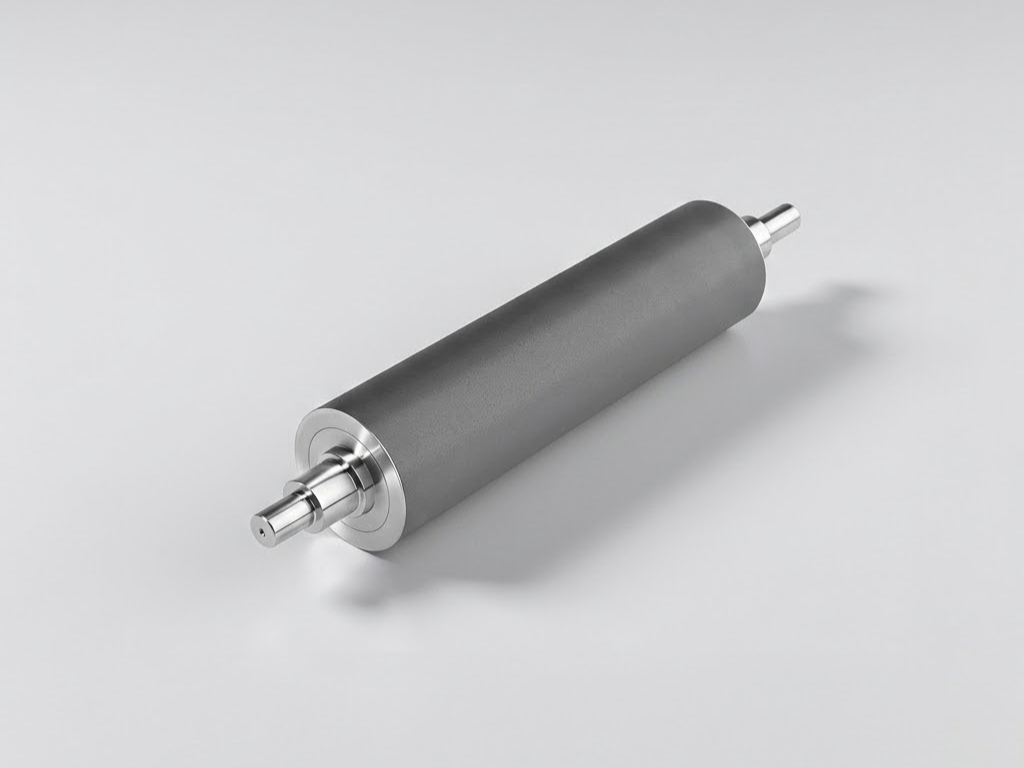
Un rodillo anilox es un cilindro especial, generalmente fabricado con un núcleo de acero o aluminio, que luego se recubre con una superficie cromada o, más a menudo en el uso moderno, con una superficie cerámica grabada con láser. Su superficie está marcada por una alta concentración de células microscópicas -depresiones diseñadas con precisión- que están diseñadas para transferir y entregar una cantidad determinada y medida de tinta a la plancha de impresión.
El rodillo anilox se desarrolló históricamente como respuesta a la variabilidad de las primeras prensas flexográficas, que se basaban en toscos rodillos de goma que no podían controlar el volumen con precisión. El rodillo anilox se conoce comúnmente como el corazón de la prensa flexográfica en el entorno moderno, una metáfora que destaca su importancia para garantizar el flujo continuo y rítmico de tinta necesario para producir a alta velocidad. El proceso flexográfico sería vulnerable a cambios incontrolados en la densidad del color y la claridad de la imagen sin la consistencia de dosificación que ofrece el anilox, y no sería adecuado para las exigencias de alta calidad de los sectores modernos del envasado y el etiquetado.
El anilox se caracteriza técnicamente por su grabado. La creación de un paisaje geométrico uniforme es el objetivo, tanto si se realiza mediante grabado con herramientas mecánicas como con láser de fibra de alta definición. Estas células son tan pequeñas que no se ven a simple vista, pero su funcionalidad global determina el éxito de una tirada multimillonaria.
Cómo funciona un rodillo anilox en el proceso de impresión
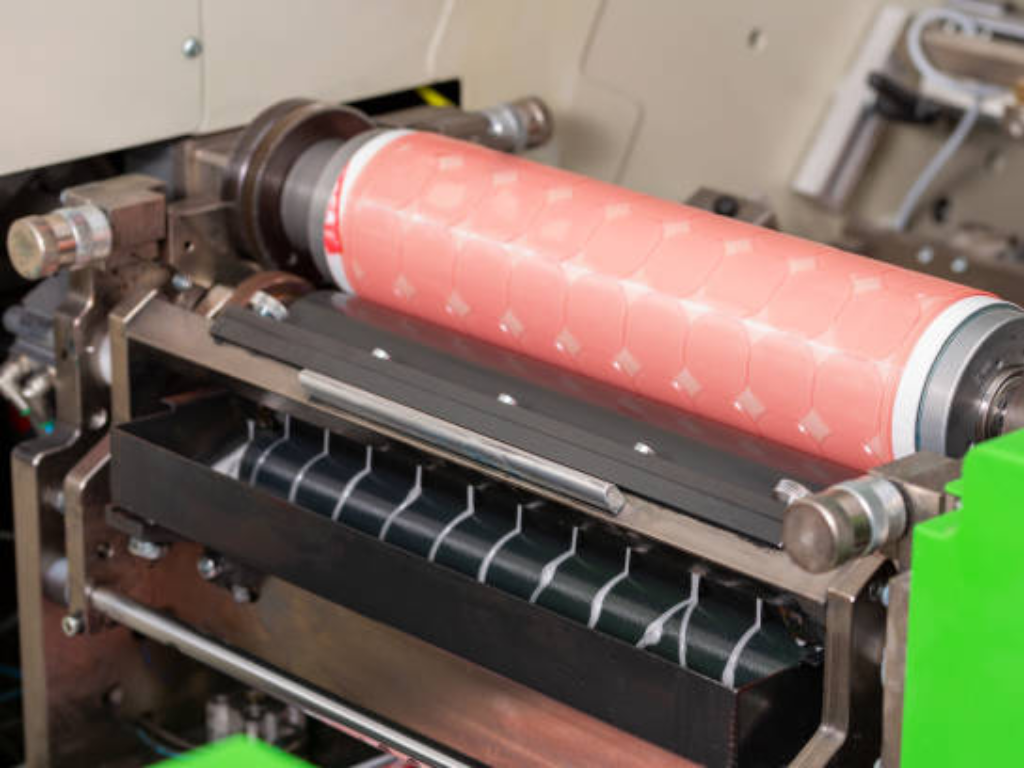
El ciclo funcional del rodillo anilox es un proceso de cuatro fases que describe la función del anilox basándose en el equilibrio mecánico. Comienza con la inmersión o aplicación de tinta en las celdas, luego una fase de dosificación, una fase de transferencia y, por último, una fase de recuperación.
Entintado: El rodillo anilox se sumerge en una fuente de tinta mientras gira o, en entornos de alto rendimiento, se alimenta de tinta a través de un sistema de racleta de cámara. En los procesos contemporáneos de alta velocidad, el rodillo de mojado básico puede no ser adecuado para contrarrestar la física de la rotación a alta velocidad. La velocidad de rotación del anilox a velocidades de impresión superiores a 500 metros por minuto forma una fuerte barrera centrífuga; en efecto, el aire contenido en las microcélulas forma un cojín que impide el desplazamiento de la tinta entrante.
El sistema de cámaras es una solución a este problema, ya que garantiza el control de la presión hidrostática en la cavidad cerrada, lo que esencialmente obliga al fluido a entrar en las células para alcanzar la saturación 100%. No obstante, este componente crítico del entorno del fluido es vulnerable a las interferencias. Cuando la presión de la bomba o la viscosidad de la tinta no se controlan adecuadamente, pueden producirse turbulencias de la tinta en la cámara. Esta turbulencia provoca el arrastre de aire, o burbujas microscópicas, que aparecen en forma de pellizcos o manchas blancas en el sustrato final, donde la tinta no ha llegado al fondo de la cubeta. Por tanto, la obtención de un flujo laminar presurizado es tan importante como el propio grabado.
Médico: Es la fase más importante de la dosificación. La cuchilla de arrastre es el principal agente dosificador en un sistema de cámaras. Esta cuchilla suele ser de acero o de polímero de alta tecnología y se coloca en un ángulo determinado contra el rodillo anilox giratorio. La cuchilla elimina toda la tinta sobrante en las llamadas zonas de tierra (las superficies planas entre las celdas), y sólo queda tinta en las celdas empotradas. Esto garantiza que la cantidad de tinta que queda en el rodillo es exactamente igual al volumen total de las celdas.
Traslado: A continuación, la tinta dosificada se pone en contacto con las zonas de imagen en relieve de la plancha de impresión flexible. Un porcentaje de la tinta de cada celda se descarga y deposita en la plancha mediante una combinación de tensión superficial y presión de pinzado. Cabe señalar que la transferencia nunca es del 100%; normalmente, se transfiere entre el 60% y el 80% del volumen de tinta, parámetro que se denomina eficacia de liberación.
Recuperación: Una vez realizada la transferencia, el rodillo reanudará la rotación hacia la estación de entintado. La tinta no utilizada que no se haya transferido debe mantenerse en estado líquido para conseguir una transferencia de tinta uniforme y evitar que se seque en las celdas, bloqueándolas y reduciendo el volumen efectivo del rodillo durante las siguientes rotaciones.
Se trata de un ciclo mecánico que se repite miles de veces por hora. Es la estabilidad de la máquina de impresión, es decir, la rigidez de los mandriles anilox de banda estrecha y la precisión de los sistemas de ajuste de la presión, lo que permite que esta transferencia microscópica sea constante a lo largo de kilómetros de sustrato.
Parámetros técnicos esenciales: LPI, BCM y geometría celular
La industria utiliza una serie de mediciones normalizadas para medir el rendimiento de un rodillo anilox. Estos parámetros pueden utilizarse para predecir el comportamiento de la tinta y la reproducción de los colores.
Pantalla de líneas (LPI) frente a volumen de tinta (BCM)
El equilibrio en la selección del anilox es la relación entre la trama de línea (en líneas por pulgada o LPI) y el volumen de tinta (en mil millones de micras cúbicas por pulgada cuadrada o BCM).
El número de celdas por pulgada lineal del ángulo de grabado se denomina trama de líneas (LPI). Cuanto mayor sea el LPI, más pequeñas y compactas serán las celdas. La reproducción de detalles finos, degradados y medios tonos de alta resolución requiere un alto LPI porque ofrece a los puntos finos de la plancha de impresión un mayor soporte.
El volumen de tinta (BCM) es la suma de la capacidad teórica de las células en un área determinada. Cuanto mayor sea el BCM, mayor será el grosor de la película de tinta requerida, y esto es necesario en bloques de color sólidos y en negrita, así como en revestimientos pesados.
La relación entre ambos es inversa: cuanto mayor es el LPI, menor es el espacio físico por celda, lo que restringe intrínsecamente el máximo BCM que puede alcanzarse. Por ejemplo, un rodillo de 200 LPI podría tener un BCM de 10,0 para soportar una gran cobertura, pero un rodillo de 1200 LPI utilizado en la impresión de procesos de alta definición podría tener un BCM de 1,8 solamente. La elección de un equilibrio incorrecto provocará una impresión sucia (exceso de tinta utilizada por los puntos) o colores desvaídos (volumen de tinta inadecuado).
Ángulos y formas de las células
La geometría de las celdas determina la liberación de tinta y la interacción del rodillo con la rasqueta. El ángulo más común es de 60 grados (hexagonal), que es el ángulo que proporciona el anidamiento más compacto de las celdas y permite una superficie máxima para transportar menos tinta.
No obstante, también se han desarrollado geometrías especiales para resolver determinados problemas industriales. Un ejemplo es utilizar ángulos de 30 o 45 grados para evitar los patrones de moiré, la interferencia óptica de las células anilox y los puntos de la pantalla de la plancha de impresión. Además, se han diseñado estructuras de celdas alargadas o en forma de canal, como los diseños GTT (Tecnología de Transferencia Genética) o en forma de S, para minimizar las turbulencias de tinta y las salpicaduras a alta velocidad. Estas formas permiten un flujo más libre de la tinta, en efecto una brigada de entrega de tinta en cubo, con la tinta fluyendo más libremente entre las células para asegurar una película uniforme a altas fuerzas centrífugas y puede acomodar mayores volúmenes.
Exploración de los principales tipos: Rodillos Anilox Cromados vs. Cerámicos
La longevidad de un rodillo anilox y su compatibilidad con las distintas químicas de tinta dependen de la composición del material del rodillo.
La norma industrial eran los rodillos cromados (de acero). Se fabrican mediante grabado mecánico de un núcleo de acero y luego se les aplica un fino revestimiento de cromo industrial para evitar el desgaste y la corrosión. Los rodillos cromados son rentables, pero tienen serias limitaciones. El proceso de grabado mecánico es incapaz de alcanzar los elevados números de LPI necesarios en la impresión moderna de alta definición. Además, el cromo no es tan duro como la cerámica, es decir, estos rodillos se desgastan fácilmente debido a la fricción constante de la rasqueta y, por tanto, el volumen de tinta se pierde gradualmente con el tiempo.
Lo último en tecnología son los rodillos anilox cerámicos. Estos rodillos se utilizan para aplicar un revestimiento cerámico de óxido de cromo de alta densidad a una base de acero inoxidable o aluminio mediante un proceso de pulverización térmica. Tras la aplicación, la cerámica se pule hasta conseguir un acabado de espejo y se graba con láseres de CO2 o fibra de alta precisión. La dureza Vickers de los rodillos cerámicos es varias veces superior a la del acero, lo que les confiere una extraordinaria resistencia a la abrasión. Esta estabilidad garantiza que el BCM se mantenga estable incluso después de millones de impresiones. Además, el grabado por láser puede utilizarse para crear recuentos de LPI superiores a 1500, lo que permite conseguir la calidad de impresión fotográfica de los envases flexibles modernos.
| Característica | Cromado (acero) | Cerámica (óxido de cromo) |
| Dureza de la superficie | ~700 Vickers | 1200 - 1300+ Vickers |
| Pantalla Línea Max (LPI) | Hasta 500 LPI | Hasta 1500+ LPI |
| Eficacia de liberación de tinta | Moderado | Superior (alta energía superficial) |
| Resistencia al desgaste | Bajo (Susceptible de puntuación) | Excelente (longevidad extrema) |
| Coste inicial | Económico | Mayor inversión |
| A largo plazo ROI | Baja (sustitución frecuente) | Alta (BCM coherente a lo largo de los años) |
Estrategia de selección: Cómo satisfacer sus necesidades de impresión
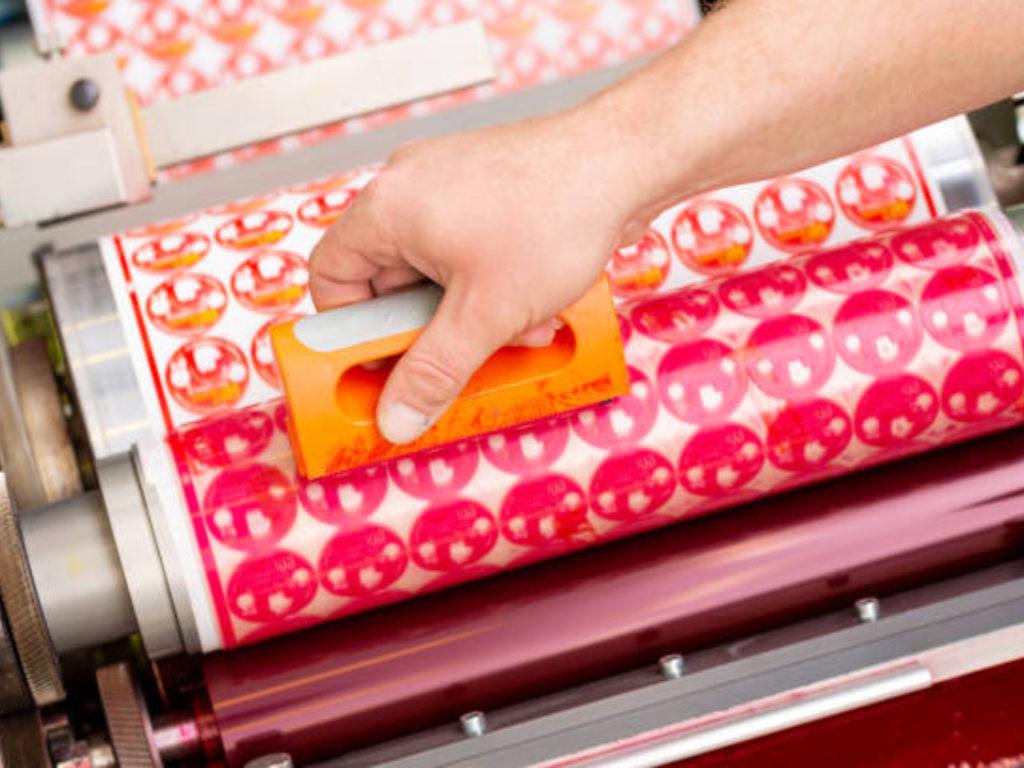
La elección de un rodillo anilox es un proceso táctico de alineación de la capacidad técnica con las realidades físicas del sustrato y la química de la tinta. La incapacidad de ajustar estas variables prolongará los tiempos de preparación y las mermas.
Selección del sustrato
Los principales impulsores de los requisitos de la BCM son la porosidad y la energía superficial del sustrato.
Sustratos porosos: El papel o cartón ondulado no estucado absorbe un gran porcentaje de la tinta. Es necesario un mayor BCM (menor LPI) para contrarrestar esta absorción y obtener un color vivo.
Sustratos no porosos: Los films (PE, PP, PET) y las láminas no absorben la tinta. La tinta permanece en la superficie de estos materiales. Por tanto, es deseable un BCM más pequeño (mayor LPI) para garantizar que la tinta no se extienda de forma incontrolada, lo que provocaría una ganancia de punto y una pérdida de nitidez de la imagen.
Compatibilidad de tintas
La química de la tinta, ya sea a base de agua, de disolvente o de curado UV, influye en la liberación de la tinta fuera de la célula.
Las tintas de base acuosa son más propensas a la tensión superficial y puede ser necesario recubrirlas o utilizar geometrías que garanticen su limpieza fuera de la célula.
Las tintas UV son mucho más viscosas. Su mayor densidad óptica se debe a que son más gruesas y, por tanto, necesitan rodillos anilox con un BCM ligeramente superior al de las tintas con base de disolvente.
Las tintas al disolvente se secan muy rápidamente, por lo que el anilox debe elegirse de modo que la tinta no empiece a secarse en las celdas durante el proceso de transferencia, lo que provocaría imágenes fantasma o una cobertura desigual.
Solución de problemas: Vinculación del rendimiento de los anilox con los defectos de impresión más comunes
Aunque los parámetros de selección pueden ajustarse teóricamente al sustrato y a la química de la tinta, la realidad industrial de la impresión a alta velocidad y de las aplicaciones de impresión flexográfica tiende a introducir variables dinámicas que se expresan como defectos visuales. Estos problemas sólo pueden resolverse con un conocimiento forense de la interacción entre el rodillo anilox y la tinta y la plancha sometidas a elevadas fuerzas centrífugas. Los responsables de producción pueden diferenciar entre un fallo mecánico y una mala especificación del anilox determinando la causa de tales defectos.
Salpicaduras de anilox
Uno de los defectos más irritantes de la flexografía UV de alta velocidad es la llamada salpicadura anilox de alta calidad, que consiste en la formación de gotas de tinta indeseables en el sustrato, normalmente en el borde anterior de las regiones impresas. Se trata principalmente de un fallo fluidodinámico entre el nip de la rasqueta y el rodillo anilox. Cuando el rodillo gira a gran velocidad, el aire queda atrapado en las microcélulas. El aire se comprime cuando estas células golpean la cámara llena de tinta. Cuando las celdas pasan por debajo de la cuchilla de la rasqueta, la presión se descarga bruscamente y la tinta escupe fuera de la celda. Esto es especialmente frecuente con las tintas UV porque son más viscosas y tienen una tensión superficial más alta. Para reducirlo, los operarios tienen que recurrir con frecuencia a geometrías de celda más complejas, incluidos los grabados en forma de S o de canal abierto, que permiten que el aire salga más fácilmente sin empujar la tinta hacia fuera.
Moaré
El muaré es un patrón geométrico de interferencia que surge cuando dos estructuras periódicas, la retícula de células anilox y los puntos de la trama de la plancha de impresión, no están alineadas. Esto produce una marca de agua que distrae o un efecto ondulado en la impresión. La regla técnica definitiva para evitar el muaré es la regla de la relación 3,5:1 a 5:1. Esto implica que la línea de trama del anilox (LPI) debe ser al menos de 3,5 a 5 veces mayor que la frecuencia de trama de la plancha. A modo de ejemplo, cuando se imprime una imagen serigráfica de 150 líneas, es preferible un anilox de 600 a 750 LPI. Cuando la relación es excesivamente baja, los puntos de la plancha pueden hundirse físicamente en las celdas anilox (lo que se denomina inmersión de puntos), lo que provoca una recogida desigual de la tinta e interferencias visuales.
Ghosting
El efecto fantasma mecánico es una imagen tenue y repetitiva que aparece en lugares en los que no debería aparecer y que suele reflejar un área sólida que estaba presente en el diseño de impresión anterior. Suele ser un síntoma de "falta de tinta" en el caso del rodillo anilox. Esto ocurre cuando las celdas no pueden reponerse con suficiente rapidez tras la primera transferencia a la plancha, o cuando parte de la tinta se ha secado parcialmente (taponado) en el fondo de las celdas. Cuando el anilox no es capaz de recuperar el 100% del volumen en una sola rotación, la siguiente transferencia será menos densa, formando un fantasma de la última imagen. El "ghosting" puede solucionarse en dos pasos: aumentar el flujo de tinta en el sistema de cámaras y realizar una limpieza química profunda para asegurarse de que todas las micras de la BCM teórica de la célula están listas para ser utilizadas.
Pero los ratios técnicos en sí mismos no evitarán las interferencias visuales, a menos que la máquina de impresión esté amortiguada estructuralmente. La filosofía de ingeniería de KETE establece que el rodillo anilox no puede considerarse como una pieza separada. Incluso el grabado más fino será presa de la llamada vibración de engranajes o de errores de registro cuando los mandriles tienden a desviarse. Nuestra prensas flexográficas están diseñadas con mandriles ultrarrígidos y sistemas de ajuste de presión de alta precisión para eliminar las vibraciones, que son el principal adversario de una transferencia consistente. La maquinaria KETE estabiliza el entorno mecánico, lo que garantiza el equilibrio microscópico del anilox incluso a velocidades máximas de producción.
Mantenimiento y cuidado: Cómo minimizar los daños y consejos de limpieza
El rodillo anilox es un instrumento de alta precisión, pero funciona en un entorno industrial hostil. Sus mayores enemigos son los impactos mecánicos y la tinta seca. Como las paredes celulares son microscópicas (a menudo sólo tienen unas micras de ancho), son increíblemente frágiles. Un solo impacto con una superficie dura puede aplastar estas paredes, creando una "mancha plana" permanente o "huella dactilar" del grabado que aparecerá como defecto en cada impresión posterior.
Protocolo de limpieza es la piedra angular del mantenimiento de los anilox. Si se deja secar la tinta dentro de las celdas, el BCM efectivo del rodillo disminuye, provocando cambios de color difíciles de diagnosticar. El mantenimiento debe seguir un enfoque escalonado:
Limpieza diaria: Inmediatamente después de una tirada, el rodillo debe limpiarse con un disolvente químicamente específico. El fregado manual con cepillos de acero inoxidable o latón (dependiendo de si el rodillo es cerámico o cromado) ayuda a desalojar la tinta húmeda.
Remojo químico: Periódicamente, los rodillos deben tratarse con geles de limpieza profunda que penetran en el fondo de las celdas para disolver las resinas más resistentes. Esto es crucial en el contexto del envasado de bebidas, donde la limpieza es primordial.
Limpieza por ultrasonidos o láser: En el caso de rodillos muy "atascados", se requiere una limpieza avanzada fuera de la máquina. Los baños ultrasónicos utilizan ondas sonoras de alta frecuencia para crear burbujas de cavitación que levantan la tinta seca de las celdas. Más recientemente, la limpieza por láser se ha convertido en la "regla de oro", ya que utiliza un láser pulsante para vaporizar la tinta seca sin entrar en contacto físico con las frágiles paredes de cerámica.
El mantenimiento proactivo no se limita a la limpieza; se trata de proteger el retorno de la inversión del equipo. Un anilox cerámico bien mantenido puede durar años, mientras que uno descuidado puede perder su utilidad en cuestión de meses.
FAQS
P: ¿Qué hace un rodillo anilox?
Un rodillo anilox actúa como un instrumento dosificador de precisión. Su función principal es recoger un volumen específico de tinta y entregar una película consistente y uniforme a la plancha de impresión. Mediante el uso de celdas microscópicas grabadas, garantiza que cada impresión se mantenga idéntica en color y densidad a lo largo de toda una tirada de producción.
P: ¿Cuánto duran los rodillos reticulados?
La vida útil depende en gran medida del material y del mantenimiento. Los rodillos anilox cerámicos suelen durar entre 2 y 5 años (o millones de revoluciones) con un cuidado profesional. Por el contrario, los rodillos cromados son mucho menos duraderos y suelen requerir sustitución o regrabado mucho antes debido a su menor resistencia a la fricción de la cuchilla.
P: ¿Qué dispositivo raspa la tinta del rodillo anilox?
La rasqueta es el dispositivo responsable de esta tarea. Se trata de una fina tira de acero o plástico rectificada con precisión que limpia el exceso de tinta de la "tierra" (superficie) del rodillo, dejando la tinta sólo dentro de las celdas rebajadas para garantizar una dosificación precisa.
P: ¿Cómo funcionan los rodillos reticulados con los cilindros de impresión?
Los dos cilindros trabajan en un proceso de transferencia sincronizado:
- El rodillo anilox gira contra el cilindro de impresión (plancha).
- Por contacto físico, la tinta dosificada en las celdas anilox se transfiere a las zonas de imagen en relieve de la plancha de impresión.
- Esta transferencia es impulsada por la acción capilar y la tensión superficial, desplazando la tinta desde las microcélulas del rodillo hasta la superficie de la plancha antes de que finalmente llegue al sustrato.
Conclusión
En resumen, el rodillo anilox es el componente definitivo que permite la escalabilidad y repetibilidad del proceso de impresión flexográfica en la industria gráfica. Dominando los matices del LPI, el BCM y la geometría de la celda, y cumpliendo un riguroso programa de mantenimiento, los fabricantes pueden garantizar que su calidad de impresión cumple los exigentes estándares del mercado moderno. Sin embargo, es vital reconocer que el sistema anilox no funciona de forma aislada. El éxito final de la tirada depende de la sinergia entre la calidad del rodillo y la estabilidad mecánica de la propia máquina de impresión. Invertir en ingeniería de alta precisión -tanto en los componentes de dosificación como en la maquinaria que los alberga- es el único camino sostenible hacia la excelencia operativa en el competitivo panorama de la impresión industrial.


