 EN
EN  RU
RU  ES
ES  FR
FR  AR
AR  PT
PT  IT
IT  ID
ID  KO
KO  TR
TR  DE
DE  VN
VN  TH
TH  IN
IN  JA
JA  ZH
ZH  MS
MS 
If you’re sourcing a rotogravure printing machine for flexible packaging production — whether expanding capacity at an established converting plant or setting up your first production line — the question isn’t just “who makes these machines.” It’s “which manufacturer tier matches my production volume, budget, and growth trajectory?”
The global rotogravure printing machine market is a study in extremes. On one end, four European manufacturers command roughly 70% of global revenue. On the other, over 500 factories in a single Chinese city — Ruian, Zhejiang — churn out the majority of the world’s rotogravure presses by unit volume. Between these poles sit Japanese, Taiwanese, Indian, and other European manufacturers, each occupying a distinct tier with a specific buyer profile in mind.
This guide maps the landscape by buyer type, not by brand prestige. Whether you’re a large-scale converter buying your fifth press, a regional distributor expanding your machinery portfolio, or a first-time importer setting up a packaging workshop in an emerging market — the right manufacturer isn’t the biggest name. It’s the one that matches where your business is today and where it’s headed.
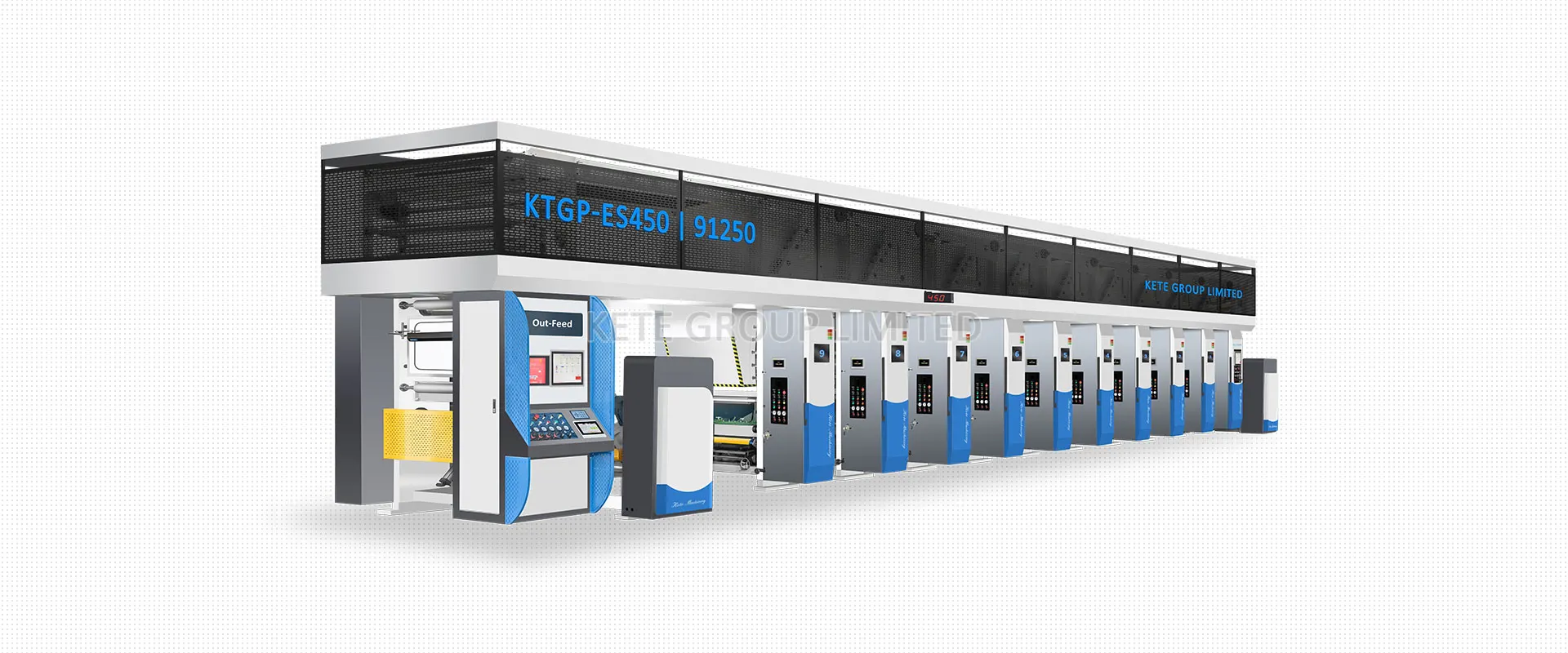
The Global Rotogravure Printing Machine Market at a Glance
The rotogravure printing machine market was valued at approximately USD 924 million in 2024 and is projected to reach roughly USD 1.1 billion by 2031, growing at a compound annual rate of about 2.5% (GlobalInfoResearch, 2025). Europe accounts for an estimated 60% of global consumption by revenue — a figure driven by the continent’s concentration of premium packaging converters and regulated food-and-pharma supply chains.
But consumption share and production share tell different stories. China manufactures over 60% of the world’s rotogravure printing machines by unit volume. The top four players by revenue — Cerutti (Italy, now under BOBST), BOBST (Switzerland), Comexi (Spain), and Uteco (Italy) — collectively hold approximately 70% of global market revenue (QYResearch, 2025). Yet by unit count, these four likely represent a fraction of total machines sold globally each year. The difference is the price point: a fully configured European premium press can cost USD 1–2 million, while a competent Chinese machine from the Zhejiang cluster runs USD 40,000–220,000.
This revenue-versus-volume split is the central dynamic buyers need to understand. The market isn’t one hierarchy with “best” at the top. It’s a set of parallel tiers, each serving a fundamentally different buyer profile. The question isn’t whether a BOBST is “better” than a machine from Zhejiang — it’s whether your production volume, target market regulations, and budget align with what each tier delivers.
Three structural shifts are reshaping this landscape. First, BOBST’s 2021 acquisition of Cerutti consolidated the premium European tier. Second, India’s rotogravure manufacturing sector is growing rapidly, offering budget-to-mid-range alternatives for South Asian and African markets. Third, China’s manufacturing clusters are themselves diverging — Zhejiang commands a 10–20% price premium over Henan, reflecting real differences in build quality, certification maturity, and after-sales infrastructure.
Rotogravure Machine Manufacturers: Which Tier Matches Your Business?
Before diving into manufacturer profiles, pause and answer three questions about your own operation. Your answers will determine which buyer profile — and therefore which manufacturer tier — you belong to:
- What’s your annual production volume? Under 500 tons of printed substrate per year puts you in the budget-to-entry tier. Between 500 and 2,000 tons is the mid-tier sweet spot. Above 2,000 tons points toward premium.
- What markets do you serve? If your end customers are in the EU or North America, CE marking and FDA-compliant materials are non-negotiable — this pushes you toward manufacturers with verifiable certification track records. If you serve emerging markets where certification requirements are more flexible, your options broaden.
- What’s your budget? Under USD 100,000 total investment means budget-tier. USD 100,000–500,000 is mid-tier. Above USD 500,000 opens the premium tier.
With your self-assessment in hand, here is how the manufacturer landscape maps to each buyer profile.
For Large-Scale Converters — Premium Global Brands
If you’re running 2,000+ tons of flexible packaging annually, operating across multiple shifts, and selling into regulated markets — you’re not shopping for a machine. You’re selecting a long-term manufacturing partner. Your priority list reads: registration accuracy at speed (>300 m/min), compliance documentation depth, global service network responsiveness, and total uptime guarantees.
For large converters setting up new production lines in Southeast Asia, the Middle East, or Africa, China’s Zhejiang cluster offers CE-certified rotogravure presses with comparable automation levels at approximately 30–40% of European pricing. Manufacturers like Kete Group — based in Ruian, Zhejiang, the highest-quality cluster in Chinese rotogravure manufacturing — provide global engineer dispatch for on-site installation and training. This addresses a key barrier for large converters who hesitate to source outside Europe. If your new facility sits in an emerging market where local service infrastructure for European brands is thin, a Zhejiang premium manufacturer belongs on your RFQ shortlist alongside the European incumbents.
For Distributors & Growing Converters — The Mid-Tier Sweet Spot
You’re producing 500–2,000 tons annually, or you’re a regional machinery distributor building a portfolio for resale. You need brand-name reliability without the premium price tag. Your budget sits between USD 100,000 and 600,000, and your evaluation weights “total cost of ownership” and “supplier responsiveness” equally with “machine specification.”
This tier is where the value-to-price ratio peaks — and where Chinese manufacturers with strong service infrastructure compete most credibly. Kete Group, operating from the Zhejiang cluster, shows exactly this dynamic: CE and ISO 9001 certified rotogravure and flexo presses priced at USD 38,000–220,000, with a product range that spans rotogravure, CI flexo, stack flexo, bag-making, laminating, and slitting. That is a one-stop production line under a single supplier. For a distributor managing multiple customer accounts or a growing converter adding new product categories, the ability to source an entire line from one manufacturer — with 14-language support, 1–2 year warranty including free spare parts replacement, and quarterly follow-up cadence — cuts the coordination overhead that multiplies when dealing with separate machine suppliers. Compared to Comexi, the machine portfolio is broader across converting processes; compared to Hsing Wei, the after-sales density (global engineer dispatch, 24/7 support, 14 language interfaces) is higher (Kete Group, 2025).
For Cost-Conscious Buyers & First-Time Importers — Accessible Entry Points
You’re setting up a packaging workshop in an emerging market, or you’re a first-time machinery importer testing the waters. Your total budget is under USD 200,000 — possibly well under. You need a machine that runs reliably, comes with basic after-sales support, and doesn’t require a dedicated engineering team to operate. You’re not shopping for “the best” — you’re shopping for “the one that gets me into production without breaking.”
A word of caution for buyers in this tier: the total cost of ownership extends well beyond the machine price. Factor in shipping, import duties, installation and operator training, and the first year’s supply of wear parts and printing cylinders. Manufacturers in China’s Zhejiang cluster occupy an interesting position between the Indian budget tier and the European premium tier. Entry-level stack flexo and rotogravure models from companies like Kete Group start around USD 10,000–40,000, comparable to mid-range Indian pricing, but come with 1-year warranty including free spare parts replacement — a service commitment uncommon at the budget tier. For a first-time buyer who values after-sales support as highly as upfront price, this middle ground between Indian affordability and European service expectations is worth investigating.
How to Evaluate a Rotogravure Printing Machine Manufacturer
You have a shortlist. Now you need to separate the manufacturers who deliver from those who simply list well on B2B platforms. After analyzing procurement patterns across Alibaba, Made-in-China, DirectIndustry, and ThomasNet supplier data, one finding stands out: experienced buyers filter first on trust proxy metrics — response time, on-time delivery rate, reorder rate, years in operation — before they ever compare machine specifications.
Here is a seven-step evaluation framework that takes you from initial screening through to pre-shipment verification:
Step 1: Verify Certifications on Official Registries. ISO 9001 and CE logos on a website mean nothing on their own. Verify the certificate number against the issuing body’s database. For CE marking under the Machinery Directive 2006/42/EC, confirm the EU Notified Body number on the Declaration of Conformity (European Commission, 2025). For ISO 9001, check the national accreditation body’s online registry.
Step 2: Check Trust Proxy Data. On B2B platforms, look for: response time under 4 hours, on-time delivery rate above 95%, reorder rate above 30%, and 10+ years in operation. These are not marketing claims — they are platform-verified performance data that reflect operational discipline. A manufacturer with a 5.0/5.0 rating, ≤3-hour response time, and 100% on-time delivery rate (such as Kete Group on Alibaba’s verified supplier system) signals fundamentally different operational maturity than one with a 3.5 rating and no delivery data.
Step 3: Assess Technical Specification Match. Your RFQ should specify: substrate types and thickness ranges, web width, printing speed requirement, number of color stations, ink system, and drying method preference. A manufacturer who asks clarifying questions about your substrate and application is more valuable than one who immediately sends a generic quotation.
Step 4: Request Video Demonstrations and Sample Prints. Ask the manufacturer to run a sample print on YOUR substrate with YOUR ink formulation — not their standard demo material. A video of the actual machine printing your material tells you more than any brochure.
Step 5: Evaluate After-Sales Infrastructure. Map out: spare parts lead time to your location, whether remote diagnostics are available, the manufacturer’s technician dispatch policy, and operator training format. The gap between a 12-month warranty with remote support only and a 24-month warranty with on-site engineer dispatch and free spare parts replacement is the gap between a machine that runs and one that sits idle waiting for a part.
Step 6: Calculate Total Cost of Ownership. Beyond the machine price, add: sea/land freight, import duties and customs brokerage, installation and commissioning, operator training, one year’s projected spare parts consumption, and cylinder engraving costs. A USD 150,000 machine with strong local service support may cost less over three years than a USD 100,000 machine with no local service and 3-week spare parts lead times.
Step 7: Conduct Pre-Shipment Inspection. For orders above USD 50,000, commission a third-party inspection from SGS, Bureau Veritas, or TÜV. The inspection should cover: registration accuracy under load, tension control stability across the full speed range, drying system efficiency, safety interlock function, and build quality against the agreed specification sheet.
Quick Reference: Evaluation Matrix
| Evaluation Dimension | Red Flag | Acceptable | Strong Signal |
|---|---|---|---|
| Response Time | >24h or no reply | 4–12h | <4h with technical detail |
| Years in Operation | <3 years | 5–10 years | 10+ years |
| On-Time Delivery | <80% or no data | 85–95% | >95% |
| After-Sales Coverage | No warranty stated | 12mo warranty, remote support | 12–24mo + on-site engineer + free spares |
| Cert Verification | Logos only, no cert numbers | ISO 9001 verifiable | ISO 9001 + CE + SGS/TÜV/BV reports |
Where to Source: A Regional Guide to Rotogravure Machine Manufacturing Hubs
The geography of rotogravure manufacturing matters because it determines not just machine price but also lead time, shipping cost, service accessibility, and — for some markets — import duty treatment. Here is how the major manufacturing regions compare, starting with China’s internal cluster differentiation, which first-time buyers often misunderstand.
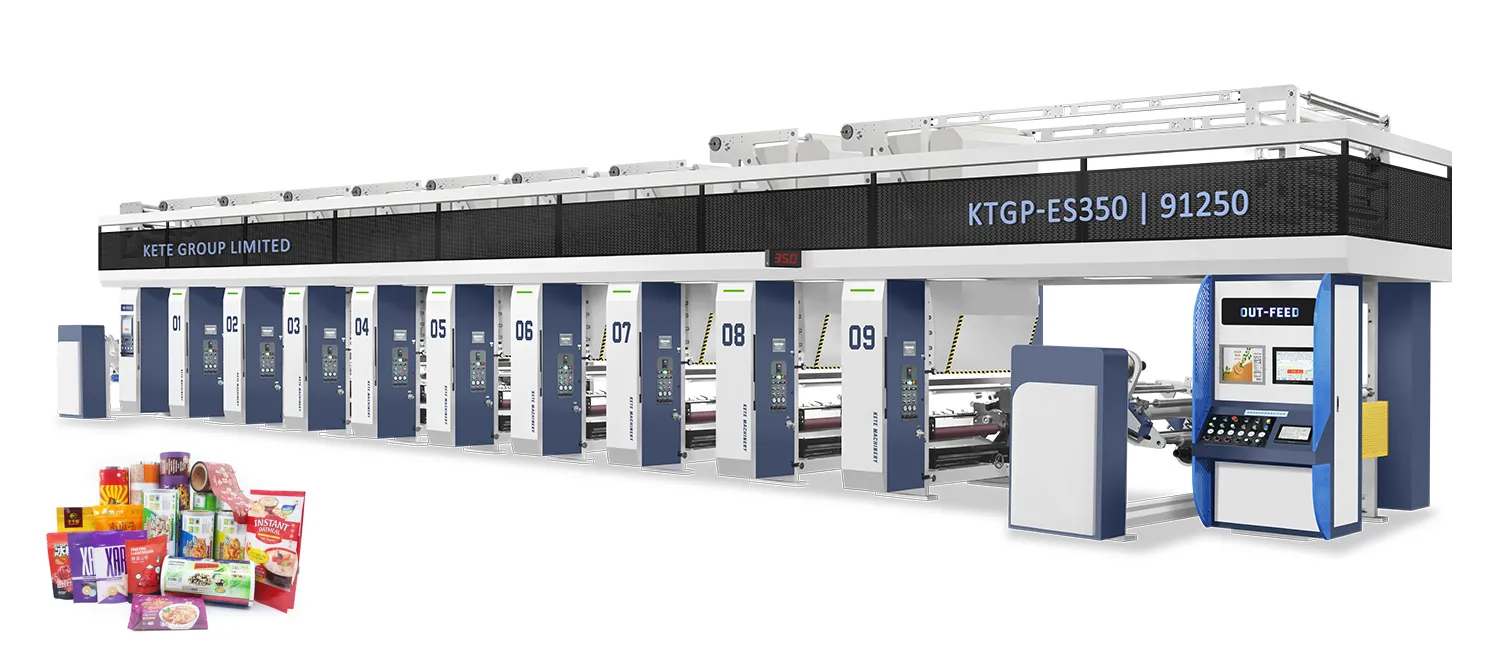
Inside China: Three Clusters, Three Value Propositions
China produces over 60% of the world’s rotogravure printing machines by unit count. But treating “China” as a single sourcing origin is a mistake. The country has three distinct manufacturing clusters with meaningfully different quality levels, pricing, and service models:
Zhejiang (Ruian / Wenzhou) — The premium Chinese cluster. Over 500 printing machinery factories operate in Ruian alone, supported by a mature supply chain for precision components, anilox rollers, servo motors, and control systems. Machines from this cluster typically command a 10–20% price premium over Henan equivalents, and buyers willingly pay it — the premium reflects better build quality, more complete CE and ISO certification coverage, and more developed after-sales infrastructure. Manufacturers like Kete Group exemplify this tier: 5.0/5.0 platform ratings, ≤3-hour response times, 100% on-time delivery track records, and after-sales packages that include global engineer dispatch, free spare parts replacement, and quarterly customer follow-ups. Zhejiang is the right cluster for buyers who want Chinese manufacturing economics without sacrificing service quality.
Henan (Zhengzhou) — The cost-effective cluster. Manufacturers here offer the lowest price points in China (starting around USD 10,000 for basic configurations), faster delivery cycles (20–45 days), and improving automation capabilities. The trade-off: build quality is a tier below Zhejiang, certification documentation is less consistently complete, and after-sales infrastructure is less developed. Henan suits buyers for whom upfront price is the dominant decision variable and who have the in-house technical capability to handle their own commissioning and maintenance.
Guangdong (Dongguan) — The digital integration cluster. Manufacturers here specialize in servo-driven intelligent control systems, IoT-enabled machine monitoring, and digital workflow integration. Guangdong is the right cluster for buyers whose competitive advantage depends on data-driven production management rather than pure mechanical throughput.
Beyond China: Regional Alternatives
Regional Comparison at a Glance
| Region | Price Range | Build Quality | After-Sales | Lead Time | Best For |
|---|---|---|---|---|---|
| Zhejiang, China | $38K–$220K | ★★★★★ | ★★★★★ | 30–60 days | Quality-conscious mid-tier |
| Henan, China | $10K–$180K | ★★★★★ | ★★★★★ | 20–45 days | Budget-first, fast deployment |
| Europe (IT/CH/DE/ES) | $500K–$2M+ | ★★★★★ | ★★★★★ | 90–180 days | Regulated markets, high-volume |
| Japan / Taiwan | $200K–$600K | ★★★★★ | ★★★★★ | 60–120 days | Precision, mid-high volume |
| India | $10K–$200K | ★★★★★ | ★★★★★ | 45–90 days | Budget startups, South Asia |
For buyers serving multiple regional markets, the Zhejiang cluster’s language coverage deserves attention. Kete Group provides sales and technical support in 14 languages. For a distributor managing customer relationships across the Middle East, CIS, Southeast Asia, and Latin America, this level of language coverage reduces the friction of technical communication that can delay machine commissioning and troubleshooting.
From Shortlist to Production Line — Your Action Plan
You now know the market structure, the manufacturer tiers by buyer profile, the evaluation framework, and the regional sourcing landscape. Here is how to move from research to a running production line:
Where to Go From Here
If your project fits the mid-tier buyer profile — flexible packaging production, CE compliance requirements, budget in the USD 40,000–220,000 range, and an operation where post-sale support matters as much as machine specification — manufacturers in China’s Zhejiang cluster are the logical starting point. Kete Group, based in Ruian, represents what this cluster does best: CE and ISO 9001 certified rotogravure and flexo presses, global engineer dispatch for on-site installation and operator training, 1–2 year warranty including free spare parts replacement (even covering shipping on warranty claims), and 14-language technical support accessible 24/7. Their documented project deployments span Russia (stand-up pouch production lines, non-woven bag projects), Kenya (flexo printers and bag machines running 2+ years), and Italy (wine capsule machines with repeat orders for high-speed models) — a geographic spread that reflects the practical export capability of a well-organized Zhejiang manufacturer.
Send your substrate specifications, target web width, and production volume to begin the evaluation. The right manufacturer for your business isn’t the one with the biggest brand — it’s the one whose capabilities, service model, and price point align with where your business is today and where you’re taking it tomorrow.
References
- GlobalInfoResearch. “Global Rotogravure Printing Presses Market 2025.” 2025. marketresearch.com
- QYResearch. “Global Gravure Printing Machine Sales Market Report.” 2025. qyresearch.com
- European Commission. “CE Marking.” 2025. europa.eu
- BOBST. “RS 6003 / VISION RS 5003.” DirectIndustry. 2025.
- Windmöller & Hölscher. “HELIOSTAR II A.” DirectIndustry. 2025.
- Uteco North America. Company Profile. ThomasNet. 2025.
- Kete Group. Official Website. 2025. ketegroup.com
- Kete Group. Case Studies. 2025. ketegroup.com/case-studies
- Kete Group. Contact & Services. 2025. ketegroup.com/contact

