 EN
EN  RU
RU  ES
ES  FR
FR  AR
AR  PT
PT  IT
IT  ID
ID  KO
KO  TR
TR  DE
DE  VN
VN  TH
TH  IN
IN 
If you’re shopping for a non-woven bag making machine, you’ve probably already noticed something confusing: one supplier quotes $600, another quotes $110,000, for what looks like the same product category. That’s not a mistake. It’s the single most important thing to understand about this market before you make a buying decision.
This guide breaks down exactly what drives non-woven bag machine pricing, where your money actually goes, and how to avoid the hidden costs that catch most first-time buyers off guard. No vague ranges. Concrete numbers, component-level analysis, and a framework for evaluating any quote you receive.
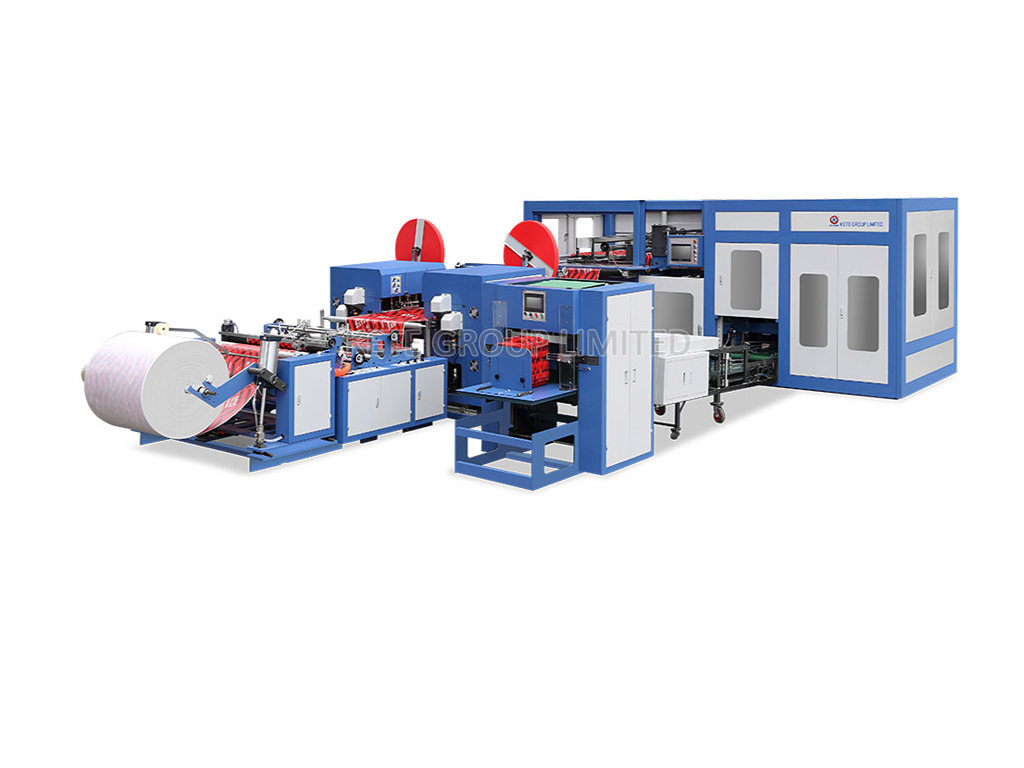
Non-Woven Bag Making Machine Types and Their Price Ranges
Before you can evaluate a price, you need to know which category of machine you’re looking at. The term “non-woven bag making machine” covers at least five distinct equipment types, each with a different cost structure and target user.
| Machine Type | Automation Level | Typical Price Range (USD) | Best For |
|---|---|---|---|
| D-cut / Flat Bag Machine | Semi-Automatic | $600-$5,000 | Startups, single bag type, low volume (<3,000 bags/day) |
| T-shirt / W-cut Bag Machine | Semi-Auto to Full-Auto | $5,000-$20,000 | Mid-volume shopping bag production, most common entry point |
| Box-Type / Gusseted Bag Machine | Full-Automatic | $15,000-$35,000 | Retail packaging, premium shopping bags with bottom gusset |
| 5-in-1 Multi-Function Machine | Full-Automatic | $35,000-$85,000 | Operations needing D-cut + T-shirt + box + handle + zipper bag on one platform |
| Integrated Production Line (with inline printing) | Full-Automatic | $50,000-$110,000+ | Large-scale exporters, full in-house production from printing to finished bag |
The reason a D-cut machine costs $600 and a 5-in-1 line costs $85,000 comes down to three things: how many operations the machine performs in one pass, how fast it runs, and what grade of components are inside. The next section gets into exactly where that money goes.
What Determines the Price: A Component-Level Breakdown
A non-woven bag machine’s cost is driven by four core subsystems. The drive system and sealing technology alone account for 55 65% of the total machine cost. Understanding what’s inside each one is the difference between paying for real engineering and paying for a paint job.
Servo Motors and Drive Systems: The Power Behind Precision
The single largest cost item in any non-woven bag machine is the drive system. This is also where the gap between a $5,000 machine and a $25,000 machine becomes immediately visible.
Stepper motors vs. servo motors the practical difference. A stepper motor moves in fixed angular increments. Think of it like a clock’s second hand ticking forward. A servo motor uses closed-loop feedback (encoder + controller) to continuously correct its position in real time. In a bag-making context, this means:
- Positioning accuracy: A servo-driven system with a 24-bit encoder the standard on mid-to-high-end machines using Yaskawa or comparable servo packages achieves positioning resolution in the sub-micron range when paired with an appropriate ball-screw drivetrain (Yaskawa, 2025). A stepper motor, by contrast, operates in the ±0.5mm range in practical production conditions.
- Continuous-run stability: Run a stepper motor at production speed for 8 hours and the waste rate from positional drift typically lands between 3-5%. A servo-driven system keeps it under 1%.
- Cost difference: A Yaskawa, Siemens, or Delta servo package adds 30-50% to the drive system cost compared to a domestic stepper setup. That premium buys you three years of predictable output, not three months.
What this means for your quote: If you see “servo motor” without a brand name, ask. A Japanese or German servo drive is a cost statement. An unbranded “servo” may be a hybrid stepper with servo-like control. Better than bare stepper, but not the same thing.
Ultrasonic Sealing vs. Heat Sealing: The Core Technology Cost
If the drive system is the most expensive subsystem, the sealing system is the one that determines whether your bags actually hold together.
Non-woven polypropylene fabric doesn’t seal well with heat alone. It shrinks and distorts before reaching melt temperature. That’s why ultrasonic welding is the standard for this category: a 20 kHz (standard) or 35 kHz (high-speed) vibration generates friction heat precisely at the sealing interface, creating a bond without scorching the surrounding material.
The cost drivers inside an ultrasonic sealing system:
- Generator and transducer: Taiwan-made generators (Ming You, Athena) are the industry benchmark for export-grade machines. Domestic alternatives cost 40-60% less but show wider frequency drift over continuous operation.
- Temperature control precision: ±1°C control (branded PID controller) vs. ±5°C (basic thermostat). At production speed say 80 bags per minute a 4°C overshoot can mean 3-5 bags with weak seals before the operator catches it. Multiplied across an 8-hour shift, that’s hundreds of rejects.
- Horn (welding tool) lifespan: 6-12 months depending on production volume. Replacement cost: $200-500. Budget machines often ship with softer-grade titanium horns that wear faster. It’s a deliberate cost-cut that becomes your maintenance burden.
Feeding Systems and Material Handling: The Stability Factor
The third major cost subsystem is the one buyers rarely think about until the machine jams for the third time in a morning.
A basic feeding system uses gravity and a simple roller. The fabric roll unwinds, passes through, gets pulled by the next station. A proper system adds three things: automatic tension control (magnetic powder brake or servo-controlled), EPC edge-position correction (±0.1mm precision, photoelectric sensor), and a servo-driven feed roller synchronized with the sealing and cutting cycles.
The practical impact: a machine with servo tension control and photoelectric edge correction runs at <1% stoppage rate due to feeding issues. A basic gravity-fed unit? 5-8% stoppage. At 80 bags per minute, that’s roughly 30-50 minutes of lost production per shift. Every shift.
Semi-Automatic vs. Fully Automatic: The Real Cost-Benefit Equation
Every buyer asks this question. Most answers stop at “full-auto costs more but saves labor.” That’s true but useless. You need to know exactly how much more, exactly how much it saves, and under what conditions the math flips.
The decision rests on three variables: your target daily output, your local labor cost, and how many bag types you plan to produce. If you’re doing under 5,000 bags per day and only one bag style, a semi-automatic machine may genuinely be the smarter financial choice. Above 10,000 bags per day, or switching between three or more bag types, full-auto pays for itself faster than most buyers expect.
Output Capacity and Labor Economics
Time to put real numbers to this.
- Semi-automatic: 30-60 bags per minute, 1-2 operators required (one feeding, one collecting/stacking). Realistic daily output: 2,000-4,000 bags factoring in operator breaks and material changes.
- Fully automatic: 60-120 bags per minute, 1 operator (loading raw rolls, collecting finished stacks). Realistic daily output: 5,000-8,000 bags.
Now the ROI calculation. Assume a local operator wage of $500/month:
- Semi-auto with 2 operators = $1,000/month in direct labor
- Full-auto with 1 operator = $500/month
- Labor saving: $500/month
- Additional output: roughly 100,000 more bags per month (based on 6-day weeks)
- At a conservative $0.03-0.05 net profit per bag, that extra output generates $3,000-5,000/month
- Combined labor saving + extra profit: $3,500-5,500/month
The price difference between a comparable semi-auto and full-auto machine from the same manufacturer typically ranges from $8,000-25,000. At the midpoint, the upgrade pays for itself in 4-7 months. After that, the full-auto machine is purely more profitable.
Bag Quality Consistency and Waste Reduction
Most buyers overlook a second dimension of the ROI: waste.
A semi-automatic machine, with its manual feeding and simpler controls, typically runs a 5-8% reject rate. Material shifts slightly during feeding, the cut is off by 2mm, the seal misses the edge, and the bag goes in the scrap bin. A fully automatic machine with servo-driven feeding and photoelectric edge control brings that down to 1-2%.
On a monthly production of 100,000 bags:
- Semi-auto at 5% waste = 5,000 rejected bags
- Full-auto at 1.5% waste = 1,500 rejected bags
- Difference: 3,500 bags saved per month
At $0.05-0.12 in material cost per bag (PP spunbond, 30-40g per standard shopping bag at $1.50-3.00/kg), that’s $175-420 in direct material savings per month. The bigger risk harder to quantify but more expensive is a batch of bags with inconsistent seals reaching your customer. One return order can cost more than the price difference between the two machines.
Hidden Costs: What the Sticker Price Doesn’t Tell You
The most important number in this article: a $20,000 machine costs roughly $26,000-32,000 by the time it’s running reliably on your factory floor. The gap is freight, duties, installation, and the first year of parts and maintenance. Almost no supplier includes this in their quote. Every buyer should include it in their budget.
Total Cost of Ownership = Machine Price + Freight & Duties + Installation & Training + First-Year Maintenance + Spare Parts.
Each piece, step by step.
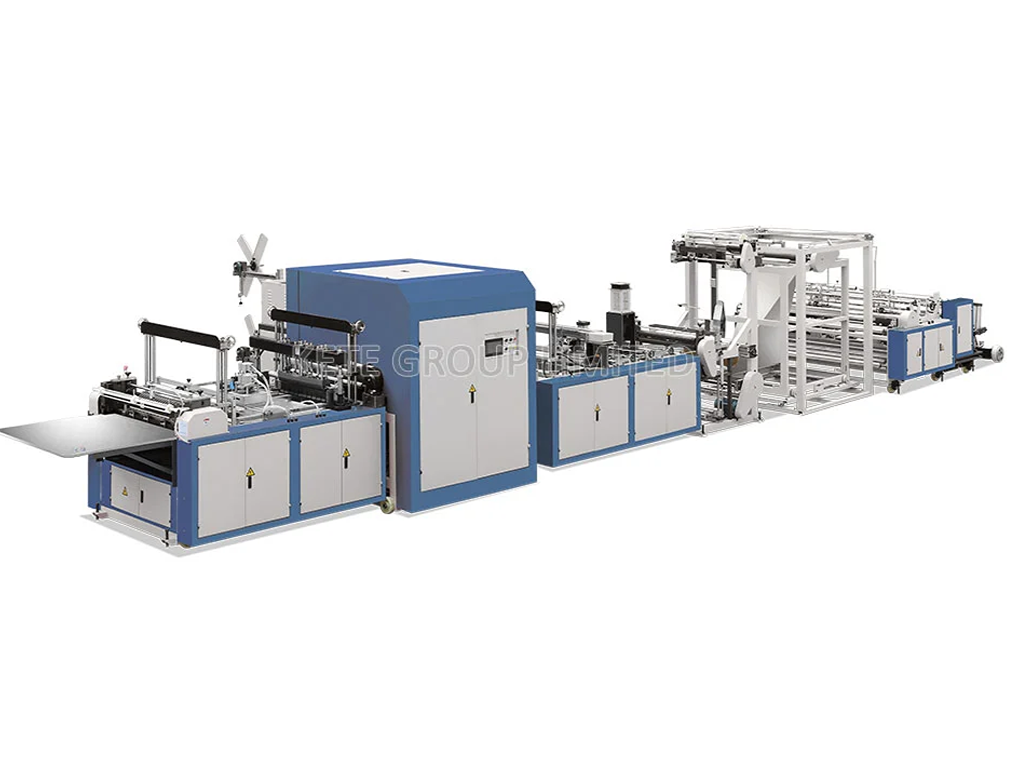
Freight, Duties, and Customs Clearance
If you’re importing from China (which most buyers are), here’s what the logistics look like:
- Sea freight: 25-35 days transit, $1,500-3,500 for a shared 20ft container (FCL or LCL depending on machine size). Wooden crate packaging adds $200-500.
- Air freight: 5-7 days, $5,000-12,000. Only worth considering for small semi-automatic machines or urgent replacement orders.
- Import duties: Varies dramatically by country. India charges approximately 7.5% Basic Customs Duty on bag-making machinery under HS code 84412000, plus 18% IGST on the CIF+duty total, plus a 10% Social Welfare Surcharge on the BCD amount. The effective duty burden comes to roughly 25-30% on the CIF value (CBIC Indian Customs Tariff, 2025). Several African and Southeast Asian nations apply reduced or zero-rated duties on manufacturing machinery. Check your country’s specific tariff schedule.
- Port handling: Customs broker fees, terminal handling, trailer/truck to your factory: budget an additional $500-1,500.
For a $20,000 machine shipped to India: roughly $3,000 freight + $5,700 duties (at ~28.5% effective rate on CIF) + $1,000 port handling = ~$9,700 in landing costs, bringing your total to just under $30,000 before the machine is even plugged in.
Installation, Commissioning, and Operator Training
The machine arrives. Now what?
Option A Fly in the manufacturer’s engineer: Airfare + accommodation ($1,500-3,500) + daily rate ($80-250/day × 3-7 days) = $2,000-5,000 total. This is the fastest path to production and the only path where installation errors are the manufacturer’s responsibility.
Option B Remote video guidance: Many suppliers offer this for free or a nominal fee. It works about 70% of the time, depending on your team’s technical baseline. The risk: install incorrectly and damage something, and you’ve voided the warranty. The repair is on you.
Option C Self-install from the manual: Possible but not advisable for your first machine. What takes an experienced engineer 3 days can stretch to 2-3 weeks for a team learning as they go. Those are weeks you’re paying rent and operator wages with zero output.
Maintenance, Spare Parts, and the Cost of Downtime
This is where the cheap-machine trap snaps shut.
A domestic-component machine (unbranded stepper motors, basic ultrasonic generator, gravity-fed material handling) typically costs $500-1,500/year in maintenance and replacement parts. A machine built with branded components (Yaskawa/Siemens/Delta servo, Athena/Ming You ultrasonic, servo tension control) runs $300-800/year. Lower because fewer things break, and what does break is easier to source.
Key consumable replacement cycles to budget for:
| Part | Replacement Cycle | Cost per Replacement (USD) |
|---|---|---|
| Ultrasonic horn (welding tool) | 6-12 months | $200-500 |
| Heating element (if heat-seal backup) | 8-14 months | $100-300 |
| Cutting blade | 3-6 months | $50-150 |
| Rubber roller (feed) | 12-18 months | $80-200 |
| Photoelectric sensor | 18-36 months | $30-80 |
The real cost isn’t the parts. It’s the downtime. A machine producing 5,000 bags per day at $0.05 profit per bag generates $250/day in contribution margin. One week of downtime waiting for a spare part to ship from China costs you $1,500 in lost profit. That’s more than most buyers spend on maintenance in an entire year. A machine that cost $5,000 less at purchase can easily cost $10,000 more over three years if it stops twice as often.
Supplier selection matters as much as machine selection. A manufacturer that stocks spare parts, responds within hours, and offers a warranty covering both parts and international shipping is a direct financial hedge against your biggest operational risk. For context, KETE one of the manufacturers serving this segment backs its non-woven bag machines with a 1-to-2-year warranty (industry standard is 1 year), free replacement parts including international courier costs, and 24/7 technical support with a sub-24-hour response commitment. Their Kenya-based client has been running two non-woven bag machines with flexo printers for over two years without major issues a real-world example of what consistent after-sales support looks like in practice (KETE Case Studies). When you’re comparing quotes, ask every supplier the same three questions: what’s your warranty period, do you cover the shipping on replacement parts, and what’s your average response time to a technical issue. The answers tell you more about total cost than the price on the quote.
Sourcing from China vs. India: Price, Support, and Lead Time Tradeoffs
Most non-woven bag machine buyers face a sourcing decision between Chinese and Indian manufacturers. Neither is universally better. The right choice depends on what you’re optimizing for.
| Factor | China | India | What This Means for You |
|---|---|---|---|
| Machine Price | $5,000-$110,000 (20-40% lower) | ¹9-35 lakh (~$11,000-$42,000) | China wins on price |
| Lead Time (incl. shipping) | 25-40d production + 25 35d sea = 50-75d total | 7-20 days (local delivery) | India wins on speed |
| Component Quality Ceiling | Can spec Yaskawa/Siemens/Athena | Mostly domestic components | China offers higher ceiling if you upgrade |
| After-Sales Responsiveness | Remote + paid engineer dispatch | Local engineer visit possible | India wins for buyers in/near India |
| On-Time Delivery (top-tier) | 98-100% | Varies; TrustSEAL-verified reliable | Both have reliable and unreliable players |
The decision framework: if your top priority is getting the lowest machine price and you’re comfortable managing international logistics, China is hard to beat. If you’re in South Asia and value fast delivery and local support above all else, an Indian supplier makes sense. If you want both competitive pricing and strong after-sales look for Chinese manufacturers who have invested in international service infrastructure, including warranty terms that cover parts and shipping, remote diagnostics, and engineer dispatch capability.
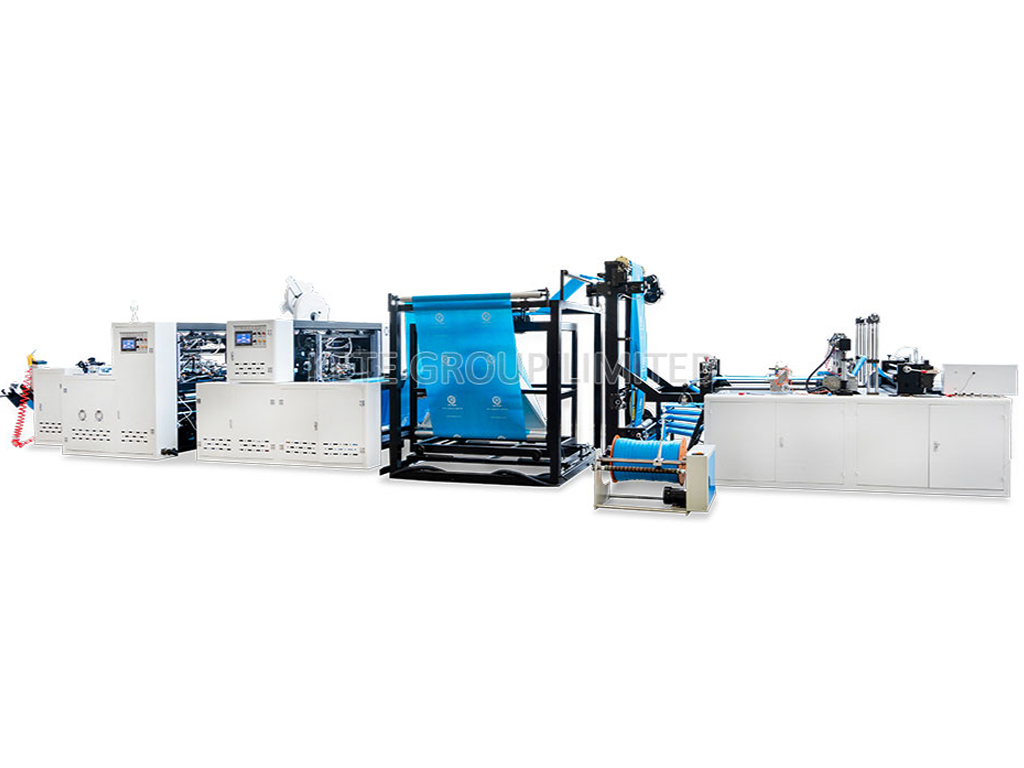
How to Evaluate Suppliers and Get the Best Value for Your Budget
You now understand what drives machine prices and where the hidden costs hide. Five steps to apply that knowledge when evaluating actual suppliers.
Step 1: Define your specs before talking to anyone. Write down: bag type(s), target dimensions, material GSM (typically 30-100g for PP spunbond), daily output target, and whether you need inline printing. Sending this to suppliers forces them to quote comparable configurations. Without it, you’re comparing apples to oranges. The cheapest quote is usually the one that omitted the features you actually need.
Step 2: Verify, don’t trust. For any supplier you’re seriously considering: (a) request a live video demonstration of the machine running your target material and bag dimensions not a pre-recorded marketing video; (b) ask for the CE certificate number and verify it against the EU’s official NANDO database; (c) on Alibaba, check the supplier’s on-time delivery rate (target e95%) and reorder rate (target e25%, the strongest signal of customer satisfaction). A supplier unwilling to do a live demo is a red flag, regardless of price.
Step 3: Compare total cost, not machine cost. Take the TCO formula from Section 4 and apply it uniformly to every quote. A machine that’s $3,000 cheaper but comes with a 1-year warranty (vs. 2 years) and no spare parts coverage will cost more over three years than a slightly pricier machine with comprehensive after-sales. Make every supplier quote against the same total-cost template.
Step 4: Test after-sales before you buy. Send a pre-sales email to each shortlisted supplier asking: “What is the price and lead time for a replacement ultrasonic horn for model X?” Measure the response time and the specificity of the answer. A supplier that takes three days to reply to a parts inquiry before you’ve paid them will not get faster after they have your money.
Step 5: Start small, scale fast. Buy one machine first. Run it for 3-6 months. If the machine performs and the supplier’s after-sales delivers, place a larger order. The cost of a pilot order is negligible compared to the cost of committing to a full production line with a supplier you’ve never worked with.
If you’d like to compare your specific bag type and volume requirements against KETE’s machine range and warranty terms, their team offers free consultations with customized quotes. Reach out through their contact page with your specs ready.
References
- Yaskawa Electric Corporation. “Sigma-7 Servo Products Rotary Servo Motors.” 2025. https://www.yaskawa.com/products/motion/sigma-7-servo-products
- Central Board of Indirect Taxes and Customs (CBIC), Government of India. “Indian Customs Tariff First Schedule, Chapter 84.” 2025. https://cbic.gov.in
- KETE GROUP. “Case Studies Non-Woven Bag Machine Projects.” https://www.ketegroup.com/case-studies/
- KETE GROUP. “Services Warranty and After-Sales Support.” https://www.ketegroup.com/services/
- KETE GROUP. “Contact Request a Consultation.” https://www.ketegroup.com/contact/
- KETE GROUP. “Official Website.” https://www.ketegroup.com/

