 EN
EN  RU
RU  ES
ES  FR
FR  AR
AR  PT
PT  IT
IT  ID
ID  KO
KO  TR
TR  DE
DE  VN
VN  TH
TH  IN
IN  JA
JA  ZH
ZH  MS
MS 
Every day, billions of plastic bags move through supermarkets, takeout counters, warehouses, and factory floors. Yet for something so universal, the journey from raw petrochemical feedstock to a finished, printed, quality-checked bag remains surprisingly opaque — even to many of the people who buy them by the container-load.
This article walks through the entire plastic bag manufacturing process, step by step. But unlike a typical factory-floor explainer, it also answers the question most readers don’t know to ask: once you understand how bags are made, how do you tell a well-made bag from a poorly made one, and a reliable manufacturer from a risky one?
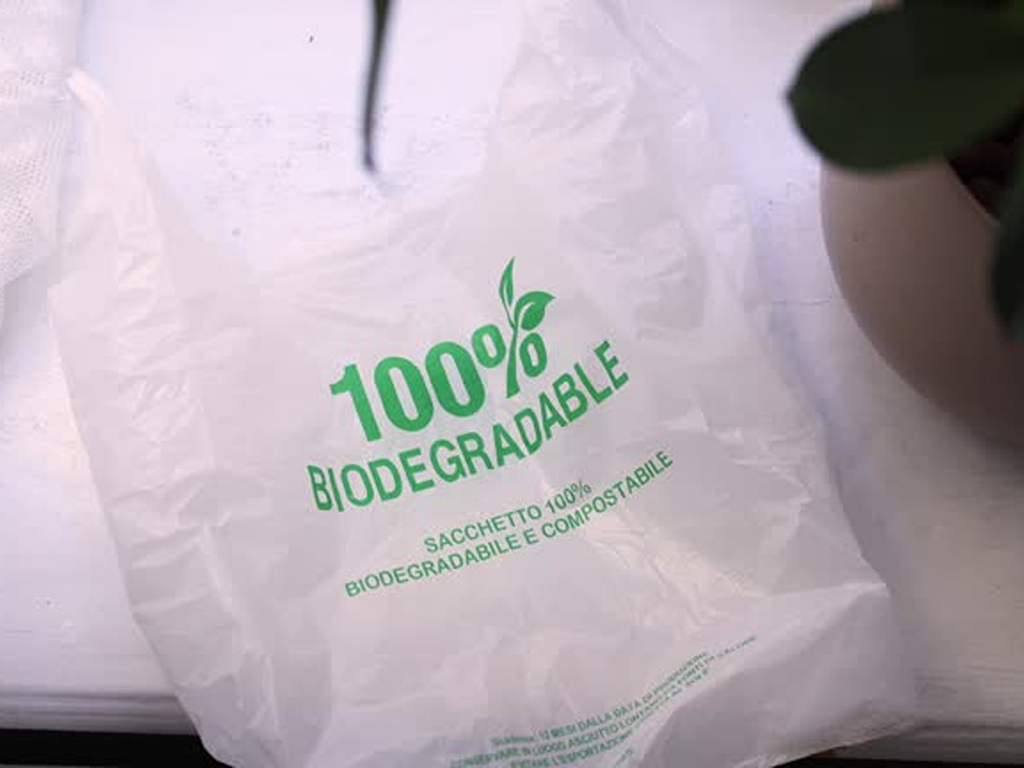
What Are Plastic Bags Made Of? — The Raw Materials
Before a single bag exists, the story starts with resin pellets: tiny, milky-white granules roughly the size of grains of rice, delivered in 25-kilogram sacks to factories around the world. These pellets are polyethylene, the most widely used plastic on the planet, and the specific type of polyethylene chosen determines almost everything about the finished bag — its softness, its strength, its clarity, and its cost.
| Resin Type | Full Name | Key Characteristics | Typical Bag Applications | Relative Cost |
|---|---|---|---|---|
| LDPE | Low-Density Polyethylene | Soft, flexible, transparent, excellent stretch and clarity | Produce bags, garment bags, bread bags, lightweight retail bags | $ |
| HDPE | High-Density Polyethylene | Stiff, strong, moisture-resistant, crinkly texture, semi-translucent | Grocery bags, trash bags, industrial liners | $ |
| LLDPE | Linear Low-Density Polyethylene | Combines LDPE’s flexibility with higher tensile and puncture strength | Stretch film, heavy-duty garbage bags, freezer bags | $$ |
| Bio-based / Biodegradable | PLA, PBAT, PBS, Bio-PE | Varies — compostable, bio-based, or both; generally lower heat resistance | Compostable produce bags, organic waste collection bags | $$$ |
Think of these resins as three types of baking flour. LDPE is cake flour: soft, pliable, and forgiving. HDPE is bread flour: stiff and structural. LLDPE is a high-gluten blend that stretches without tearing, combining the best of both worlds. The factory’s formulation decision — often a proprietary blend of two or more resins — is the first quality lever in the entire production chain.
Beyond the base resin, a small percentage of additives (typically 1-5% by weight) tune the film’s behavior: color masterbatch for branding and opacity, UV inhibitors to prevent sun degradation in outdoor storage, anti-static agents to stop bags from clinging together on fast-moving packing lines, and slip agents that reduce surface friction for easier handling. These additives are invisible in the finished product, but their presence — or absence — separates a bag that performs reliably from one that fails on the job.
The Core Process — Blown Film Extrusion Step by Step
Blown film extrusion is, at its heart, a balancing act between three forces: melt pressure from below, air pressure from within, and haul-off tension from above. Every quality parameter of the final film traces back to how well these three forces are controlled. Understand this balance, and you understand the entire manufacturing process.
Melting and Extrusion — From Pellet to Molten Tube
The journey begins at the extruder: a long, heated barrel containing a rotating screw that looks something like a heavy-duty auger. Resin pellets enter through a hopper at the top and are carried forward by the turning screw through three distinct heating zones.
In the feed zone (140-160°C for LDPE), pellets are preheated and conveyed forward. In the compression zone (170-190°C), the screw channel depth decreases, compressing the material and generating intense shear heat. In fact, 70-80% of the energy that melts the plastic comes from this mechanical shear, not from the barrel heaters. The metering zone (180-200°C) then homogenizes the melt into a uniform, bubble-free stream and pushes it through a filter screen to catch any contaminants.
At the end of the barrel, the molten plastic is forced upward through a circular die, emerging as a thick-walled tube called a parison. The die gap — the narrow ring-shaped opening the plastic squeezes through — is typically 0.8-2.0 mm wide, and its uniformity around the entire circumference is one of the first places where manufacturing precision matters. A die with inconsistent gap width produces film that is thicker on one side than the other. No amount of downstream adjustment can fully fix that.
Bubble Formation and Cooling — The Heart of Quality Control
This is the step that gives “blown film” its name — and it is where the most critical quality decisions are made.
Compressed air is injected through a hole in the center of the die, inflating the molten tube into a towering bubble that can rise 8 to 12 meters (roughly the height of a three-story building). The ratio between the bubble’s final diameter and the die diameter is called the Blow-Up Ratio (BUR), typically ranging from 1.5:1 to 4:1. A higher BUR produces film with more balanced strength in both directions but is harder to control; a lower BUR favors machine-direction strength at the expense of transverse properties.
As the bubble rises, air rings blast cool air onto its exterior surface. The point where the molten plastic crystallizes and turns from clear to translucent is called the frost line, and its height is one of the most carefully watched variables on the factory floor. A low frost line (closer to the die) produces film with better transparency but lower transverse tear strength, because the polymer molecules have less time to orient themselves before freezing in place. A high frost line gives the molecules more time to stretch and align, improving mechanical strength but reducing clarity. Operators adjust cooling air temperature, volume, and the internal bubble pressure to position the frost line at exactly the right height for the product specification.
On high-output lines, an Internal Bubble Cooling (IBC) system exchanges the warm air inside the bubble with cooled air, boosting production rates by 20-40%. Combined with automatic air rings that continuously measure film thickness around the circumference and adjust cooling in real time, the best modern lines can hold thickness variation to within ±3-5%. On a manually adjusted line without these systems, ±8-12% is more typical. That difference shows up as bags that feel inconsistent, seal unpredictably, or fail under load. Food-grade applications demand even stricter barrier standards — see our guide to plastic bags for food packaging .
Collapsing and Winding — From Bubble to Roll
At the top of the tower, a set of angled stabilizing panels (sometimes called an A-frame or collapsing frame) guides the now-solidified bubble downward into the nip rolls. These powered rollers flatten the tube into a double-layer sheet called lay-flat film and pull the entire bubble upward at a controlled speed, typically 50-150 meters per minute. The nip also creates an airtight seal that maintains the bubble’s internal pressure; lose that seal, and the bubble collapses.
Before winding, the film may pass through a corona treatment station. This applies a high-voltage electrical discharge that bombards the film surface, raising its surface energy from roughly 30-32 dynes per centimeter (untreated PE) to 38 dynes or higher. The change is invisible to the eye but essential for printing: without it, ink beads up on the surface like water on wax. Finally, the lay-flat tube is wound onto a master roll, which can reach 800-1,200 mm in diameter and weigh hundreds of kilograms, ready for the next stage.
From Film to Bag — Converting and Finishing
The bag-making machine is where the film roll finally becomes a recognizable product. At its core, every bag-making operation boils down to three mechanical actions applied in rapid sequence: cut, seal, and stack. The precision of these actions — measured in fractions of a millimeter and milliseconds — determines whether a bag holds groceries or splits at the seam.
Cutting and Heat Sealing — How a Continuous Tube Becomes Individual Bags
The film roll unwinds into the bag-making machine, where a heated sealing bar descends at precisely timed intervals. The bar melts the two layers of film together under controlled pressure, creating a permanent bond; this is the bottom seal of the bag. A blade follows immediately behind, slicing the tube at the seal line to separate each bag from the continuous film.
Three variables govern seal quality: temperature, pressure, and dwell time. For LDPE, the sweet spot is typically 120-150°C at 0.2-0.5 MPa of pressure, with the bar held in contact for 0.2-1.0 seconds depending on film thickness. Too little heat or time, and the seal peels open under load. Too much, and the film burns through, creating pinholes and weak spots. A well-sealed bag should retain at least 80% of the parent film’s tensile strength at the seal. That number separates a production line with proper process control from one running on guesswork.
The machine’s motor type matters more than most buyers realize. Servo-driven machines, which use closed-loop feedback to control the film feed with ±0.01 mm precision, can run at 150-300 bags per minute while maintaining consistent bag length. Stepper-motor machines, which operate open-loop at ±0.1 mm precision, typically top out at 80-120 bags per minute. The $2,000-$3,000 premium for servo pays for itself in speed, accuracy, and reduced material waste within months. For a deeper look at surface treatment and ink chemistry, see our guide to printing on plastic bags .
Handle Punching, Gussets, and Special Features
Most bag-making machines accept modular tooling for additional features. Handle punching uses a hardened steel die to stamp out the carrying holes in T-shirt bags and shopping bags; a single die set lasts 500,000 to 1 million cycles before requiring re-sharpening. Side gussets, typically 20-80 mm deep, are folded into the film before sealing, allowing the bag to expand into a three-dimensional shape that holds more volume. Other common add-ons include zipper closures (which slow the machine by 20-30% but command a premium price), tear-off perforations, ventilation holes for produce bags, and hang holes for retail display hooks. These modules can usually be combined on a single production line, letting one machine produce multiple bag styles by swapping tooling rather than requiring separate equipment.
Counting, Stacking, and Packaging for Shipment
At the end of the line, optical sensors count each bag as it exits and automatically separate the stream into stacks — typically 50, 100, or 200 bags per bundle, with counting accuracy of ±1 bag per stack. The packaging format depends on the end use: individually boxed for retail shelf display, wound onto rolls for continuous-dispense applications like produce departments, or stacked on wire wickets for automated filling lines. Each carton is labeled with the bag type, dimensions, material specification, batch number, and production date. That small label becomes critical when tracing a quality issue back to its source six months later.
Printing on Plastic Bags — Flexography and Rotogravure
Not every plastic bag needs printing, but for those that do — branded shopping bags, labeled food packaging, barcoded industrial sacks — the printing method can be as important as the bag itself. Two technologies dominate.
Flexographic printing uses flexible photopolymer plates wrapped around rotating cylinders, with each color requiring its own plate and print station. Fast-drying, low-viscosity inks transfer from an anilox roller to the plate to the film surface. It is the workhorse of the industry: plate costs run $100-$300 per color, making it economical for short-to-medium runs, and modern presses reach 250 meters per minute. Rotogravure printing, by contrast, etches the image directly into a chrome-plated copper cylinder. The setup is far more expensive at $500-$2,000 per color, but it delivers exceptional detail and consistency across millions of impressions. Gravure is the choice for ultra-high-volume jobs where the per-unit printing cost must approach zero.
Both methods require the film to have been corona-treated beforehand — that surface-energy boost from the extrusion stage is what lets the ink grip rather than slide. A small but growing number of factories are also adding digital inkjet printing for short-run, variable-data, or personalized packaging jobs, eliminating plate costs entirely at the expense of speed.
The machines behind the bags matter as much as the materials. Whether you’re evaluating your first extrusion line or upgrading an existing one, getting the equipment right determines everything downstream.
Explore Bag Making EquipmentQuality Control — The Invisible Difference Between Good and Bad Bags
Two factories can run the same resin, the same machine brand, and the same bag specification, and produce results that are worlds apart. The difference is quality control, and it happens not at one checkpoint but at every stage.
| Production Stage | What’s Checked | How It’s Measured | What Buyers Should Ask About |
|---|---|---|---|
| Incoming resin | Melt flow index, moisture content, color batch consistency | Laboratory MFI tester, moisture analyzer | “Do you test every resin lot before it enters production?” |
| Film extrusion (in-line) | Thickness profile, bubble stability, frost line position, gels/fisheyes | Beta/gamma gauge or capacitive sensor (±0.1 µm precision), visual inspection | “Can you show me a real-time thickness scan from your last production run?” |
| Printing (in-line) | Color consistency vs. standard, registration accuracy, ink adhesion | Spectrophotometer (ΔE target <2.0), cross-hatch tape test | “What is your color tolerance — and do you measure it continuously or by sampling?” |
| Bag converting (in-line) | Seal strength, bag dimensions, handle cut accuracy | Tensile tester (ASTM F88 for seals), calipers, visual inspection | “What seal strength does your QC spec require — and how often do you test?” |
| Final inspection (pre-shipment) | Visual defects, count accuracy, packing integrity, labeling | AQL sampling (typically Level II, AQL 2.5 for major defects / 4.0 for minor) | “Do you use AQL sampling or 100% inspection? Can I engage a third-party inspector?” |
A factory that can show you a real-time thickness scan from the extrusion line is running a fundamentally different operation from one that only checks thickness after the roll is finished and can only say “looks fine.” The first factory can prove its process is in control; the second is hoping. When you visit a factory or commission an audit, watch for these signals: Are QC records handwritten or digital? Does the lab have calibrated instruments or just a micrometer and a scale? Do operators log process parameters every hour or only when something goes wrong? The answers tell you more than any certificate on the wall.
The Shift Toward Sustainability in Plastic Bag Production
No discussion of plastic bag manufacturing in 2026 is complete without addressing the environmental dimension. This is not a separate moral argument; it is a practical reality reshaping the industry from the resin supplier to the end customer.
Conventional polyethylene bags carry a carbon footprint of roughly 52-150 kg of CO₂ equivalent per 1,000 bags, with half of those emissions concentrated in the raw material extraction and polymerization stages. Three technical pathways are emerging to reduce that number, and most forward-looking manufacturers are investing in at least one.
Mechanical recycling of post-industrial PE waste into rPE (recycled polyethylene) currently offers the best environmental return. Life-cycle analyses consistently rank it ahead of bio-based alternatives because it avoids the energy cost of making new polymer entirely. A common industrial formulation blends 30% rPE with 70% virgin resin, maintaining adequate film strength while significantly reducing the carbon footprint. Bio-based polyethylene, produced from sugarcane ethanol rather than petroleum, is chemically identical to fossil-derived PE — meaning it runs on the same extrusion lines — but its production remains energy-intensive and currently costs more. Compostable materials like PLA (polylactic acid), PBAT, and PBS represent the third path: they can fully biodegrade under industrial composting conditions (58°C, >60% humidity, 90-180 days), though they require dedicated waste-collection infrastructure that remains patchy in most markets.
The regulatory landscape adds urgency. The EU’s Packaging and Packaging Waste Regulation (PPWR), various national single-use plastic bans, and Extended Producer Responsibility (EPR) schemes are pushing bag buyers worldwide to demand lower-impact options. For anyone sourcing plastic bags at scale, a manufacturer’s environmental roadmap — what recycled content they can incorporate today, and what alternative materials they are testing for tomorrow — is rapidly becoming as commercially relevant as their unit price.
How to Evaluate a Plastic Bag Manufacturer — A Buyer’s Practical Checklist
Understanding how plastic bags are made gives you the vocabulary. Knowing what to look for in a manufacturer gives you the leverage. The distance between “a factory that makes bags” and “a factory that makes bags you can stake your business on” comes down to three layers of evaluation: the machines they run, the processes they follow, and the proof they can show.
What to Look for in Production Equipment
When you step onto a factory floor — whether in person or via video tour — the machinery is the first honest signal. Start with the extruder: ask about the screw’s brand and origin. A screw from a recognized specialist like Wafo or Reifenhäuser typically lasts 5-8 years with proper maintenance; a generic domestic screw might need replacement in 2-4 years, and a worn screw produces inconsistent melt quality long before it fails visibly. Ask whether the line has an automatic air ring with in-line thickness gauging. If it does, the factory can prove, with data, that their film meets spec across the entire roll. If it does not, you are relying on operator experience — and operator experience varies with who showed up for the night shift.
On the bag-making side, look for servo-driven machines with alloy-steel sealing blades. Servo control means bag length stays consistent through an entire production run; alloy blades hold their edge through hundreds of thousands of cycles, producing uniform seals hour after hour. These are not exotic, hard-to-find features. They are minimum viable equipment for professional-grade production. If a factory is still running stepper-motor machines with carbon-steel blades, their cost structure may be lower, but the quality ceiling is lower too.
Red Flags in Factory Audits — What Experienced Buyers Watch For
A factory’s machines are important. Its habits are more important. Here are five signals that separate a disciplined operation from a careless one:
- Raw material storage: Resin sacks stacked directly on concrete floors, no temperature or humidity controls, no first-in-first-out labeling. Moisture absorbed by improperly stored resin creates steam bubbles during extrusion, appearing as fisheye defects across the film surface.
- Shop floor cleanliness: Loose pellets scattered underfoot, dust on equipment, film rolls stored uncovered. Contaminants that get into the film don’t come out — they end up printed inside your customer’s bag.
- Process records — or lack of them: If the only quality data you see is a final-inspection checklist, the factory has no process control. Real quality management means temperature curves, thickness scans, and seal-strength readings logged at regular intervals, not just when a customer complains.
- Tooling condition: Sealing bars showing visible oxidation, cutting blades with nicks or rounded edges, dies still in service past their rated life. Worn tooling produces inconsistent seals and ragged cuts; it also tells you the factory prioritizes short-term cost avoidance over consistent output.
- Operator discipline: Watch whether workers at critical stations (die gap adjustment, ink mixing, seal-bar temperature setting) are following written standard operating procedures or just doing what they’ve always done. A factory without SOPs is a factory where quality walks out the door when the senior operator retires.
Certifications That Matter — ISO, BRCGS, FDA, and Beyond
Certificates are the easiest thing for a factory to claim and the easiest thing for a buyer to skip verifying. Do not skip.
| Certification | What It Covers | What to Verify |
|---|---|---|
| ISO 9001:2015 | Quality management system — the universal baseline | Certificate number and issuing body; check the scope covers bag/film production, not just “trading” |
| BRCGS Packaging | Food safety for packaging materials — required by most major food brands | Grade (AA is highest); verify on the BRCGS public directory |
| FDA 21 CFR 177.1520 | US food-contact compliance for olefin polymers | Ask for a third-party migration test report, not just a self-declaration |
| EU 10/2011 + REACH SVHC | EU food-contact and chemical safety compliance | Lab test report from an ISO 17025-accredited lab |
| EN 13432 / ASTM D6400 | Industrial compostability certification | Verify through TÜV, BPI, or OK Compost’s public certification databases |
Certificates are the starting line, not the finish. A manufacturer who is transparent about their certifications — happy to share certificate numbers, testing lab reports, and audit dates — is already in the top tier. Beyond paperwork, however, there is another dimension that separates transactional suppliers from true manufacturing partners: what happens after the machines are delivered and the first production run begins. The single most underestimated factor in machinery procurement, whether you are buying bag-making equipment, printing lines, or a complete converting system, is after-sales support. A manufacturer that provides both remote technical support and on-site installation and training (such as Kete’s field engineering teams, who commission equipment at the customer’s factory and train local operators) fundamentally changes the risk equation for a buyer, especially one importing equipment across continents for the first time.
References
- British Plastics Federation. “Blown Film Process.” BPF Plastipedia. bpf.co.uk
- RSC Sustainability. “Comparative Life Cycle Assessment of Virgin Polyethylene and Bio-Polyethylene with Recycled Polyethylene.” 2025–2026. sciencedirect.com
- ASTM International. “ASTM D882-18: Standard Test Method for Tensile Properties of Thin Plastic Sheeting.” 2018. astm.org
- ASTM International. “ASTM F88-21: Standard Test Method for Seal Strength of Flexible Barrier Materials.” 2021. astm.org
- Rutan Poly Industries. “How Poly Bags Are Manufactured.” rutanpoly.com