PT
PT  EN
EN  RU
RU  ES
ES  FR
FR  AR
AR  IT
IT  ID
ID  KO
KO  TR
TR  DE
DE  VN
VN  TH
TH  IN
IN 
01.What Is Razor Slitting and How Does It Work?
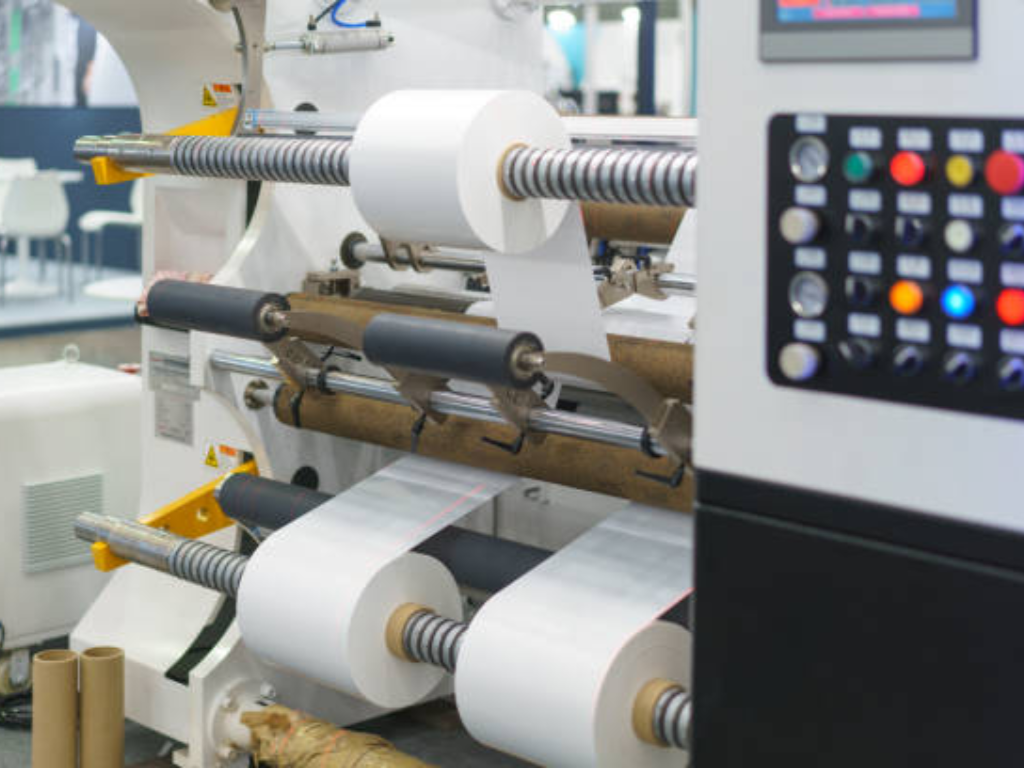
Razor slitting is a web converting process in which a stationary razor blade slices through a moving roll of material, separating it into narrower widths. Unlike shear slitting where two rotating knives meet in a scissor-like action razor slitting relies on tensile stress fracture. The blade tip creates a controlled crack that propagates 1 3 mm ahead of the cutting edge, cleaving the material before it ever physically touches the blade’s full surface.
Think of it like sliding an envelope across a fixed letter opener. The envelope moves, the blade stays still, and the cut happens because the material drives itself into the edge. The thinner the envelope, the cleaner the cut which is exactly why razor slitting dominates in thin-film applications.
There are two common configurations. Razor-in-air positions the blade in open span between rollers, making it the simplest setup and ideal for delicate substrates where minimal contact is desirable. Razor-in-groove mounts blades inside grooves on a supporting roll, providing greater stability and accuracy the go-to choice when slit-width precision matters or when the material is slightly thicker.
The method’s appeal is straightforward: a typical razor slitting line can run at 200 600 m/min, achieve minimum slit widths as low as 5 mm, and requires only 10 15 minutes for a full blade changeover. The blades themselves cost pennies compared to the rotary knives used in shear systems. But this simplicity comes with a trade-off: blade life is short, and the method is unforgiving with the wrong material. Understanding those boundaries is what the rest of this guide is about.
02.Razor vs. Shear vs. Score: Which Slitting Method Is Right for You?
Before diving into blade catalogs and machine specs, answer three questions:
- What material are you slitting, and how thick is it?
- Does your line run long campaigns of a single SKU, or frequent changeovers between different widths and materials?
- What is your operator team’s technical skill level?
Your answers will naturally point toward one method and away from the others.
Razor Slitting The Economical Choice for Thin Films
Razor slitting is the go-to method for thin, non-abrasive plastic films BOPP, PET, PE, CPP, PVC, and lightweight laminates typically in the 12 175 ¼m (0.5 7 mil) range. At its best, it delivers clean, dust-free edges at speeds of 300 600 m/min with slit-width tolerances around ±0.5 mm.
The economics are compelling: blades are disposable and cost-effective, setup takes 10 15 minutes, and the system requires minimal capital investment. For a converter running multiple short jobs per shift, razor’s quick-change capability keeps the line moving.
The ceiling is just as real. An uncoated carbon-steel blade cutting standard PE film lasts roughly 20 minutes before edge quality degrades meaning 24 blade changes per 8-hour shift (Sollex, 2024). Thicker or abrasive materials chew through blades in minutes. Above 600 m/min, friction heat can melt certain films, leaving raised bead-like edges. And if your material contains filler particles calcium carbonate, titanium dioxide, silica anti-block blade life collapses.
Shear Slitting The Industrial Workhorse for Versatility and Precision
Shear slitting uses two rotating knives a male blade and a female anvil that meet in a continuous scissor cut. It handles virtually any flexible web: films from 50 ¼m to over 500 ¼m, paper, board, aluminum foil, nonwovens, industrial fabrics, adhesive tapes, and multi-layer laminates.
Performance metrics tell the story. Shear systems achieve ±0.1 mm slit-width tolerance five times tighter than razor. Speeds routinely exceed 600 m/min, with well-tuned lines running past 1,000 m/min. Blade life spans 8,000 12,000 km between regrinds, orders of magnitude beyond disposable razor blades.
The trade-offs are complexity and cost. Setup demands 30 45 minutes and a trained technician who understands knife overlap (typically 0.0005″ 0.001″ for films, 0.001″ 0.002″ for paper), cant angle (0.5° 1.5°), and side force (4 8 lbs). Initial capital investment for knife holders, shafts, and positioning systems is significantly higher. And resharpening while cheaper over the long run than buying disposable blades requires a maintenance schedule and spare knife inventory.
Score/Crush Slitting When Pressure Does the Cutting
Score slitting presses a circular blade against a hardened anvil roller (60 65 HRC) with 2 8 lbs of force, crushing the material apart rather than cutting it. It serves a narrow but important niche: pressure-sensitive adhesive tapes, label stock liners, and thick paperboard applications where razor blades would gum up and shear knives would be overkill.
This method generates the most dust of the three and produces the roughest edge quality. If your application isn’t specifically tape, labels, or heavy paperboard, razor or shear is almost certainly the better choice.
03.Which Materials Are Best Suited for Razor Slitting?
The razor slitting sweet spot is narrow but well-defined: non-abrasive, thin-gauge flexible webs. Two factors decide whether your material belongs in a razor slitter: thickness and filler content.
Below is a material-by-material suitability reference. Use it as a starting point always test with your specific grade and line speed.
| Tipo de material | Typical Thickness Range | Razor Suitability | Recommended Blade | Notes |
|---|---|---|---|---|
| BOPP | 10 60 ¼m | Excelente | Carbon steel, Z-coating | Cleanest razor application; minimal blade wear |
| PET | 12 175 ¼m | Bom | Stainless steel, TiN coating | Heavier gauges (>100 ¼m) push razor limits |
| LDPE / HDPE | 15 200 ¼m | Bom | Z-coating (Zero Friction) | Soft films; Z-coating critical above 50 ¼m |
| CPP | 15 80 ¼m | Excelente | Carbon steel, Z-coating | Similar to BOPP; clean cuts |
| PVC | 15 200 ¼m | Conditional | Stainless steel, ceramic coating | Can be abrasive depending on plasticizer content |
| Folha de alumínio | 6 50 ¼m | Excelente | Aço inoxidável | Thin foil cuts beautifully; harder tempers wear faster |
| Metallized Film | 12 60 ¼m | Conditional | Ceramic or TiN coating | Metal layer accelerates wear on uncoated blades |
| Laminates (film-to-film) | 30 150 ¼m | Conditional | Ceramic coating | Adhesive layers and multi-material stacks stress blades |
| Não tecidos | 30 200 gsm | Conditional | Tungsten carbide | Fiber abrasiveness varies widely by type and bonding method |
| Paper / Paperboard | 50 300+ ¼m | Not recommended | Abrasive fibers destroy razor blades; use shear slitting |
The pattern is clear: if your material is d175 ¼m, non-abrasive, and unfilled, razor slitting will serve you well. Cross any one of those lines thicker, more abrasive, or filler-loaded and you should be looking at shear.
04.Razor Blade Selection: Materials, Coatings, and Setup Parameters
Here’s the single most underappreciated fact in razor slitting: blade selection determines your effective production uptime, not just your consumables cost.
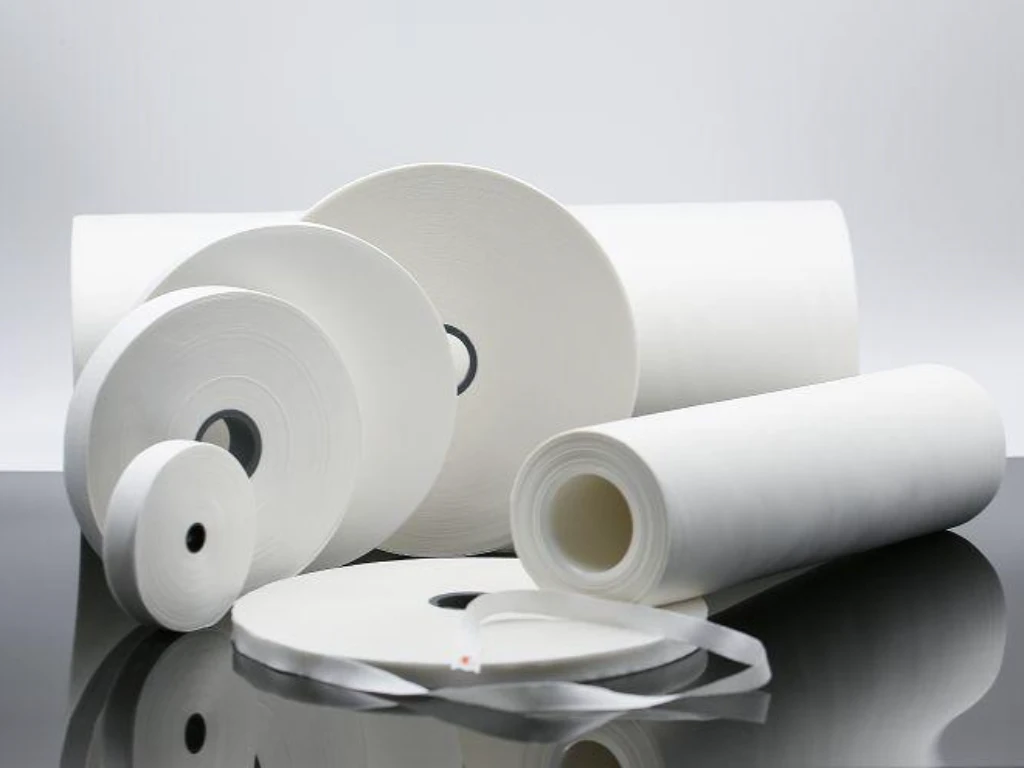
Run the numbers. An uncoated carbon-steel blade on clean PE film lasts about 20 minutes. That’s 24 changes per shift. At 3 5 minutes per change stopping the line, replacing the blade, rethreading you lose 72 120 minutes of production. Nearly 25% of the shift gone to blade changes. Upgrade that same position to a Zero Friction (Z) coated blade, and the same job runs for weeks without a change. The blade costs more per unit, but the math is devastating in favor of the coated option.
Blade Materials and Coatings Matching the Edge to Your Material
Blade performance is a function of substrate material, coating, and the specific film running against it. Cadence, Inc.’s industry-standard razor slitting guide provides a wear-index baseline that makes comparison practical (Cadence, Inc., 2024).
| Blade Material | Coating | Wear Index (vs. Carbon Steel) | Melhor para | Typical Life (Clean PE Film) |
|---|---|---|---|---|
| Aço carbono | None | 1× | Low-budget, short-run, clean films | ~20 minutes |
| Aço inoxidável | None | ~10× | Corrosion-sensitive environments | ~3 4 hours |
| M2 HSS | Ceramic (K) | ~16× | Films with mild fillers (CaCOƒ, TiO‚) | ~2 weeks |
| Solid Tungsten Carbide | None | ~80× | Heavy-duty films, abrasive/recycled plastics | Months |
| Zirconia Ceramic | None (self-sharpening) | ~100× | High-abrasion films, calcium carbonate-filled | Months |
| Tungsten Carbide | Diamond (Diamaze®) | ~1,300× | Maximum-life applications; extreme abrasives | 6 12 months |
Coatings add their own logic. Zero Friction (Z) reduces drag on thin stretch films the go-to for PE below 50 ¼m. Ceramic (K) handles abrasive fillers like calcium carbonate and titanium dioxide. TiN (T) titanium nitride, the gold-colored coating works well for general-purpose PET and PE. Full Ceramic (X) protects against heavily inked or printed films where the ink layer itself acts as an abrasive.
Practical advice: ask your blade supplier for samples and run a timed test. Record minutes to first visible burr on the slit edge. Quantify don’t guess. A $2 blade that lasts 20 minutes costs more per running hour than a $20 blade that lasts two weeks.
Blade Setup Parameters Angles, Depth, and Positioning
A perfect blade in the wrong position cuts worse than a dull blade in the right one.
Angle of attack. The standard starting point is 45° to the material plane. Lower angles (30 40°) produce a longer slicing action and spread wear across more of the cutting edge ideal for very thin films where minimal drag is critical. Higher angles (50 60°) concentrate force on a shorter edge segment, useful when the material resists penetration.
Penetration depth. The formula: blade extension = material thickness + 50% of material thickness. For 50 ¼m PE, that’s 75 ¼m of blade protruding past the material plane. Too shallow and the blade skips the web runs uncut. Too deep and the blade acts as a brake, increasing drag and risking web breaks.
Groove centering. In razor-in-groove setups, the blade tip must sit exactly on the groove centerline. Offset to either side produces asymmetric cutting forces, and the result is a wavy slit line one of the most common quality complaints on razor slitting lines. The groove width should exceed blade thickness by 0.002″ 0.005″.
Finally, observe the 10% tension rule: web tension in the slitting zone should not exceed 10% of the material’s elastic limit. Beyond that threshold, the material stretches asymmetrically on either side of the blade, and slit quality degrades rapidly a principle established by Dr. David Roisum in his foundational work on web handling mechanics.
05.How to Choose a Razor Slitting Machine: Key Specifications and Decision Criteria
By this point, you know your material belongs in a razor slitter. The next question: which machine?
Start by documenting your own requirements before looking at anyone’s spec sheet. Write down: (1) maximum web width your operation handles (typical industrial range: 600 2,600 mm), (2) your target line speed (100 600 m/min), (3) minimum slit width you need to produce (5 50 mm, depending on application), (4) maximum finished roll diameter, and (5) your changeover frequency daily, weekly, or per-shift.
With those numbers in hand, evaluate machines against this checklist:
| Especificação | What to Look For | Why It Matters |
|---|---|---|
| Max Web Width | Match to your widest incoming roll + 10% margin | Future-proofs investment; avoids buying a second machine for wider jobs |
| Max Speed | 300 600 m/min for razor systems | Higher speed increases throughput but amplifies blade wear and heat; balance is key |
| Min Slit Width | d10 mm for most film applications | Narrower capability supports more order types; critical for label and tape converters |
| Slitting Accuracy | ±0.3 mm or better | Determines whether finished rolls meet customer specs without rework |
| Diâmetro de desbobinagem / rebobinagem | Up to ¦1,800 mm unwind, ¦1,500 mm rewind | Larger diameters reduce roll-change frequency and splice waste |
| Controlo da tensão | Closed-loop with load cells, ±1N precision | The single biggest factor in consistent slit quality across the full width |
| Blade Positioning | Manual for low-frequency changeovers; automatic/servo for high-mix operations | Auto-positioning cuts setup time from 30 minutes to under 5 on multi-width jobs |
| PLC & Controls | Siemens, Yaskawa, or Delta with touchscreen HMI | Determines ease of use, recipe storage, and diagnostic capability |
| Safety Compliance | CE, ISO 12100, or local equivalent | Non-negotiable; also affects insurability and operator acceptance |
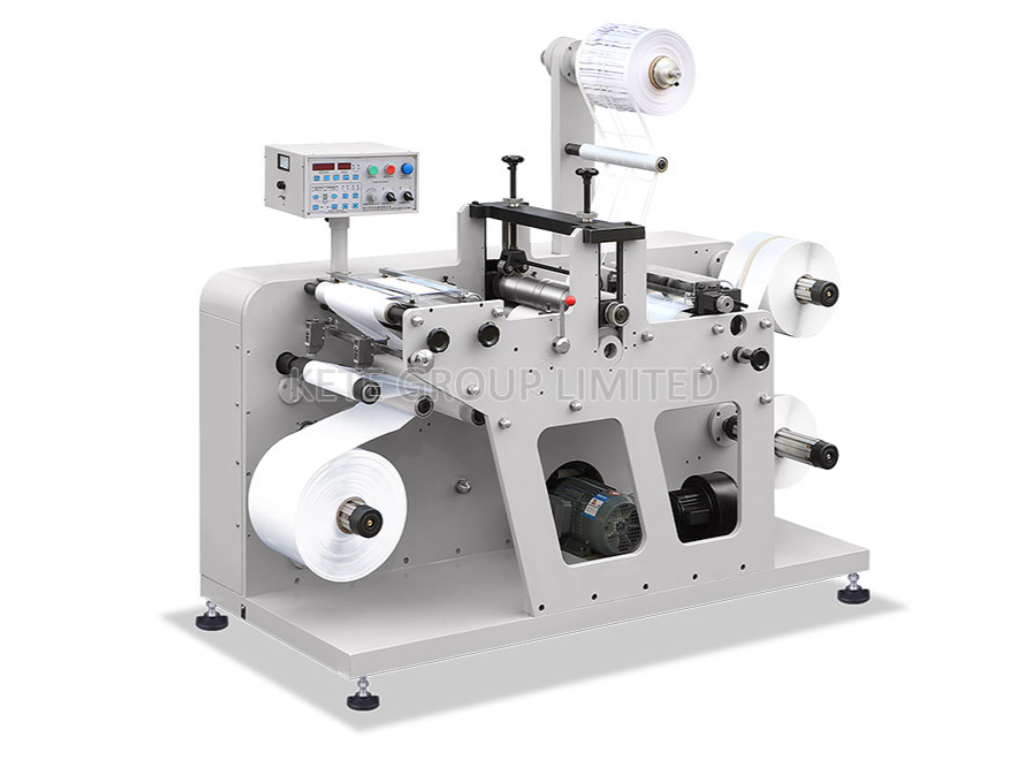
When evaluating suppliers, look beyond the spec sheet. For example, manufacturers like KETE offer slitting machines spanning center, surface, and center-surface winding configurations with razor, shear, and score method support on a single platform backed by CE and RoHS certification. Their slitting line achieves ±0.1 mm accuracy with minimum slit widths down to 5 mm, and global service coverage across 80+ countries includes on-site installation and training. A 1 2 year warranty with dedicated after-sales support at service@ketegroup.com provides a useful reference point for what a well-rounded supplier package should include. To explore their full range, visit the slitting machine product line or review their warranty and global service coverage.
Beyond the spec sheet, two supplier qualities matter more than any individual number. First, trial-cut capability can the supplier run your actual material on their machine before you commit? A machine that slits BOPP beautifully may struggle with your specific PET grade, and the only way to know is to test. Second, after-sales reach what’s the response time for technical support in your region, and how quickly can spare parts arrive? A machine with perfect specs but no local service is a liability, not an asset.
06.Common Razor Slitting Problems and How to Solve Them
Every razor slitting line develops problems. The difference between a line that runs profitably and one that bleeds money in scrap and downtime is how fast those problems get diagnosed. Here are the five most common issues, with likely causes and immediate fixes.
Rough or fuzzy slit edge. The blade is dull or the angle is too steep. Replace the blade first it’s the cheapest variable to eliminate. If the problem returns within minutes, try a lower attack angle (30 40°) and verify your material isn’t carrying abrasive fillers.
Melt beads along the cut edge. Friction heat is exceeding the film’s softening point around 120°C for PE, 160°C for PP. Reduce line speed by 10 20% as a first step. For a permanent fix, switch to a Zero Friction (Z) or PTFE-coated blade, which generates less heat at the same speed.
Wavy or wandering slit line. The web tension is asymmetric the left and right sides of the blade are pulling at different forces. Check your tension zone settings and verify the blade is centered in its groove. Apply the 10% tension rule: if total tension exceeds 10% of the film’s elastic limit, reduce it and re-test.
Web breaks at the slitting point. Either the blade is too thick for the material (creating excess drag) or the incoming web tension is too high. Switch to the thinnest available blade 0.009″ (0.23 mm) is a good starting point for films under 50 ¼m and reduce unwind tension incrementally until breaks stop.
Blade life abnormally short. Your material likely contains abrasive fillers you haven’t accounted for. Common culprits: calcium carbonate (CaCOƒ) as a cost-reducing filler, titanium dioxide (TiO‚) for whiteness, or silica (SiO‚) as an anti-blocking agent. Confirm the formulation with your film supplier, then upgrade to a ceramic-coated or solid tungsten carbide blade matched to the specific filler type.
Keep a simple log: date, material, blade type, minutes to first quality defect. Within a month, you’ll have enough data to optimize blade selection by material and likely cut your consumable spend by half while reducing downtime.
If you’re comparing suppliers for your next slitting line, KETE’s full catalog with specifications and application guidance is available at ketegroup.com.
Referências
- Sollex. “Razor Slitting Guide Industrial Razor Blades for Film & Foil.” 2024. https://www.sollex.com/blog/post/razor-slitting-technique-slitter-rewinder
- Cadence, Inc. “Razor Slitting Guide.” 2024. https://www.cadenceblades.com/
- PFFC Online. “Advantages of Shear, Razor and Crush Web Slitting Techniques.” https://www.pffc-online.com/slit/18518-advantages-of-shear-razor-and-crush-web-slitting-techniques
- Catbridge. “Converting Conversations: Understanding Razor Slitting Methods.” https://www.catbridge.com/converting-conversations-understanding-razor-slitting/
- Parkinson Technologies. “The Ultimate Guide to Choosing the Right Slitter Rewinder for Your Business.” https://parkinsontechnologies.com/blog/the-ultimate-guide-to-choosing-the-right-slitter-rewinder-for-your-business
- KETE GROUP. Slitting Machines Product Line. https://www.ketegroup.com/machines/slitting-machines/
- KETE GROUP. Quality & Warranty. https://www.ketegroup.com/quality/
- KETE GROUP. Contact. https://www.ketegroup.com/contact/
- GRUPO KETE. Página inicial. https://www.ketegroup.com/