ES
ES  EN
EN  RU
RU  FR
FR  AR
AR  PT
PT  IT
IT  ID
ID  KO
KO  TR
TR  DE
DE  VN
VN  TH
TH  IN
IN 
What Is Inline Printing And Why It’s Reshaping Packaging Production
Inline printing means embedding the print process directly into your packaging or filling line applying variable data, barcodes, batch codes, or full-color graphics onto the substrate as it moves through production, without stopping for offline pre-printing or label application.
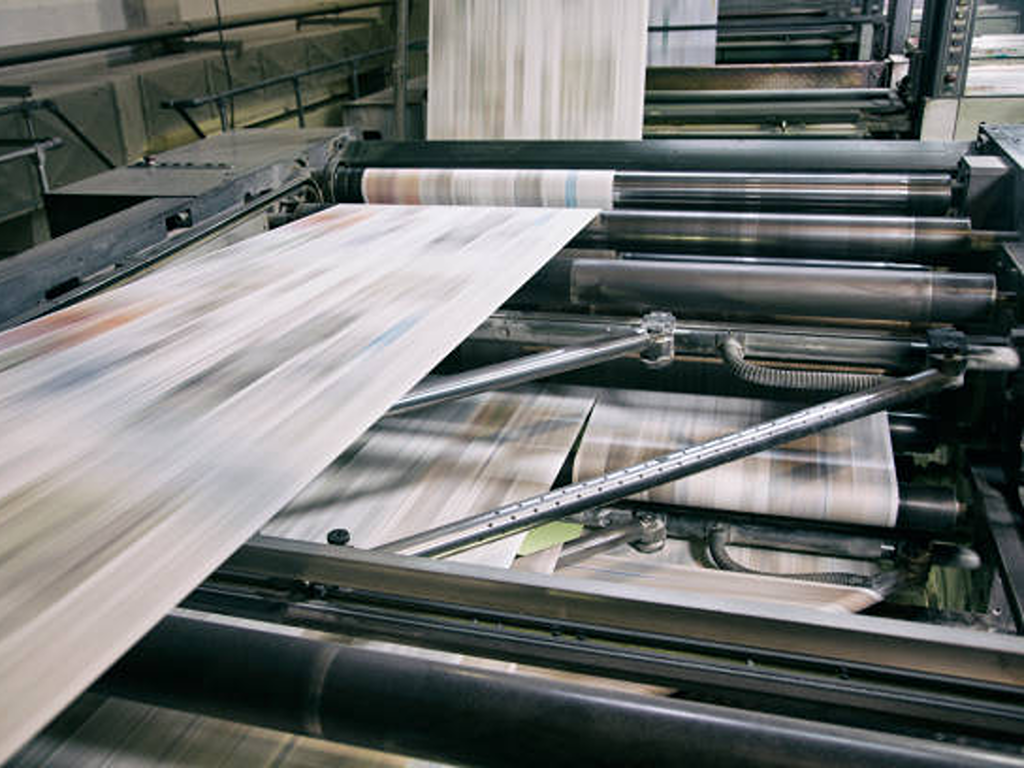
Your home printer feeds one sheet at a time, prints it, and waits for you to collect the output. An industrial inline printer does the opposite: the substrate film, paperboard, corrugated, or a finished pouch moves past the printhead at 30 to 200 meters per minute. The printhead fires ink droplets or transfers an image in microseconds. UV or LED lamps cure it instantly. The material continues directly to the next station filling, sealing, die-cutting, slitting without breaking rhythm.
Why does this matter to a converter? Consider a flexible packaging line running snack pouches. This morning, the line is packing mango-flavored dried fruit for Customer A. This afternoon, it switches to strawberry for Customer B. With pre-printed rollstock, that switch means stopping the line, removing the remaining Customer A film rolls, loading Customer B’s pre-printed rolls, and restarting each roll representing weeks of inventory someone paid to store. With inline printing, the operator selects a new digital file. The same blank film rolls keep feeding. The print changes instantly. The inventory of pre-printed variants drops from ten SKUs to one.
That single scenario captures why inline printing has moved from “nice-to-have” to a competitive necessity for converters managing high-mix production. But the technology landscape is broad, and choosing the right approach depends on what you print, how fast your line runs, and what substrate carries the image. The rest of this guide walks through those choices technology by technology, cost by cost, with a decision framework that works whether you run a single narrow-web press or a multi-line converting operation.
In a nutshell
Inline printing integrates the print process directly into your packaging line applying variable data, barcodes, or full-color graphics onto the moving substrate without stopping for offline pre-printing or label application. It eliminates pre-printed rollstock inventory, cuts changeover time from hours to minutes, and makes per-package variable data possible.
The Technology Landscape Which Inline Printing Method Fits Your Line
Before diving into specific technologies, start with three questions about your production reality:
- Sustrato Are you printing on porous paperboard, non-porous plastic film, corrugated cases, or irregular-shaped products?
- Information type Do you need basic date/batch codes, high-resolution barcodes, or full-color brand graphics?
- Line speed What’s your line’s meter-per-minute rate, and what resolution (dpi) does your output require?
There’s no “best” technology only the best match for your substrate-information-speed triangle. The three technology families below each occupy a different corner.
Inline Printing Technology Overview
| Technology | Resolution | Velocidad | Best Substrates | Cost per Print | Aplicación típica |
|---|---|---|---|---|---|
| CIJ | 72-100 dpi | Up to 1000 chars/sec | Any surface including irregular | Muy bajo | Date codes, batch codes |
| TIJ | 300-600 dpi | Moderate (cartridge-limited) | Porous paperboard, coated stock | Low-medium | High-res barcodes, logos on cartons |
| TTO | 300-600 dpi | ≤400 mm/sec (contact) | Flexible films, pouches, labels | Medio | High-res codes on film |
| Flexo | 100-500 m/min | High (plate-dependent) | Films, paperboard, labels | Very low (long runs) | Full-color packaging inline converting |
| Digital Inkjet | 30-100 m/min (up to 1200 dpi) | Alta | Films, paperboard, corrugated | Medium-high | Variable data, short runs, versioned packaging |
Continuous Inkjet (CIJ) The Workhorse for Basic Coding on Any Surface
CIJ is the technology you’ll find on more packaging lines than any other. It works by pumping electrically charged ink through a microscopic nozzle, breaking the ink stream into droplets mid-flight, and deflecting them with an electric field to form characters on the substrate all without ever touching the surface.
This non-contact nature is CIJ’s superpower. It prints legibly on curved bottles, textured caps, wet cans, and dusty corrugated cases at line speeds that leave contact-based technologies behind. For date codes, lot numbers, batch IDs, and basic linear barcodes, CIJ remains the default choice across food, beverage, and industrial packaging.
The trade-off is resolution. CIJ tops out around 72 100 dpi fine for human-readable text and simple barcodes but inadequate for detailed graphics or high-density 2D codes. Solvent-based MEK or acetone inks, while fast-drying and substrate-agnostic, raise VOC concerns in enclosed production environments. The shift toward low-migration inks (compliant with EU 10/2011 and FDA 21 CFR for food contact) is the most important ink chemistry trend in this category. On the maintenance front, modern sealed-nozzle designs have dramatically reduced the daily cleaning ritual that earlier CIJ generations required some systems now run years between nozzle services.
Thermal Inkjet (TIJ) & Thermal Transfer (TTO) High-Resolution Coding for Flexible Films and Labels
These two technologies are often confused because both produce high-resolution results on packaging materials. But they work on fundamentally different principles, and choosing between them depends on your substrate and throughput requirements.
TIJ uses thermal cartridges tiny heating elements that vaporize ink to create a bubble, which propels a droplet onto the substrate. It’s essentially a high-end desktop inkjet miniaturized into an industrial printhead. Resolution reaches 300 600 dpi, making it suitable for logos, GS1-compliant 2D barcodes, and crisp human-readable text on paperboard, coated cartons, and porous surfaces. The catch: standard TIJ inks are water-based and require an absorbent substrate. Non-porous films need specially formulated solvent-based TIJ inks, which are still a developing category.
TTO, by contrast, uses a heated printhead pressing a ribbon against the substrate the heat transfers pigment from the ribbon onto the film surface. It’s a contact process, which limits speed (typically ≤400 mm/sec) but delivers excellent durability and edge definition on flexible films, pouches, and labels. Carbon ribbon grades span three tiers: wax (economy, for paper labels), wax-resin hybrid (general purpose), and pure resin (maximum scratch and chemical resistance for industrial environments).
The decision between TIJ and TTO typically comes down to substrate: if it absorbs liquid, TIJ is simpler and cheaper per print. If it’s a non-porous film, TTO is the proven choice though it costs more in ribbon consumption over time.
Flexographic & Digital Inkjet Full-Color Inline Printing for High-Impact Packaging
This is where the investment jumps from “coding and marking” to “printing.” When your packaging is the brand experience a premium folding carton, a stand-up pouch with photographic graphics, a shrink sleeve with metallic inks you’re operating in the domain of flexography and digital inkjet.
Flexo uses photopolymer plates wrapped around cylinders. Ink transfers via an engraved ceramic anilox roller (typically 200 800 LPI) and is doctored to a precise film thickness by an enclosed blade system. Each color station adds another plate. A modern CI flexo press running inline can lay down 2 to 10 colors, apply varnish or cold foil, and feed directly into a rotary die-cutter. Finished cartons or labels emerge from a single pass at speeds of 100 to 500 meters per minute. Because the plates are reusable, the cost per print on long runs (think 50,000+ linear meters) is fractions of a cent. But plate-making adds setup cost and lead time, and changing a job means swapping plates at every station 20 to 30 minutes on a well-designed press, but still an interruption.
Digital inkjet takes the opposite approach: no plates, no anilox rollers, no make-ready. The printheads (piezo or thermal) jet UV-curable or water-based ink directly onto the substrate, driven entirely by the digital file. Changeover is instant select a new job on the touchscreen and the next substrate through the press carries the new design. Resolution reaches 1,200 dpi. The trade-off is speed and unit cost: digital inkjet lines typically run 30 100 meters per minute, and ink costs are higher per square meter than flexo on long runs.
This creates a clear break-even logic. For short runs under roughly 10,000 linear meters seasonal promotions, regional variants, test-market packaging digital inkjet wins on total cost because it eliminates plate charges entirely. For long runs above 50,000 linear meters, flexo’s plate cost amortizes to near-zero per print and its speed advantage compounds. Between those ranges sits the growing category of hybrid presses: flexo stations for fixed brand colors and varnishes, paired with digital inkjet stations for variable data, versioned graphics, or promotional codes all inline, in a single pass.
Edale’s publicly available flexo vs. litho calculator, validated by Smithers, provides a useful reference point: for a 10-color folding carton job with foil and embossing, inline flexo breaks even with sheetfed litho at approximately 76,900 cartons. Add reverse-side printing and foil, and flexo holds a 14% cost advantage even at one million cartons largely because the inline single-pass workflow eliminates the separate die-cutting and finishing steps that offline litho requires (Edale, 2025).
When Digital Wins
- Short runs under 10,000 linear meters
- Instant changeover with zero plate costs
- Variable data or versioned graphics per package
When Flexo Wins
- Long runs above 50,000 linear meters
- Lowest cost per print at high volumes
- 100-500 m/min single-pass production
Inline vs. Offline Printing A Decision Framework for Packaging Converters
Understanding the technology options is step one. Step two is deciding whether your production setup actually benefits from inline or whether offline printing still makes better economic and operational sense for your specific job mix.
The table below is designed as a quick self-assessment. If you answer “yes” to most of the left-column conditions, inline is likely your stronger path. If the right column describes your operation more accurately, offline probably still wins.
Inline vs. Offline Printing Decision Factor Checklist
| Decision Factor | Inline Tends to Win When… | Offline Tends to Win When… |
|---|---|---|
| Daily job changeovers | More than 3-4 per shift | Fewer than 2 per shift |
| Typical run length | Under 50,000 linear meters | Over 200,000 linear meters |
| Substrate variety | 2-3 standard materials | 6+ different materials requiring different handling |
| Operator headcount | 1-2 operators available | 3+ operators available across shifts |
| Capital approach | Single integrated investment | Phased equipment purchases over time |
| Redundancy requirement | Can accept full-line stoppage risk | Cannot risk stopping downstream operations |
| Variable data need | Every package needs unique data (serialization, QR, promo codes) | All packages get identical print |
When Inline Wins Short Runs, High Mix, Tight Lead Times
The strongest case for inline printing emerges when your production schedule looks like a revolving door of short runs. Consider a typical contract packaging operation: eight customer orders in a single shift, each requiring different date codes, batch numbers, and for several customers different branding on the package itself. With offline pre-printing, each order needs its own rollstock inventory. Changeover means physical roll changes, registration setup, and the inevitable waste of threading each new roll through the tension system.
With inline, a 5,000-linear-meter label job that takes roughly six hours across three standalone machines (print, then offline die-cut, then offline slit) compresses to approximately 1.5 hours in a single inline pass a nearly 75% reduction in total production lead time. The 20 30 minute job changeover on an inline flexo line replaces the two to four hours of cumulative setup across separate offline stations.
The SKU math is equally compelling. An e-commerce fulfillment operation shipping custom-branded boxes for 30 different retail clients would need to stock 30 different pre-printed box SKUs each with minimum order quantities, warehousing costs, and the inevitable waste when a client rebrands or a design becomes obsolete. An inline print station at the box-forming position means stocking one blank box SKU and printing whatever design the day’s orders call for. The working capital trapped in packaging inventory drops from 30 60 days of stock to near zero.
And then there’s the capability that offline simply cannot provide: per-package uniqueness. Pharmaceutical serialization, GS1 Digital Link QR codes that route each package to a different landing page, lottery-style promotional codes printed at the point of fill these require inline variable-data printing by definition. No pre-printed roll can deliver a different code on every package.
When Offline Still Makes Sense Long Runs, Specialized Finishing, and Risk Buffer
Inline is not the universal answer, and the honest assessment matters as much as the advantages. There are three scenarios where offline printing remains the economically rational choice.
First: genuinely long, stable production runs. If you print the same potato chip bag design for six months straight millions of impressions, zero artwork changes flexo’s plate cost amortizes to a negligible fraction of a cent per print. The inline line’s quick-change advantage becomes irrelevant when you never change. In this scenario, a dedicated offline flexo press optimized purely for speed, paired with separate high-speed finishing equipment, can out-produce an inline setup on pure throughput.
Second: highly specialized finishing that demands dedicated machinery. Hot-foil stamping with micron-level registration, intricate embossing with matched male-female dies, cast-and-cure holographic effects these processes often require press configurations and dwell times that don’t easily integrate into a general-purpose inline line. Running them offline on purpose-built equipment produces better results, and the additional handling between stations is worth the quality gain.
Third: operational redundancy. In an inline setup, the entire line is a chain if the print station goes down, the filling and sealing stations downstream stop too. For a 24/7 dairy packaging operation where line stoppage costs thousands per hour, an offline printing approach with buffer inventory between stations provides insurance: the filler keeps running from pre-printed rollstock while the print issue is resolved. The cost of that buffer inventory is the premium paid for production continuity.
Academic productivity research reinforces the context-dependency: a study comparing digital printing workflows in the packaging industry found that inline integration reduced payback time by 20 35% for short-to-medium run scenarios, but the advantage narrowed considerably for operations with low changeover frequency and high per-job volume.
Offline still makes sense when…
Long, stable production runs with zero artwork changes flexo plate cost amortizes to negligible fractions of a cent per print
Highly specialized finishing requires dedicated machinery that can’t integrate into a general-purpose inline line
Operational redundancy is critical buffer inventory between stations protects against full-line stoppage risk
The Hybrid Future Why the Best Answer Is Increasingly “Both”
The industry is converging on a third model that rejects the “inline or offline” binary entirely. A hybrid press combines flexo color stations for fixed brand elements with digital inkjet stations for variable data, all inline but functionally independent. The fixed blue of a brand logo prints flexo at 200 meters per minute. The batch-specific QR code and the “Limited Edition Summer 2026” promotional banner print digitally from the same file that the ERP system updated ten seconds ago.
This configuration is gaining traction because it mirrors the actual job mix most converters face: some elements of every job are static, and some need to change. The capital cost of a hybrid line is higher than either pure-flexo or pure-digital alone, but the operational flexibility closes the gap quickly when your order book contains both long-run staple SKUs and short-run promotional variants.
A quick self-assessment for hybrid readiness: (1) Do you run at least one customer with both fixed branding and variable campaign elements? (2) Does your ERP system already generate per-job print data that could drive a digital station? (3) Are your operators comfortable with both mechanical (flexo) and software-driven (digital) systems? Two or more “yes” answers suggest hybrid deserves a serious evaluation.
Industry Applications Where Inline Printing Delivers the Biggest Impact
Every industry that uses inline printing benefits from it differently. The three sectors below represent the largest adoption drivers each with distinct regulatory, operational, and commercial pressures that make inline printing not just useful but often mandatory.
Food & Beverage Traceability, Shelf Life, and SKU Proliferation
Food packaging operates at the intersection of two relentless forces: regulation and variety. Every package must carry a date code, batch identifier, and depending on the market origin information and nutritional claims, all in formats specified by authorities from the FDA to the EU Commission. At the same time, a single filling line might run four to six SKUs in a day: different flavors, different pack sizes, different market-specific label variants.
CIJ and TIJ are the dominant inline technologies here CIJ for direct coding onto cans, bottles, and flexible film at high speed; TIJ for higher-resolution date/batch printing onto cartons and labels. The food-contact safety dimension adds a critical constraint: inks that touch or could migrate into food must meet low-migration standards under EU 10/2011 and FDA 21 CFR. This eliminates many conventional solvent inks and drives demand for specifically formulated low-migration CIJ and TIJ ink sets.
Innovation at the edges points toward an even more integrated future. Direct-to-cap printing applying branding, expiration dates, and QR codes onto bottle caps at 2,300 caps per minute using UV inkjet eliminates the label entirely for certain beverage formats. Water-based digital inkjet printing onto molded fiber trays replaces pre-printed labels with direct decoration, cutting material consumption and improving recyclability. For converters serving food and beverage customers, these label-elimination use cases represent both a threat (if you sell labels) and an opportunity (if you offer the inline printing capability that enables them).
Pharmaceuticals & Medical Devices Serialization, UDI, and Zero-Error Tolerance
No industry demands more from inline printing than pharmaceuticals. Under the EU Falsified Medicines Directive (FMD) and the US Drug Supply Chain Security Act (DSCSA), every prescription drug package must carry a unique serial number in a machine-readable 2D Data Matrix code. Medical devices face parallel requirements under the Unique Device Identification (UDI) system mandated by FDA and EU MDR/IVDR regulations every device, down to the individual unit of use in some classifications, needs a unique identifier linked to a central database.
These aren’t optional marketing features. They’re legal requirements enforced by regulators with the power to block products from market. And they change the inline printing equation fundamentally: the print station must not only apply the code but also verify it inline, in real time, at production speed.
The standard architecture pairs a high-resolution inkjet or laser marker with an inline vision inspection camera. The camera reads every code immediately after printing, compares it to the expected data from the serialization server, verifies the code grade (ISO/IEC 15415 specifies minimum Grade C for Data Matrix; pharmaceutical applications typically target Grade B or above for reliable scanning throughout the supply chain), and triggers automatic rejection of any unit that fails. Inspection throughput reaches 2,000 units per minute on modern systems. The ink itself must pass ISO 10993 biocompatibility testing when used on device surfaces that contact patients a requirement that significantly narrows the approved ink supplier list.
E-Commerce & Logistics Custom Branding at Scale Without Pre-Printed Box Inventory
E-commerce packaging faces a paradox: brands want memorable unboxing experiences with custom-printed boxes, but stocking pre-printed boxes for every size, design variant, and seasonal campaign ties up capital and warehouse space that logistics operators can’t afford. The average 3PL might handle 50 100 active client brands, each with multiple box sizes. Pre-printing every variant would require thousands of box SKUs, most of which would sit in inventory for months between campaigns.
Inline printing at the box-forming or case-sealing station collapses this complexity. One blank corrugated blank feeds the line. The inline print station typically a high-resolution piezo inkjet or thermal inkjet array applies the brand artwork, shipping labels, handling instructions, and promotional messaging in a single pass, driven by the order data from the warehouse management system. Ranpak’s Print’it! system, as one reference implementation, handles up to 15 variable-height boxes per minute with full-color output.
The savings extend beyond inventory. When a brand launches a holiday campaign, the packaging design changes across all shipments immediately no lead time for pre-printed box orders, no minimum order quantity, no obsolete inventory when the campaign ends. For 3PL operators and e-commerce fulfillment centers, this agility is becoming a competitive differentiator in client acquisition: the ability to offer “branded packaging with zero inventory commitment” wins contracts that pre-printed-only competitors can’t touch.
Need help matching inline printing technology to your production reality?
The Real Cost of Inline Printing Beyond the Equipment Price Tag
Most converters enter their first inline printing evaluation focused on the equipment quote. That number matters but it accounts for only 30 40% of the total cost of ownership over the equipment’s service life. The bigger numbers hide in labor, changeover time, material waste, and inventory carrying costs categories that don’t appear on the quote but dominate the P&L over a three-year horizon. This is why inline systems, which often carry a 15 40% higher upfront price than equivalent offline setups, frequently deliver lower total cost.
Breaking Down the Cost Structure Equipment, Consumables, Labor, and Hidden Line Items
The table below compares the five major cost categories for a typical inline vs. offline configuration, using mid-market converting operation parameters.
Three-Year Cost Structure Inline vs. Offline Configuration
| Cost Category | Inline (Single-Pass) | Offline (Multi-Machine) | Delta |
|---|---|---|---|
| Equipment (amortized over 7 years) | $28,500/yr | $21,500/yr | +32% (inline higher) |
| Annual consumables (ink, ribbon, plates) | $18,000–$35,000 | $12,000–$25,000 | +25–40% (inline ink premium offset by zero plate cost on digital jobs) |
| Direct labor (1 operator vs 2.5) | $45,000/yr | $112,500/yr | −60% (single-operator inline) |
| Changeover downtime cost | $8,500/yr (20 min × 4 changes/day) | $34,000/yr (2 hr × 4 changes/day) | −75% (inline faster changeover) |
| Packaging inventory carrying cost | $3,000/yr (1 blank SKU) | $22,000/yr (15 pre-printed SKUs @ 45 days stock) | −86% (SKU consolidation) |
| Annual waste (make-ready scrap) | $4,200/yr (1 threading × 5m) | $12,600/yr (3 threadings × 5m each) | −67% (single threading inline) |
The labor differential is the single largest line item. An inline system whether a CI flexo press with integrated die-cutting or an inkjet coder mounted on a filling line typically runs with one operator. The offline equivalent often requires two or three: one on the printer, one on the die-cutter or slitter, and possibly a material handler moving work-in-progress between stations. At a fully burdened operator cost of $45,000 per year, eliminating 1.5 operator positions saves $67,500 annually enough to close most of the upfront equipment price gap within 18 months on its own.
ROI Timeline When Does Inline Printing Pay for Itself?
The industry benchmark for inline converting ROI falls consistently in the 12 18 month range. Some machinery’s published analysis of label converting operations reports that “most customers see a full Return on Investment within 12 to 18 months,” driven by a 40 60% reduction in labor costs and significantly lower material waste during job setups.
Three factors accelerate payback:
- Multi-shift operation: Running two or three shifts compounds the labor savings and amortizes the equipment investment over more production hours.
- High SKU count: The more changeovers per shift, the more the inline quick-change advantage compounds. A converter running 6 8 jobs per day sees dramatically faster payback than one running 1 2 long-run jobs.
- ERP integration: When the inline print station pulls job data directly from the ERP or MES system eliminating manual data entry at every changeover the labor savings extend from operators to supervisors and quality staff who no longer need to verify every setup manually.
Two factors slow it down: low capacity utilization (single shift with significant idle time) and very low SKU variety (few changeovers, which is the scenario where offline already makes sense economically).
Accelerates Payback
Multi-shift operation compounds labor savings across more production hours
High SKU count each additional changeover amplifies the inline speed advantage
ERP integration eliminates manual data entry and supervisor verification at every changeover
Slows Payback
Low capacity utilization single shift with significant idle time
Very low SKU variety few changeovers means offline makes more economic sense
The Hidden Savings SKU Consolidation, Working Capital, and Agility
The numbers that don’t appear on most ROI calculators but should fall into three categories:
First, SKU consolidation. A converter serving 20 customers with pre-printed packaging might stock 60 80 different packaging SKUs (different sizes, designs, language variants). Each SKU represents procurement overhead, warehouse space, and the risk of obsolescence. Switching to inline variable printing collapses this to perhaps 5 10 blank substrate SKUs. Markem-Imaje’s analysis of dynamic QR code inline printing ROI identifies SKU consolidation as “one of the largest hidden savings” often unattributed in formal ROI calculations because the costs are scattered across procurement, warehousing, and write-off budgets rather than a single visible line item.
Second, working capital release. Pre-printed packaging inventory typically turns every 30 45 days in consumer packaged goods operations. At any given moment, 6 8 weeks of packaging stock is sitting on shelves, paid for but not yet generating revenue. Blank substrate stocked for inline printing can operate on just-in-time delivery a variable cost drawn down as production demands, not a fixed inventory commitment per SKU. For a mid-size converter, the working capital released by moving from pre-printed to inline can run into the low six figures.
Third, agility premium. When a retailer demands new packaging artwork by next week, the converter with inline capability says yes and charges for the service. The converter dependent on pre-printed rollstock says “eight weeks for plate-making and delivery” and risks losing the business to someone faster. This revenue-protection value is real but nearly impossible to quantify in a standard payback calculation.
Implementation Essentials What It Takes to Put Inline Printing on Your Line
Implementing inline printing is not a “buy the equipment, bolt it on, and start running” exercise. The integration touches your ERP system, your quality control workflow, your web-handling infrastructure, and your operator training program. But the challenges are well understood, and solutions exist for each.
Technical Integration ERP Connectivity, Vision Inspection, and Web Handling
Three subsystems define whether an inline implementation succeeds or struggles.
ERP-to-print data flow. The most common failure mode in inline printing implementations isn’t hardware it’s data. An operator manually typing batch codes, date formats, and market-specific regulatory text into a printer controller introduces exactly the kind of error that inline systems are supposed to eliminate. The solution is a middleware layer platforms in the category of Markem-Imaje’s CoLOS or Matthews’ MPERIA that sits between the ERP/MES and the print station. When a work order for “Customer X, Market DE, 50g pack” hits the production schedule, the middleware translates it into the correct print template, date format (DD.MM.YYYY for Germany, MM/DD/YYYY for the US), batch code structure, and language variant all without operator keyboard input. Communication protocols are typically OPC-UA or EtherNet/IP on the plant floor, with REST APIs or file drops for the ERP layer.
Inline vision inspection. For regulated industries, printing the code is only half the requirement verifying it is the other half. An inline camera system positioned immediately after the print station reads every code, grades it against the required quality standard (ISO/IEC 15415 for 2D codes, ISO/IEC 15416 for linear barcodes), and triggers a reject diverter for any unit below threshold. This closed-loop verification is the only way to guarantee that 100% of shipped packages carry scannable codes essential for pharmaceutical serialization and increasingly expected in food traceability.
Web handling and tension control. On flexo and digital inkjet lines printing onto thin films (BOPP, PE, PET), registration depends entirely on tension stability. A servo-driven closed-loop tension system maintains web tension within ą2% of setpoint from unwind through each print station to rewind or die-cutting. Without this level of control, even a 0.1mm registration drift accumulates across multiple colors and renders the finished print unusable. Modern CI flexo presses achieve ą0.15mm register accuracy across all color stations at full production speed a specification that only holds when the tension control system is properly sized and tuned for the substrate being run.
Three systems that make or break an inline implementation
ERP-to-print data flow
Inline vision inspection
Web handling & tension control
Operational Readiness Training, Maintenance, and the Learning Curve
Inline systems reduce operator count but increase the skill requirement for the operators who remain. An offline workflow lets each operator specialize: one person masters the printer, another the die-cutter. Inline demands one person who understands the entire chain and who can diagnose whether a registration problem originates in the print station, the tension zone, or the die-cutting module. The training curve is real: basic operational competence takes 3 5 days, but independent troubleshooting capability typically requires 2 4 weeks of hands-on experience with the specific installation.
Preventive maintenance discipline matters more on inline systems because the consequences of failure are higher. Key intervals to budget for: CIJ nozzle cleaning (daily to weekly, depending on ink type and environment, though sealed-nozzle designs substantially extend this interval); TIJ cartridge replacement (predictable from milliliter consumption rates typical industrial cartridges hold 40 100ml); TTO printhead life (varies by ribbon type and duty cycle); and flexo anilox roll cleaning (ceramic rolls require daily to per-shift cleaning with specialized chemistry to prevent dried ink from clogging the engraved cells a clogged anilox cell is a permanent print defect until cleaned).
Finally, supplier support quality should factor directly into equipment selection. An inline press from a manufacturer with responsive remote support, readily available spare parts, and a track record of on-site installation and training is a different proposition from an equivalent-spec machine sold with minimal after-sales infrastructure. The difference manifests in hours of downtime per year a variable that dominates total cost far more than a few percentage points on the purchase price.
Where Inline Printing Is Heading GS1, Sustainability, and the Smarter Factory
Three trends are actively reshaping what inline printing will be asked to do over the next five years.
GS1 Sunrise 2027. The global transition from one-dimensional barcodes (UPC/EAN) to two-dimensional GS1 Digital Link codes (QR and Data Matrix) has a hard deadline: by the end of 2027, point-of-sale systems worldwide must be capable of scanning GS1 2D codes. For converters, this means that every packaging line that currently prints a simple linear barcode will soon need to print a data-dense 2D code which demands higher resolution, better contrast, and more precise registration than many legacy inline coders were designed to deliver. The converters who upgrade their inline print capability ahead of the deadline will be ready to meet retailer requirements on day one. Those who wait may find themselves scrambling.
Label-free packaging. Sustainability targets are pushing brand owners toward eliminating packaging components that complicate recycling. Removing a pressure-sensitive label from a PET bottle or a PP tray adds cost and material to the recycling stream. Direct-to-substrate inline printing on the bottle, the tray, the pouch itself eliminates the label entirely. For converters, this creates an opportunity: offering inline direct-print capability positions you as the partner who can help brand owners meet their packaging reduction commitments.
The connected line. Inline printing is the “digital-to-physical” handoff point in the smart factory: it’s where data from the cloud becomes ink on a package. As ERP systems, manufacturing execution systems, and brand asset management platforms become more integrated, the inline print station becomes the execution endpoint of a fully digital workflow pulling artwork revisions, regulatory text updates, and variable promotion codes automatically, without human intermediation. The converters who invest in this integration layer now will be the ones whose lines can accept orders from brand owners’ systems directly, reducing the quoting, proofing, and setup cycle from days to minutes.
For converters evaluating their next move, the path forward starts with an honest assessment: what does your actual job mix look like run lengths, changeover frequency, substrate variety, variable data requirements? The technology that fits a high-mix short-run label converter is not the same technology that fits a dedicated long-run flexible packaging line. Identifying where you sit on that spectrum, and matching the technology to the job mix rather than the other way around, is the single most important decision in the evaluation process.
If you’re ready to explore inline flexo configurations matched to your specific production requirements, Kete offers tailored solution consultations that balance your technical needs with budget constraints. Their engineering team works from your substrate samples and target throughput to propose a configured line CI flexo, stack flexo, or a full converting package with pre-shipment print testing on your own materials. You can speak with a solutions engineer about your inline flexo requirements o review case studies from converters who have built their inline production lines with Kete equipment.
Talk to an Inline Flexo Engineer
Bring your substrate samples and throughput targets. We’ll propose a configured line and test-print on your own materials before shipment.
Solicitar una consultaReferencias
- Edale. “Flexo vs Sheetfed Carton Calculator.” 2025. https://edale.com/flexo-vs-sheetfed-carton-calculator/
- Edale. “Why Investing In Modern Flexo Makes Business Sense.” 2025. https://edale.com/blog/why-investing-in-modern-flexo-makes-sense/
- Markem-Imaje. “Dynamic QR Code Printing: The Hidden ROI for Manufacturers.” https://www.markem-imaje.com/blog/post/dynamic-qr-code-inline-printing-roi
- ISO/IEC 15415:2011. “Information technology — Automatic identification and data capture techniques — Bar code symbol print quality test specification — Two-dimensional symbols.”
- GS1. “GS1 General Specifications.” https://www.gs1.org/standards/barcodes-epcrfid-id-keys/gs1-general-specifications
- Kete Group. “Contact Pre-Sales Services & Consultation.” https://www.ketegroup.com/contact/
- Kete Group. «Casos prácticos». https://www.ketegroup.com/case-studies/
- Kete Group. “Flexo Printing Machine.” https://www.ketegroup.com/