VN
VN  EN
EN  RU
RU  ES
ES  FR
FR  AR
AR  PT
PT  IT
IT  ID
ID  KO
KO  TR
TR  DE
DE  TH
TH  IN
IN 
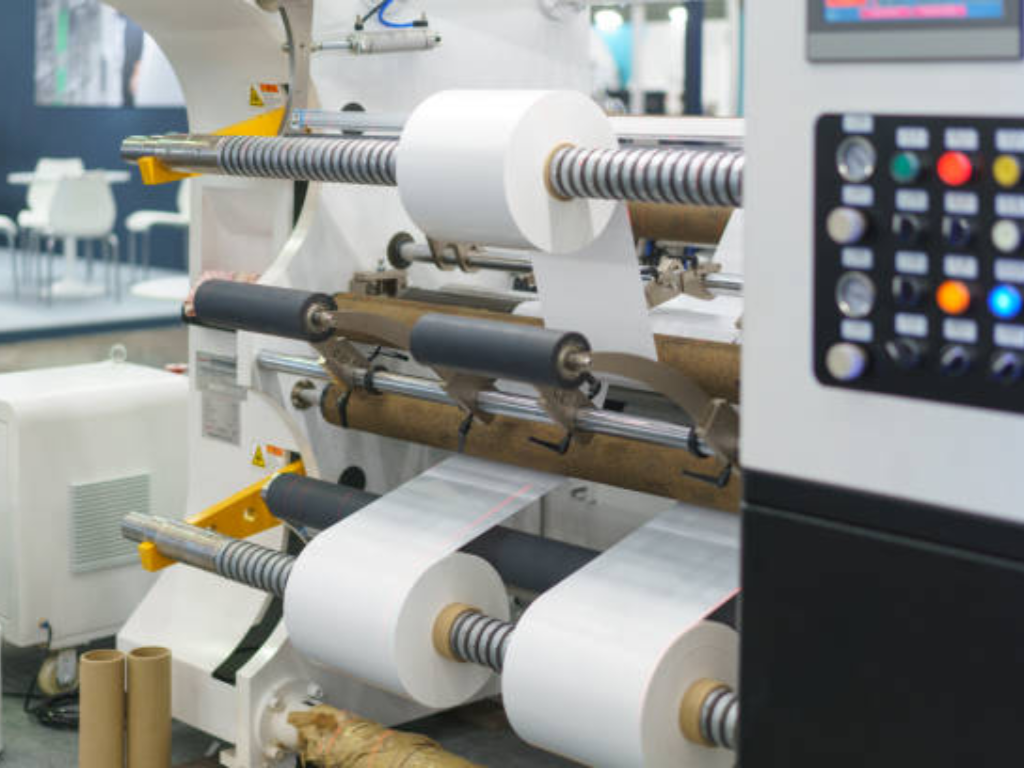
Equilibrium is an ongoing engineering problem in the strict field of web handling and material converting. The operation of cutting a master roll into several smaller coils creates a complicated variable: material gauge variation. None of the substrates, polymer film, paper, or metallic foil, has a uniform thickness throughout its width. Therefore, when these materials are rewound, minor differences in thickness are added exponentially, resulting in irregular roll diameters and tension. In order to eliminate this mechanical divergence, the industry has resorted to the differential rewind shaft, enhancing slitting machine changeover efficiency.
This guide offers a critical analysis of the differential winding technology, its architectural elements and how it is important in streamlining production efficiency in the contemporary converting landscape.
What is a Differential Rewind Shaft and Why Does it Matter
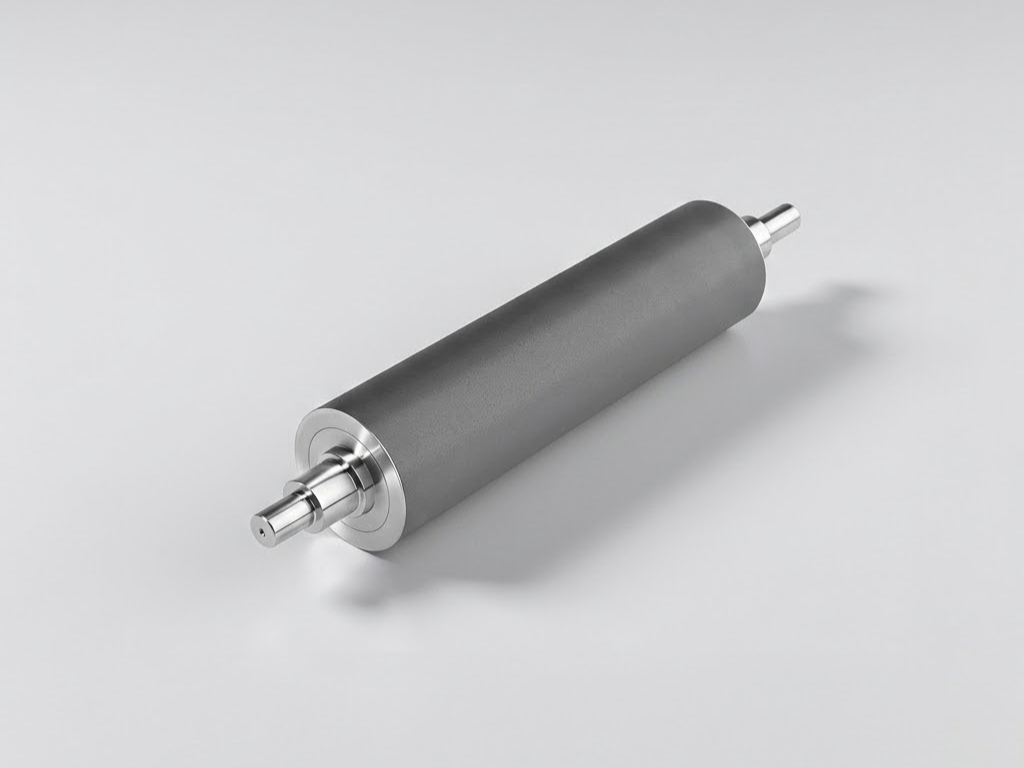
In its simplest form, a differential rewind shaft is a special winding element that enables two or more rewind cores to rotate at different speeds whilst under a constant, controlled rewind torque. The differential shaft, unlike a conventional expansive air shaft, in which all cores are fixed to a single rotational velocity, recognizes the natural imperfection of industrial materials and allows for a wide range of operational flexibility across a range of machines. The nervous system of the converting process is tension, and when tension changes as a result of changes in diameter, the structural integrity of the final product is destroyed.
The main requirement of this technology is due to the variation of gauges. A difference in thickness, even a microscopic one, say a few microns, causes a large difference in diameter after many thousands of revolutions. On a normal shaft, the thicker parts or high spots of the material will be tightly wound, and the thinner parts will be loose, resulting in defects like telescoping, starring, or crushed cores, which can lead to core dust generation.
What is the economic and operational significance of this? The use of differential winding directly solves the problem of the yield loss of the secondary processes. By utilizing standard differential friction shaft systems, manufacturers can eliminate waste significantly by making sure that every slit roll, no matter where it is located on the shaft, is given the precise amount of tension it needs. Moreover, it enables greater running speeds and roll diameters, which successfully move the production frontier outward and raise the total payback of the slitter-rewinder system.
Key Components: Anatomy of a High-Performance Friction Shaft
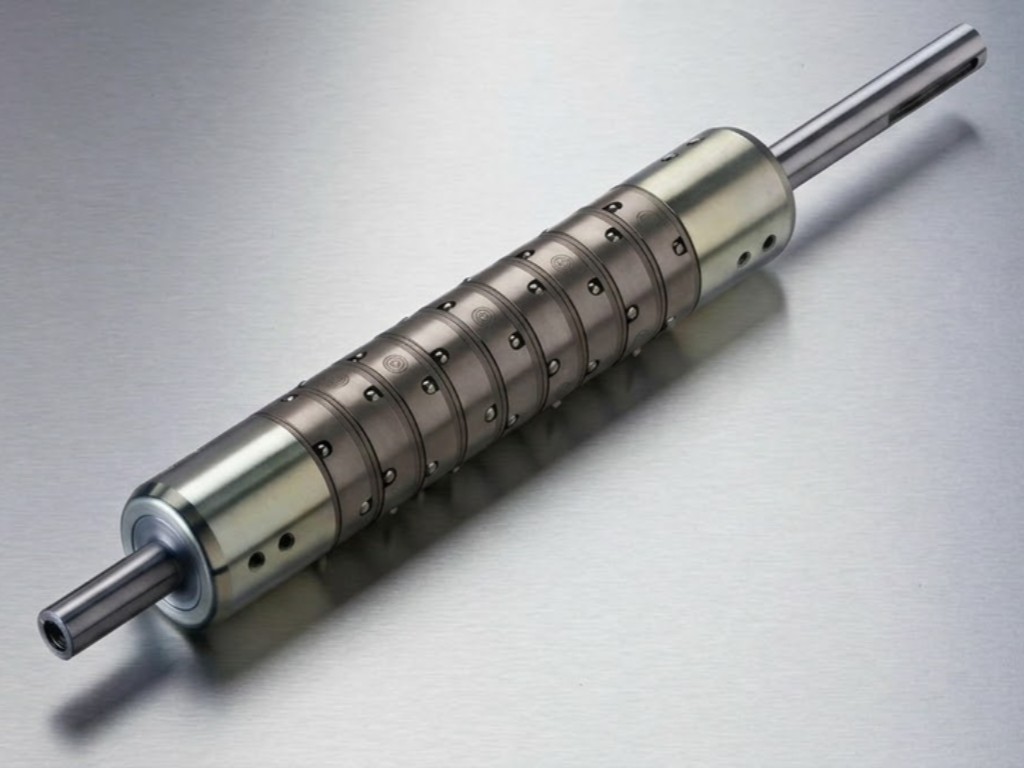
The efficacy of a differential shaft requires dissection of its internal architecture to understand. A high-performance friction shaft is not a homogeneous tool but a complex assembly of interactive elements.
The Central Mandrel and Không khí Bladders
The shaft is made of a mandrel of steel or aluminum, which is precision-ground. Longitudinal grooves are cut in or along this mandrel to accommodate polyurethane or special rubber air bladders. These bladders are the main transducers of pneumatic energy to mechanical torque. The bladders are filled with air pressure, which causes an outward force.
Friction Rings (Slip Rings)
The friction rings are mounted on the mandrel and bladders. These rings are the agents of the differential action. They are made to slide at a controlled speed with respect to the central shaft. These rings are in contact with the internal surface and friction strips (usually of felt, special plastics or composite materials) which rest on the air bladders. The coefficient of friction between the shaft and the rings depends on the amount of air pressure applied and hence the amount of torque passed to each individual core.
Core Locking Mechanisms
The outer part of the friction ring should firmly hold the inner diameter of the winding core (usually cardboard or plastic). This is done by either mechanical keys, spring-loaded balls or leaf-like expansions. A high-performance shaft is such that the grip on the core is absolute, such that any slip that may occur is internal between the ring and the shaft, and not between the ring and the core.
Main Types of Differential Rewind Shafts: Ball Type vs. Lug Type
Differentiating shafts is often based on the interface of the shaft with the core. Ball Type and Lug Type are the two most common paradigms, each of which is applicable to a particular tension regime and material classes.
Ball Type Differential Shafts
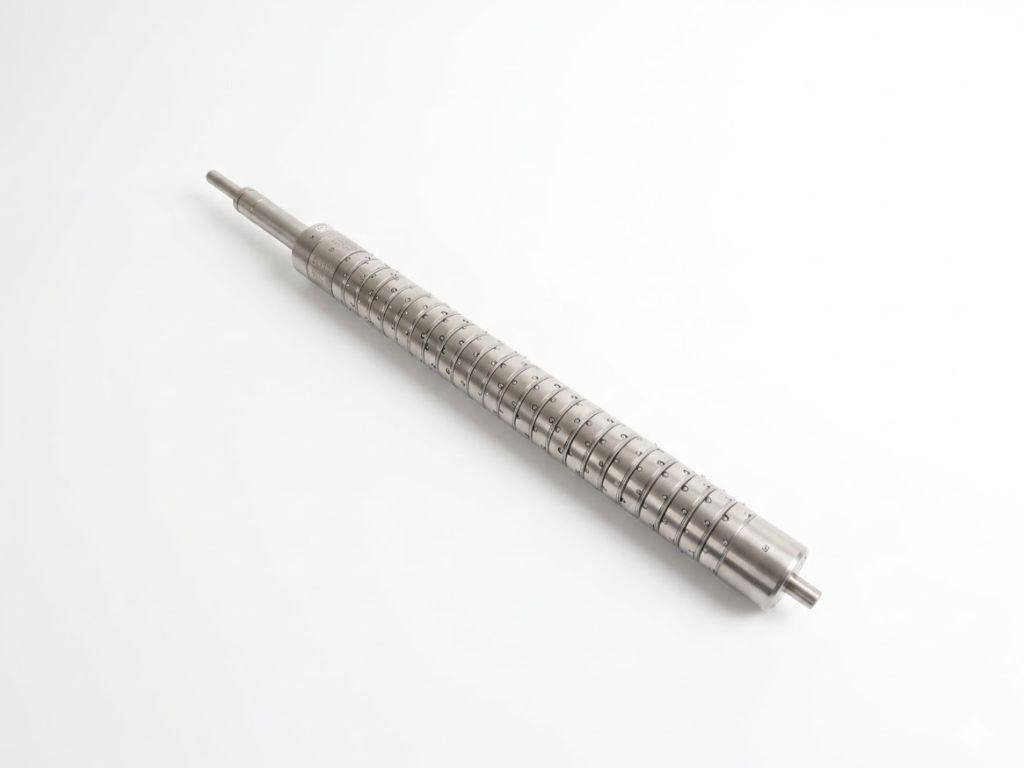
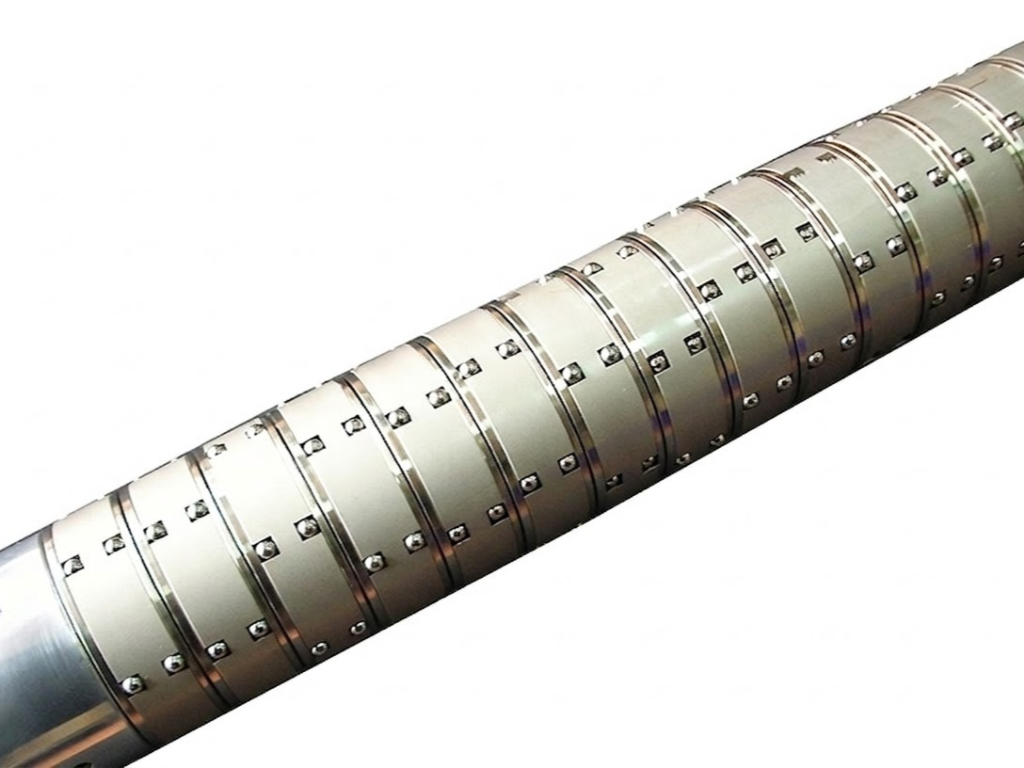
Ball type shafts make use of a row of spring-loaded or air-activated balls that are spread around the friction rings. These balls give a multi-point contact with the core, making them ideal for handling various web materials, allowing for precise control without undue side movement.
Ideal Use Cases: They are used in preference for slitting narrow widths and delicate substrates such as thin films (BOPP, PET) or light foils.
Ưu điểm: Due to the easy retractability of the balls, core loading and unloading are remarkably smooth. They are also more precise when working at lower tension levels, where small adjustments are very important to avoid stretching of the material.
Lug Type (or Leaf Type) Differential Shafts
Lug type shafts use larger and stronger mechanical lugs or leaves to hold the core. These elements provide more contact surface area, making them ideal for most new slitting rewinders.
Best Use Cases: These are the workhorses of heavy-duty applications, e.g., thick paperboards, non-wovens, or heavy-gauge laminates.
Ưu điểm: Torque capacity is the main advantage in this case. In winding heavy rolls where high starting and running tension is needed, the lug type offers the mechanical bite required to prevent any core-slippage at high load.
Differential Shafts vs. Standard Air Shafts: Key Differences
The replacement of standard air shafts by the differential shafts is a change of state of the mechanical system to the dynamic response system. To explain the difference, it is necessary to consider the physics of the wind.
Under standard differential air shaft conditions, all cores are clamped to the shaft, effectively gripping the inside of the core. When a roll accelerates more than its neighbor because of the variation in gauge, the roll will strive to accelerate the material more than the line speed of the machine. The tension in that particular web lane is increased because it cannot rotate faster than the shaft. On the other hand, the roll with a smaller diameter will be less tense. This results in a binary failure: one roll is too tight (stretch or breakage) and the other is too loose (sagging or baggy rolls).
Friction rings are free market agents of torque, so that each roll can establish its own equilibrium. The larger the roll and the larger the diameter, the larger the differential shaft specifications are to enable that particular core width to slip more or less with the shaft to ensure a constant tension profile.
| Tính năng | Standard Air Shaft | Differential Quay lại Shaft |
| Rotation | Synchronous (All cores same speed) | Asynchronous (Cores slip independently) |
| Tension Control | Global (Same for all lanes) | Individual (Specific to each lane) |
| Gauge Tolerance | Very low | Cao |
| Ideal Application | Single roll winding or uniform materials | Multiple narrow slit rolls/gauge variation |
| Operational Cost | Thấp hơn | Higher (Requires air control systems) |
Selection Guide: How to Choose the Right Shaft for Your Specific Materials
The choice of the differential shaft is not a one-size-fits-all but a calculation of material properties and tension requirements. The decision-making process should be guided by the following parameters.
Chất nền Sensitivity and Tension Range
When converting 12-micron BOPP film, you will have much less tension requirements than converting 200-gsm paperboard. In low tension high sensitivity films, a Ball Type shaft with low friction composite rings is necessary to prevent over-tensioning. In high-tension paper applications, high-torque friction strips are required on a Lug Type shaft.
Slit Width and Core Diameter
The size of your slit roll will dictate how many friction rings you will need on each core. When the slitting is very narrow (e.g., 10mm to 20mm), then you require a shaft with a high density of rings. Moreover, make sure that the shaft diameter (usually 3″ or 6″) fits your current core stock.
Operating Speed and Heat Dissipation
The slip effect itself produces thermal energy at high speeds. When you are operating a high-speed slitter at 500 meters per minute, you need to choose a reliable way to select a shaft that is designed to manage thermal. This could involve special finishes on the rings or a core mandrel that would help to conduct the heat away effectively to ensure that the air bladders do not deteriorate or the material does not warp.
Common Problems and BẢO TRÌ Solutions
The most well-built differential shaft is not immune to the laws of entropy. Maintenance is the same as disregarding a structural hairline crack in a dam; the collapse can be slow until it is disastrous.
Thermal Buildup and Bladder Failure
Too much friction produces heat. When the tension is excessive or the slip is too steady, the internal air bladders may become soft or melt.
- Giải pháp: Check air pressure settings religiously and make sure that the overspeed (the difference between the speed of the shaft and the web) is maintained within the recommended 3 percent to 5 percent range of the manufacturer.
Dust and Contaminant Ingress
Core dust may enter the gaps between the rings of mechanical friction in areas where paper or non-wovens are handled. This grit is an abrasive that results in uneven friction and premature wear of the friction strips.
- Remedy: Adopt a cleaning schedule of once a week with compressed air or special non-solvent cleaners to make sure that the rings can move freely on the mandrel.
Uneven Ring Wear
The friction strips on the air bladders will wear out with time. When some lanes are more active than others, the delivery of torque will not be evenly distributed along the shaft.
- Remedy: Periodically alternate the locations of the friction rings or change the friction strips as a complete set to ensure a consistent “baseline” of torque delivery.
Why Choose KETE’s Slitter Rewinder
Since its inception in 2011, KETE has emerged as a trusted partner in the slitting and rewinding sector. Our distinction lies in a holistic engineering perspective: we do not merely supply components; we architect entire ecosystems. We perceive the differential rewind shaft not as a peripheral tool, but as a sophisticated extension of the machine’s core logic. Our commitment to utilizing high-caliber, durable components ensures reliable operation and minimized maintenance costs in any industrial environment.
By choosing KETE, you are engaging in a partnership that transcends the transaction. Our expert team provides personalized industry insights, aligning our latest slitting technology with your specific operational goals. This strategic alignment ensures maximum mechanical longevity, significant waste reduction, and the highest standards of rewound roll quality, allowing you to make informed decisions for your long-term production investments.
Phần kết luận
The development of the differential rewind shafts is a major breakthrough in the history of web conversion. Engineers have managed to reduce the disruptive impact of the variation in the gauge of the material by decoupling the rotational velocity of the winding core from the mechanical drive of the shaft. This technology allows the manufacture of reels and rolls with perfect tension profiles and structural integrity across the entire web, whether it is the accuracy of a Ball Type shaft or the strength of a Lug Type system. The role of the differential shaft as a stabilizer of industrial production will only increase as the global markets require thinner, more complex and more varied substrates. To the contemporary converter, learning this technology is no longer a choice, but a necessity to survive in an economy that is precision-driven.