TR
TR  EN
EN  RU
RU  ES
ES  FR
FR  AR
AR  PT
PT  IT
IT  ID
ID  KO
KO  DE
DE  VN
VN  TH
TH  IN
IN 
If you’re searching for “paper bag making machine price,” you’ve probably already discovered something frustrating: almost nobody publishes real prices. You find product pages with “Contact Us for Quote” and manufacturer blogs that talk around the number without ever giving you one.
This guide does the opposite. You’ll get actual price ranges for every machine tier, a clear breakdown of what drives those numbers, and a framework to figure out exactly where your budget fits, whether you’re launching a small workshop or scaling an industrial production line.
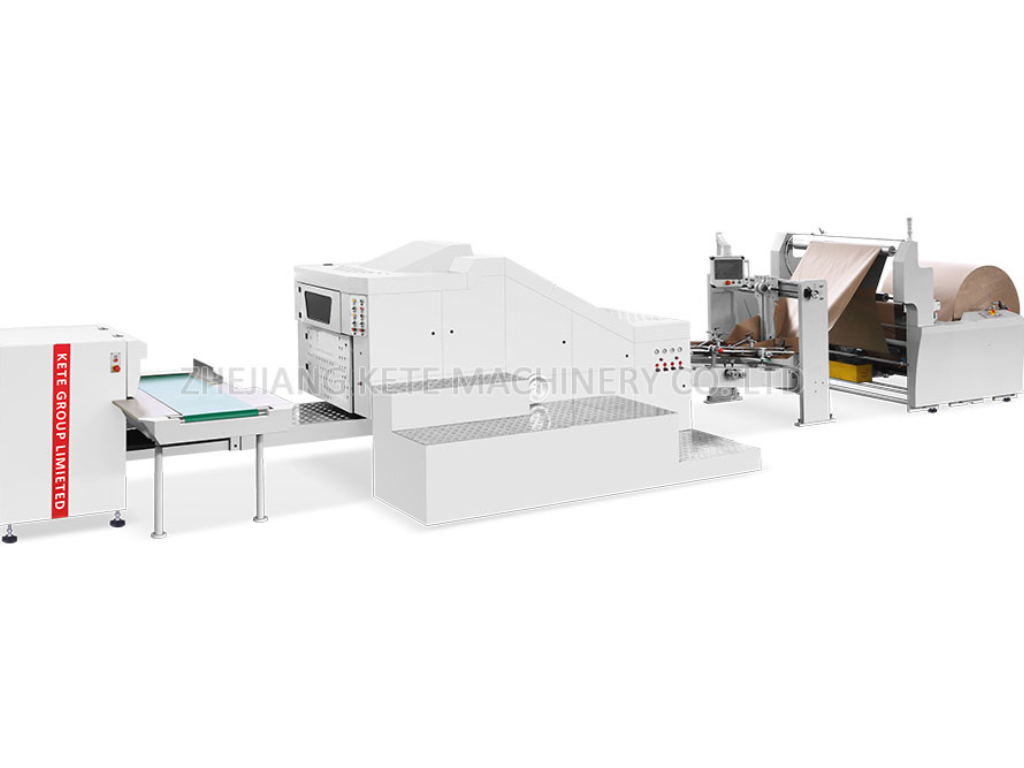
The global paper bag market is projected to grow from $6.4 billion in 2025 to $9.6 billion by 2032 (Persistence Market Research, 2026), driven by plastic bans and the retail shift to sustainable packaging. That demand needs machines to meet it, and the price of those machines spans an enormous range.
01What Determines Paper Bag Making Machine Prices
A paper bag machine’s price isn’t one number. It’s a function of at least six independent variables, with three dominating the equation. Understanding these is the difference between paying for what you need and paying for what you don’t.
Automation Level: Semi-Automatic vs. Fully Automatic
The single biggest price divide runs between semi-automatic and fully automatic machines.
A semi-automatic paper bag machine requires 3 to 5 operators. Someone feeds the paper, someone applies glue, someone collects and stacks the finished bags. These machines typically run at 30 to 80 pieces per minute and cost between $5,000 and $45,000 depending on build quality and component brands.
A fully automatic machine does all of that in one continuous line: unwind → tube forming → side gluing → cutting → bottom forming → counting and stacking. One or two operators oversee the process rather than run it. Speeds range from 80 to over 200 pieces per minute. Prices start around $50,000 and climb past $300,000 for high-speed models with integrated handle attachment.
Think of it like the difference between a manual-transmission car and one with adaptive cruise control. Both get you there, but one demands constant attention and skill, while the other optimizes the journey on its own. The fully automatic machine costs more upfront because it replaces labor, reduces variability, and runs longer without stopping.
Production Speed and Capacity: The Output-Price Ratio
Speed is the most direct price multiplier. Here’s how the numbers work:
| Speed Tier | Bags/Minute | Daily Output (8 hrs) | Typical Price Range (FOB China, 2026) | İçin Uygun |
|---|---|---|---|---|
| Entry | 30–80 | 14,400–38,400 | $5,000–$45,000 | Startups, local suppliers |
| Mid | 80–150 | 38,400–72,000 | $50,000–$160,000 | Growing manufacturers |
| Yüksek | 150–250+ | 72,000–120,000+ | $160,000–$500,000+ | Large-scale industrial supply |
A machine running at 150 pieces per minute can easily cost 50% more than an 80-piece-per-minute model with otherwise identical specs. But the math matters: at 150 pcs/min instead of 80, you produce roughly 33,000 more bags per 8-hour shift. If each bag nets $0.015 in profit, that’s an extra $495 per day, roughly $180,000 per year. The faster machine often pays for its price premium within months.
One critical detail: the speed printed on the spec sheet is usually measured under ideal conditions (thin paper, simple bag type, experienced operator). When you run 120 gsm kraft paper instead of 80 gsm, the actual speed can drop 20 to 30 percent. Always ask the supplier for speed data at your specific paper weight and bag dimensions, not theirs.
Bag Type Complexity: Why a Square-Bottom Bag Costs More Than a Flat Bag
Every additional step in the bag-making process requires another mechanical station: another servo motor, another set of cylinders, another glue line. The complexity stack looks like this:
- Flat bag: 3–4 process steps. Simplest, cheapest machine. No bottom folding.
- Square-bottom bag (V-bottom): 8–10 steps. Adds tube forming, side gluing, bottom opening, folding, gluing, and pressing stations.
- Square-bottom with twisted handle: 12–15 steps. Everything above, plus a rope-making unit, handle feeding, hot-melt glue coating, and handle attachment.
- Square-bottom with flat handle + inline printing: 15–18 steps. Adds a flexo printing deck (water-based ink, rubber plates, doctor blade system) before the bag-forming section.
Each additional station typically adds $8,000 to $15,000 to the machine price. A buyer who needs only flat bags can get a capable semi-automatic machine for $10,000. A buyer who needs square-bottom bags with twisted handles and 4-color inline printing is looking at a minimum of $160,000. Same industry, same raw material. Completely different equipment.
The Bag Type Is Your Biggest Cost Driver
The bag type you choose is the single largest cost driver. A $10K machine makes flat bags. A $160K machine makes the same material into handled shopping bags. Choose wisely based on what your customers actually need.
02Paper Bag Making Machine Price Ranges by Type (2026 Guide)
This section is what you came for. The prices below are 2026 FOB China ranges: what you’d pay the manufacturer before shipping, duties, and local installation. Chinese manufacturers (concentrated in Zhejiang and Shandong provinces) produce the majority of the world’s paper bag machines and typically offer prices 20 to 40 percent below European equivalents.
Price Reference Table: FOB China, USD (2026)
| Tier | Makine Tipi | Speed (pcs/min) | Price Range (USD) | İçin En İyisi |
|---|---|---|---|---|
| Entry | Semi-Auto Square Bottom | 30–80 | $5,000–$25,000 | Startup, <10K bags/day |
| Entry+ | Semi-Auto with Inline Print | 30–60 | $18,000–$45,000 | Small workshop with branding |
| Mid | Full-Auto Square Bottom (no handle) | 80–150 | $50,000–$100,000 | Growing manufacturer |
| Mid+ | Full-Auto with Twisted Handle | 80–120 | $100,000–$160,000 | Shopping bag supplier |
| Yüksek | Full-Auto + Handle + 4-Color Print | 100–200 | $160,000–$300,000 | Large retail bag producer |
| Industrial | High-Speed Integrated Line | 200+ | $300,000–$500,000+ | National/global chain supplier |
Paper Bag Machine Price Reference (2026 FOB China)
| Tier | Makine Tipi | Hız | Price Range | İçin En İyisi |
|---|---|---|---|---|
| Entry | Semi-Auto Square Bottom | 30–80 pcs/min | $5,000–$25,000 | Startup, <10K bags/day |
| Entry+ | Semi-Auto with Inline Print | 30–60 pcs/min | $18,000–$45,000 | Small workshop with branding |
| Mid | Full-Auto Square Bottom (no handle) | 80–150 pcs/min | $50,000–$100,000 | Growing manufacturer |
| Mid+ | Full-Auto with Twisted Handle | 80–120 pcs/min | $100,000–$160,000 | Shopping bag supplier |
| Yüksek | Full-Auto + Handle + 4-Color Print | 100–200 pcs/min | $160,000–$300,000 | Large retail bag producer |
| Industrial | High-Speed Integrated Line | 200+ pcs/min | $300,000–$500,000+ | National/global chain supplier |
Most buyers land in the Mid-Range tier. The question isn’t “can I afford it” — it’s “how fast does it pay for itself.”
Entry-Level Machines ($5,000–$45,000): For Startups and Small Workshops
If you’re launching a paper bag business or running a small workshop, this is your range. An entry-level semi-automatic square-bottom machine can produce 5,000 to 20,000 bags per day with 3 to 5 workers. It handles kraft paper from 60 to 120 gsm, with bag widths typically ranging from 150 to 400 mm.
What you get for $5,000: a basic machine with unbranded motors, a simple PLC (if any), and no automatic tension control. It will make bags. It will also need frequent adjustment, and troubleshooting will be largely on you.
What you get for $25,000: the same basic architecture but with branded components: a Delta or Schneider PLC, better sensors, more consistent glue application, and likely some phone-based technical support from the supplier. The difference in daily uptime between these two tiers is significant.
Realistic use case: A bakery chain in Nairobi wants to produce its own branded paper bags instead of importing them. Daily need: 8,000 bags. A $15,000 semi-automatic square-bottom machine, operated by 3 workers, pays for itself in 12 to 18 months through eliminated import costs.
Mid-Range Fully Automatic Machines ($50,000–$160,000): The Sweet Spot
This is where most serious buyers land. A fully automatic machine in this range runs with 1 to 2 operators, uses servo-driven controls for precise registration, and keeps waste rates below 2 percent when properly maintained.
At $80,000: you’re getting a full-auto square-bottom machine without handle attachment. Typical configuration includes Lenze or Delta servo motors, Schneider PLC with touchscreen, SICK photoelectric sensors for registration, Selectra EPC for web guiding, and a water-based glue system. Speed: 100 to 150 pcs/min. This machine can produce roughly 48,000 to 72,000 bags in an 8-hour shift.
At $150,000: the same machine gains a twisted-handle and flat-handle attachment module, hot-melt glue coating, and automatic handle feeding. This is the machine for shoppers who need retail-ready paper carrier bags.
The payback math is compelling. At 60,000 bags per day with $0.015 profit per bag, you’re generating $900 per day in contribution margin, recovering an $80,000 investment in roughly 4 to 6 months of single-shift operation.
High-End Industrial Lines ($160,000–$500,000+): For Large-Scale Supply
These are the machines that supply national retail chains and global quick-service restaurants. They run 200 to 400 bags per minute, often with dual-channel parallel production, integrated 4-to-6-color flexo printing, automatic vision inspection that rejects defective bags in real time, and robotic stacking and bundling.
Configuration at this level: Mitsubishi or Siemens servo systems, multi-color registration accuracy within ±0.1 mm, modular architecture that allows adding printing stations or handle types later, and full IoT connectivity for remote diagnostics. A single high-speed line can produce over 100 million bags per year.
Most buyers reading this guide don’t need this tier. But knowing it exists completes the price map. It also puts the mid-range’s value in perspective: you’re getting 70 to 80 percent of the capability for 20 to 30 percent of the price.
03Hidden Costs That Affect Your Total Investment
The price on the quotation is only part of the story. Depending on your location and machine type, the total landed-and-running cost can be 18 to 35 percent above the FOB price.
Upfront Add-Ons: Shipping, Duties, Installation, and Training
Here’s a real worked example. A fully automatic square-bottom machine quoted at $80,000 FOB Shanghai, shipping to Mombasa, Kenya:
| Cost Item | Amount (USD) |
|---|---|
| Machine FOB price | $80,000 |
| Sea freight (20-ft container, Shanghai → Mombasa) | $2,800 |
| Import duty (10% of CIF value) | ~$8,300 |
| Inland transport (Mombasa → Nairobi) | $1,200 |
| Installation & commissioning (technician dispatch) | $2,500 |
| Total landed and running | ~$94,800 |
That’s an 18.5 percent premium over the FOB price, and this assumes no customs complications. Import duties on packaging machinery typically range from 4 to 14 percent depending on the destination country’s tariff schedule. Always ask your supplier whether the quoted price includes export-standard packaging (rust-proof oil coating plus fumigated wooden crate, essential for ocean freight) or whether that’s billed separately.
Ongoing Costs: Energy, Consumables, Maintenance, and Downtime
The machine you buy is a commitment that extends years beyond the invoice. Three numbers deserve your attention:
Waste rate. A well-built machine with branded servo motors and precise tension control keeps waste below 2 percent. A budget machine with unbranded components often runs at 5 to 10 percent waste. At 60,000 bags per day, the difference between 2 percent and 8 percent waste is 3,600 bags thrown away every single day. At $0.03 in material cost per bag, that’s $108 per day. That’s $39,420 per year vanishing into your scrap bin.
Energy consumption. Modern servo-driven machines are significantly more efficient than older mechanical-cam designs. A current-generation full-auto machine producing roughly 9,000 bags per hour draws around 87 kVA. An equivalent older-design machine can draw 150 kVA for the same output. That’s a 48 percent difference that shows up on every electricity bill.
Downtime. When a mid-speed line stops, the cost of lost production averages around $1,200 per hour. The most common cause of extended downtime isn’t catastrophic failure. It’s waiting for a replacement part that the supplier didn’t stock locally. Component brands matter not just for performance, but for the global availability of spares.
04How to Match the Right Machine to Your Budget and Production Needs
You now know the price ranges and what drives them. Here’s how to apply that knowledge to your specific situation.
Run this four-step self-assessment before you send a single inquiry:
- Define your bag. What type (flat, square-bottom, with handles)? What dimensions (width × bottom width × height in mm)? What paper weight (gsm)? These three answers alone eliminate 70 percent of machines that don’t fit.
- Calculate your volume. How many bags do you need per day, today and in 18 months? If you’re at 5,000 bags now but expect 20,000 within a year, buy a machine that handles 25,000. Running a machine at 80 percent capacity is far more economical than replacing an undersized one.
- Lock your tier. Match your volume to the price table in Section 2. A 10,000 bag/day operation belongs in the Entry tier. A 50,000 bag/day operation belongs in Mid-Range.
- Decide on add-ons. Do you need inline printing? Handle attachment? If there’s any chance you’ll need handles within 12 months, buy a machine that has the module now or at least supports retrofit. Adding a handle unit later costs $8,000 to $15,000 if the machine is modular. It forces a complete replacement at $50,000+ if it isn’t.
The most expensive mistake in this industry is buying a machine for who you are today instead of who you’ll be in two years. Leave 20 percent capacity headroom. It’s the cheapest insurance you’ll ever buy.
“The most expensive mistake in this industry is buying a machine for who you are today instead of who you’ll be in two years. Leave 20% capacity headroom. It’s the cheapest insurance you’ll ever buy.”
05How to Evaluate Suppliers Beyond the Price Tag
Two machines can share the same spec sheet at the same price and deliver completely different ownership experiences. The difference is the supplier behind the machine. This section gives you the tools to tell them apart.
The Supplier Verification Checklist: 8 Questions Every Buyer Should Ask
Before you compare prices, compare answers to these eight questions. A supplier who can answer all of them clearly and quickly is worth paying 10 to 15 percent more for.
- Factory or trading company? Ask for a live factory video call. Not a recorded tour, but a real-time walkthrough showing the production floor, assembly line, and testing area. A trading company that claims to own a factory will struggle to schedule this within 48 hours.
- Which brands are inside the machine? Request a photograph of the electrical cabinet with the door open. You should see recognizable brand labels on the PLC (Schneider, Mitsubishi, Siemens), servo drives (Lenze, Delta, Yaskawa), and sensors (SICK, Omron, Keyence). Unbranded or whited-out labels are a red flag.
- What certifications do you hold? For machines exported to Europe, Africa, or the Middle East, CE certification is the baseline. Ask for the certificate number and verify it independently. Genuine CE certificates issued through a notified body (like TÜV or SGS) carry a four-digit identification number. RoHS compliance for electrical components is an additional quality signal.
- What’s your standard lead time? A credible manufacturer gives you a specific range (e.g., “35 to 45 working days from deposit”) and explains what affects it. Not “soon” or “it depends.”
- What does your warranty cover, and for how long? The industry standard is a minimum of 12 months. Some manufacturers offer 24 months on the mainframe. The warranty should explicitly cover parts and labor for manufacturing defects. Get it in writing.
- What is your after-sales response time? “24 hours” is the benchmark for technical response. Ask what happens after that: do they dispatch a technician, guide your team remotely, or ship replacement parts? Each path has different cost and downtime implications.
- Can you connect me with a current customer? A manufacturer confident in their machines will have at least one customer willing to take a 10-minute call. If every reference is “confidential,” ask why.
- What spare parts ship with the machine? You should receive a recommended consumables kit with the machine: cutting blades, glue nozzles, rubber rollers, heating elements, and common sensors. Ask for the replenishment lead time on each item.
8-Question Supplier Verification Checklist
- 1. Factory or trader — demand a live video walkthrough
- 2. Component brands — look inside the electrical cabinet
- 3. Certifications — verify CE/RoHS certificate numbers independently
- 4. Lead time — get a specific range, not “it depends”
- 5. Warranty terms — 12 months minimum, in writing
- 6. After-sales response — 24-hour benchmark for technical support
- 7. Customer reference — one happy client willing to talk
- 8. Spare parts — consumables kit + replenishment lead time
For example, manufacturers like KETE — who have been exporting packaging machinery for over a decade — make this information accessible: CE and RoHS certifications are posted on their quality page, brand-name components (Schneider PLC, Lenze servo systems, SICK sensors, Selectra EPC) are listed by model in their machine specifications, and their dedicated after-sales team operates through a separate service channel (service@ketegroup.com) with documented installation and training support. Whether you choose them or another supplier, this level of transparency is the standard you should demand from every manufacturer you evaluate (KETE Quality & Warranty, Contact Support).
Red Flags That Signal an Unreliable Supplier
Sometimes it’s easier to eliminate bad options than to identify good ones. Here are the signals that should make you walk away:
- Price 30 percent or more below the market average. Genuinely lower prices come from genuine efficiencies, not magic. A full-auto machine quoted at $35,000 when the market range is $50,000 to $100,000 almost certainly uses unbranded components and provides minimal after-sales support.
- Can’t provide a live factory video within 48 hours. Every legitimate factory has a smartphone and a production floor. If they can’t show you one within two days, they’re likely a trading office with no manufacturing control.
- Certifications don’t verify. Enter the certificate number into the issuing body’s online database. A CE certificate that doesn’t trace back to a notified body is a self-declaration with limited legal standing.
- Refuses to share customer references. Every manufacturer has at least one client who agreed to be a reference. If they have zero, they either have no real clients or their clients are unhappy.
- Demands 100 percent upfront payment. The standard payment structure for international machinery purchases is 30 percent T/T deposit with the balance (70 percent) due before shipment, after you’ve seen the machine pass its factory acceptance test. A demand for full payment upfront shifts all risk to you. For first-time transactions, consider using Trade Assurance (Alibaba) or a letter of credit for additional buyer protection.
The Golden Rule.
If a supplier can’t answer all 8 checklist questions clearly and provide a live factory tour within 48 hours, walk away — regardless of price.
06Getting Started: Your Next Steps From Budget to Purchase
You came here looking for a price. By now, you should have more than a number. You should have a framework for making a decision that you won’t regret in two years. Here’s your action plan.
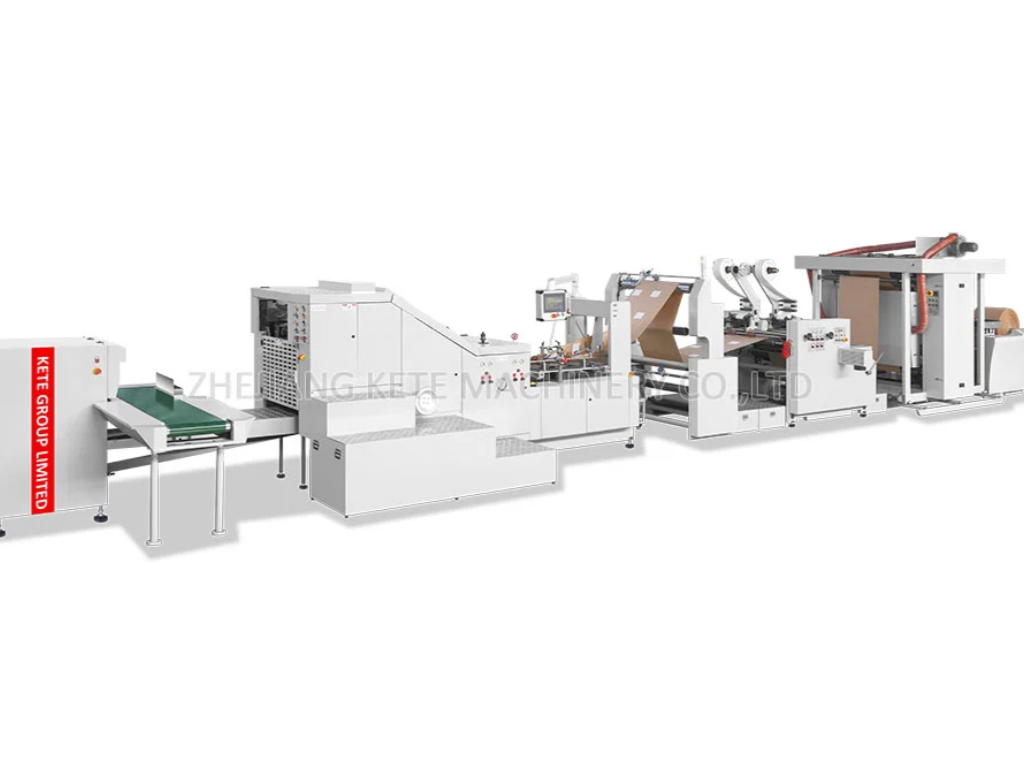
Step 1 — Write your spec sheet. Bag type. Dimensions (width × bottom × height in mm). Paper weight range (gsm). Target output (bags per day). Handle requirement (yes/no, twisted/flat). Inline printing (yes/no, how many colors). Voltage and frequency. Destination port. This document is your RFQ. The more precise it is, the more accurate the quotes you’ll get back.
Step 2 — Send to 3 to 5 suppliers. Don’t put all your hope in one quote. Send your spec sheet to at least three manufacturers. Include two Chinese manufacturers (who dominate this market on value) and, if your budget allows, one European supplier for a quality benchmark.
Step 3 — Score the responses. Use the eight-question checklist from Section 5. A supplier who answers all eight questions clearly, provides verifiable certifications, and connects you with a reference customer goes to the top of your shortlist, even if their price isn’t the lowest.
Step 4 — Verify before you deposit. Schedule a live video factory tour. If the budget allows, commission a third-party inspection (SGS, Bureau Veritas, or Intertek, typically $500 to $1,500) before the balance payment. This is not paranoia; it’s standard practice for capital equipment imports.
If you’re comparing suppliers and want to start with a team that has been helping first-time international buyers navigate this exact process for over ten years — offering specification consulting, a dedicated first-time buyer resource, and virtual factory tours that let you see the production floor from your desk — KETE’s sales engineers are available at sales@ketegroup.com to review your requirements and provide a detailed quotation with no obligation (Konsültasyon İsteyin).
Get Transparent Paper Bag Machine Pricing for Your Production Line
KETE provides detailed FOB quotations with full component-brand disclosure, landed-cost estimates, and no-obligation specification consulting.
Request a quotationReferences
- Persistence Market Research. “Paper Bag Market to Reach US$ 9.6 Billion by 2032.” 2026. https://sg.finance.yahoo.com/news/paper-bag-market-reach-us-153000502.html
- DIResearch/百语方略. “Paper Bag Making Machine Market Size & Share Analysis.” 2025. https://dxpress.gelonghui.com/p/3570690
- Intel Market Research. “Fully Automatic Paper Bag Machine Market Growth Analysis 2026-2032.” 2026. https://www.intelmarketresearch.com/fully-automatic-paper-bag-machine-market-21806
- KETE GROUP. “Quality & Warranty.” https://www.ketegroup.com/quality/
- KETE GROUP. “Contact.” https://www.ketegroup.com/contact/
- KETE GROUP. “Paper Bag Making Machine.” https://www.ketegroup.com/paper-bag-making-machine/
- KETE GROUP. Homepage. https://www.ketegroup.com/