TR
TR  EN
EN  RU
RU  ES
ES  FR
FR  AR
AR  PT
PT  IT
IT  ID
ID  KO
KO  DE
DE  VN
VN  TH
TH  IN
IN 
The printed package is the main point of contact between the identity of a brand and the perception of the consumer in the modern economy of visual communication. But the replication of high-fidelity, photographic images through color printing on industrial media, such as corrugated cardboard to advanced polymer films, poses a basic technical challenge. Industrial printing presses, flexographic and rotogravure systems, are binary in nature; they either apply a certain ink or not. They are unable to naturally adjust the density of a single color ink to produce a gradient. This requires an advanced mediation layer: halftone printing.
This guide explores the mechanical, optical, and systemic variables of this essential halftone printing technique, providing a comprehensive framework for professionals in the printing industry to optimize their production output. In the world of commercial printing, understanding how to achieve consistent, high-definition results is paramount.

What Is Halftone Printing
At its core, the halftone technique is a reprographic printing method that approximates continuous tone digital images through the use of dots, which are either different in size or different in spacing, thereby producing a gradient-like effect and capturing intricate details. A printed image on a flexible pouch is to the uninitiated a smooth flow of colors and shadows. The same picture, to the professionals, is a calculated structure of thousands of discrete geometric units. The halftone dot is the atomic unit of the visual currency on a package, which converts the complex light data into a language that can be executed by mechanical presses.
The history of halftone development was the answer to the all-or-nothing of letterpress and lithography. In modern professional packaging, halftone enables the reproduction of CMYK (Cyan, Magenta, Yellow, and Black) overlays, which, at a normal viewing distance, are combined by the human eye into a complete palette of color. It is not just an aesthetic decision but a strict mathematical necessity of any high-speed production line in which photographic realism is the goal.
The Science of Dots: How Halftone Creates Continuous Tones
The effectiveness of halftone printing depends on the physiological constraints of the human visual system, namely, the effect of spatial integration. When the discrete points of color are put too close to each other, the primary visual cortex of the brain cannot distinguish the separate dots and instead perceives the mean reflected light as a solid tone. It is the optical illusion that drives the multi-billion-dollar packaging business.
Halftoning is a science that trades off resolution and tonal depth. When the dots are too large, the image will look pixelated or rough; when they are too small, such as with smaller dots, the physical constraints of the printing plate and the surface tension of the substrate can make the dots disappear or become blurred, resulting in the loss of detail in the highlights or shadows.
AM Screening vs. FM Screening: Choosing the Right Grid
In the industrial landscape, there are two primary methodologies for halftone screening: Amplitude Modulation (AM) and Frequency Modulation (FM).
AM Screening (Traditional): It is the most common technique in flexographic and rotogravure printing. The dots in AM screening are placed on a grid that is fixed. The dots grow in size (amplitude) to produce a darker tone and shrink in size to produce a lighter tone. The dots are equidistant at their centers. AM screening is preferred due to its predictability and ability to be controlled easily on high-speed presses, but it is prone to moiré patterns unless controlled properly.
FM Screening (Stochastic): FM screening uses microscopic-sized dots of uniform size. The tonal variation is obtained by altering the number of dots in a particular area (frequency). Since the dots are randomly or pseudo-randomly spaced, FM screening avoids the possibility of moiré and can achieve almost photolike detail. Nevertheless, FM screening involves an exceptional accuracy in ink transfer and plate mounting since the minute dots are very sensitive to pressure changes.
The Importance of LPI (Lines Per Inch) in Packaging Detail
A halftone image is resolved in Lines Per Inch (LPI), or the screen ruling. This represents the number of lines or the number of lines of dots packed into a single inch of the printing surface. This determines output resolution and is often confused with dpi (dots per inch) in digital printing.
Düşük LPI (6585): This is normally applied to corrugated boxes or high absorbency substrates where fine detail would be lost to ink spread.
Orta LPI (100-133): The standard of most consumer products and paper-based packaging.
Yüksek LPI (150-200+): It is used in high-end flexible packaging, labels, and cosmetic boxes.
Hiking the LPI enhances the smoothness of the image but puts a heavy load on the printing machine. The printing process requires a very stable press environment because a single micron of vibration can cause these tightly spaced dots to overlap and destroy the clarity of the design.
Technical Variables for High-Definition Halftone Reproduction
Production of a high-definition halftone is not a set-and-forget process. It is a multi-physical optimization problem. The aim of the professional packaging setting is to ensure that the dot remains intact between the digital file and the plate-making process and ultimately onto the substrate.
Controlling Dot Gain for Crisp Imagery
Dot Gain (Total Dot Area Growth) is one of the most intractable problems in industrial printing. As a printing plate transfers ink onto a substrate, the physical force causes the ink to be dispersed, resulting in the dot on the final product being larger than the larger dots on the plate.
The dot gain depends on a number of factors: the viscosity of the ink, porosity of the material, and, most importantly, the nip pressure between the plate cylinder and the impression cylinder. Unless dot gain is computed and corrected at the pre-press stage, the mid-tones of an image will be too dark, and the shadows will plug up, losing all definition. To control this variable, a press that has the ability to adjust the size of the dots and its pressure on a micrometer scale is necessary to make sure that the mechanical squeeze is maintained to the lowest possible level.
Avoiding Moiré Patterns Through Precise Screen Angles
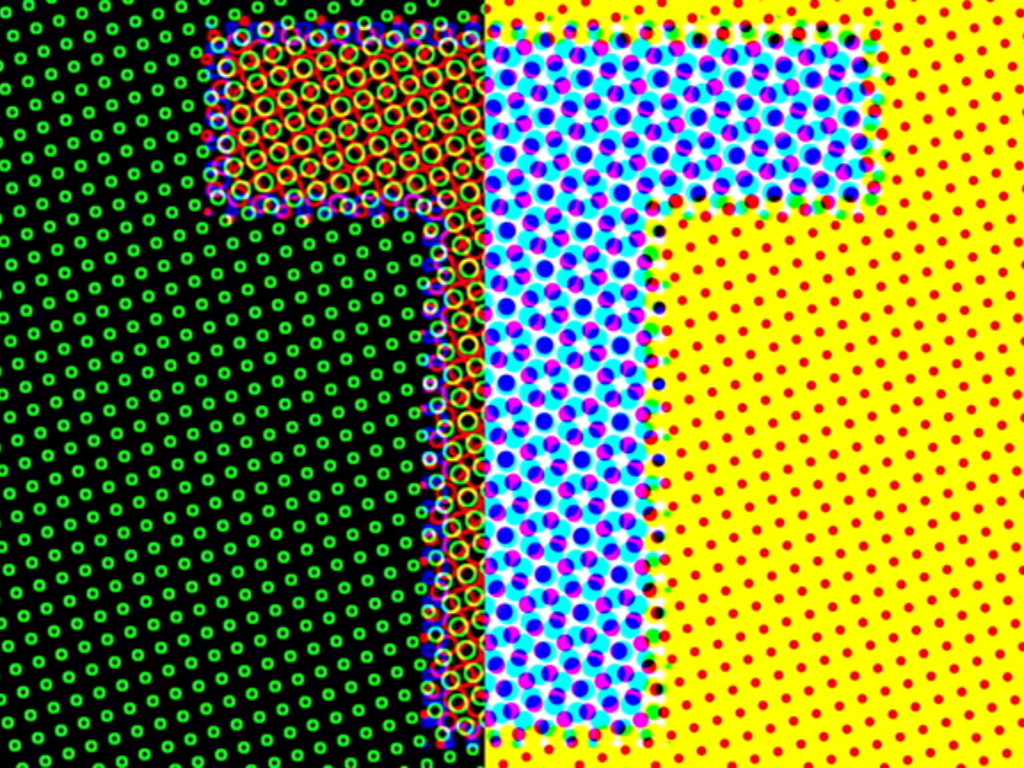
The fingerprints of an uncalibrated system are called moire patterns. These undesired patterns of interference arise when two or more halftone screens are superimposed at angles that are not compatible. Each color in a typical CMYK process has to be rotated to a particular angle, usually 15, 45, 75 and 90 degrees, so that the dots create a rosette pattern instead of a distracting geometric grid.
In flexography, the problem is further complicated by the Anilox roller, which also has a cell structure with its angle. When the angle of the halftone screen on the plate conflicts with the angle of the Anilox roller, a moire pattern may occur across the entire web, particularly affecting the quality of the halftone imprint. This can only be solved by having a profound knowledge of the geometric synergy between the hardware of the machine and the digital screening of the plate.
Diagnostic Rigor: Identifying and Rectifying Halftone Defects
The quest to achieve perfection of the halftone is often hampered by physical aberrations that arise during the transfer of ink, especially when trying to replicate different shades of color. The capability of diagnosing these defects within a short time is critical in a high-speed industrial environment to reduce the waste of materials. Slurring is one of the most widespread problems, in which the halftone dots are not circular but elongated. This is hardly a digital error; it is a mechanical manifestation of a speed difference between the substrate and the plate cylinder. The dot is dragged across the substrate when the surface speeds are not synchronized perfectly, and this destroys the visual resolution of the image.
The other defect is the other critical defect, and it is known as Bridging, where the ink fills the gaps between the individual dots, forming a solid mass of color where a gradient is supposed to be. This is usually brought about by a mixture of high nip pressure and low-viscosity colors of ink. Likewise, the “Halo Effect” or dark ring of ink around the periphery of the dots is a sign of an over-impression condition in which the mechanical squeeze is pushing the ink to the edges of the relief. Through a systematic diagnostic model, press operators are able to determine whether a defect lies in ink chemistry, plate mounting, or mechanical calibration.
| Halftone Defect | Visual Symptom on Substrat | Primary Mechanical/Technical Cause | Recommended Corrective Action |
| Slurring | Dots appear elongated or oval-shaped | Surface speed mismatch between Plate and Web | Calibrate servo-drive synchronization |
| Visual EffectsBridging | Dots merge/connect in mid-tone areas | Excessive nip pressure or low ink viscosity | Reduce impression; optimize ink tack |
| Halo Etkisi | Dark ink ring around dot perimeter | Over-impression (Mechanical squeeze) | Re-calibrate to the “Sweet Spot” pressure |
| Moiré | Distracting geometric/interference patterns | Incompatible screen angles or Anilox LPI | Re-calculate angles; check Anilox geometry |
| Ghosting | Faint shadow images in solid areas | Poor ink distribution or mechanical vibration | Check doctor blade stability & Anilox LPI |
Why Halftone Consistency is the Benchmark for Printing Press Quality
In high-volume manufacturing, one successful print does not count. The real economic worth is consistency, the capability to preserve the same quality of the halftone throughout a 50,000-meter production run and through several batches over several months.
The final stress test of a printing press is halftone consistency. Halftone dots are the first to show any instability in the system since they are so small. When the tension control of the machine varies, the dots will move and lead to color drift. When the drying system is not uniform, the ink will not spread uniformly and the dot gain will vary. Thus, when a packaging expert considers a press, he is not merely considering speed; he is considering the capability of the machine to serve as a stable laboratory in the reproduction of microscopic dots. The seriousness that binds the whole production ecosystem is consistency, so that the color of the brand on a shelf in New York is the same as the one on a shelf in Tokyo.
The Metrics of Perfection: Quality Control and Standardized Measurement
The shift of subjective visual evaluation to objective, empirical measurement is the mark of professional maturity in the harsh conditions of industrial manufacturing. A printing operation should not only make the pressroom a production floor, but a laboratory of optical physics to produce a high-definition halftone. The Perfect Dot is not an opinion; it is a measurable condition that is determined by specific technical measurements.
The Role of Densitometry and the Murray-Davies Equation
The densitometer is the main instrument of this analytical arsenal. Two important variables that we could use in halftone printing were Solid Ink Density (SID) and Dot Area. The former is used to control the thickness of the ink film to a level that gives the desired color saturation, and the latter is used to measure the physical development of the halftone dots. Engineers use the Murray-Davies equation to compute the technical health of a print run, in which the effective dot area is computed by dividing the integrated density of the halftone tint by the density of the solid ink.
When a press operator notices a variation in dot area, such as a 50% tint that reads 68%, they observe a measurable failure in pressure or ink viscosity control. A facility can create a closed-loop system in which mechanical adjustments are made based on data and not intuition by setting a baseline of the Target Dot Gain.
Spectrophotometry and the Delta E Standard
Whereas densitometry is used to determine the amount of light reflected, spectrophotometry is used to determine the quality of the light in the visible spectrum. Color accuracy in the complicated world of CMYK and Extended Gamut (ECG) halftones, where colors are produced by optical overprinting of transparent dots, is quantified by Delta E. This measure is the mathematical difference between a desired color and the printed output in the L*a*b* color space. In the case of global brands, a Delta E of less than 2.0 is usually the non-negotiable point of acceptance. This degree of accuracy demands a printing press that is perfectly stable in registration; any movement of the halftone dots by a fraction of a millimeter will alter the spectral composition of the color, and a spike in Delta E will be detected and the production batch will be rejected.
Global Standards: ISO 12647-6 and G7 Calibration
The industry follows strict international standards to enable a universal language of quality. The ISO 12647-6 standard defines flexographic printing requirements, which gives a guideline to dot gain curves and ink latitudes. Likewise, the G7 approach is concerned with gray balance and visual mid-tone consistency, such that a halftone image would look the same no matter what substrate or which press is used. Standardized metrics are the unchangeable account of the pressroom, which gives an open account of performance that creates trust between the manufacturer and the brand owner. In the case of KETE, the minimum of our mechanical design philosophy is to design machines that can always achieve and surpass these ISO standards.
Achieving Printing Excellence with KETE Precision Engineering
With nearly 40 years of specialized experience in the packaging printing sector, KETE operates at the critical intersection of reprographic theory and mechanical rigor. We understand that the “Perfect Dot” is the result of disciplined engineering, not a variable of chance. Our high-speed flexo presses utilize advanced servo-drive technology on each station, enabling independent, micron-level control of the plate cylinder and anilox roller. This precision effectively neutralizes the mechanical vibrations that lead to slurred dots or ghosting in high-LPI runs.
rotograFor the professional seeking to scale operations, KETE provides a strategic partnership rather than a mere transaction. Our expert team aligns sophisticated machinery—from high-volume rotogravure systems to agile, fast-setup flexography—with your specific operational goals. With a global footprint spanning over 80 countries and a comprehensive one-year warranty, we ensure that your investment is grounded in reliability. We do not simply manufacture equipment; we provide the stable platform required for the science of halftoning to perform without compromise, ensuring your output remains consistent from the first meter to the last.
Adapting Halftone Strategies for Different Packaging Substrates
The environment of a halftone dot is what determines its behavior. The substrates used in professional packaging are of an enormous variety, and each has a varying surface energy and topography.
Paper and Kraft: These are porous, thirsty materials. They are more likely to drag ink deep into the fibers, resulting in high dot gain. In order to compensate, professionals tend to employ lower LPI (85110) and sharper dot shapes to preserve clarity.
BOPP and PE Films: These are non-absorbent materials used in snack food and beverage labels. The ink is deposited on the surface. In this case, the problem is the adhesion of ink and pinholing. High LPI (150+) can be used, but it needs a press that has better tension control to avoid the film stretching and distorting the dot grid.
Aluminum Foil and Metallized Films: These are very reflective surfaces that enhance any defect in the halftone. Any discrepancy in the dot structure will cause apparent banding.
Knowledge of these interactions enables the printer to choose the right Anilox volume and plate hardness, and the halftone strategy is optimized for the material in question.
Future Trends: Sustainability and High-Resolution Halftone
The packaging sector is in the process of structural transformation to sustainability. This trend is directly affecting the halftone technology in two major ways.
First, there is an impetus to Extended Gamut Printing (EGP). Printers can reproduce 90 percent of Pantone colors with only halftone overlays by using a standardized set of 7 colors (CMYK + Orange, Green, Violet). This saves on ink wastage, removes the necessity of wash-ups between jobs and is solely dependent on the accuracy of the halftone dot to produce spot colors.
Second, the shift towards thinner, recyclable monomaterial films and paper-based barriers demands even more sensitive pressure control. The more environmentally friendly the material is, the harder it is to print on. The new era of the Green Packaging is the high-resolution halftone methods, which are backed by energy-efficient LED-UV curing and water-based inks. The capability to produce high-end looks using less ink and thinner papers is no longer a luxury, but a competitive requirement.
Sonuç
Learning the art of halftone printing, the geometry of screen angles, and the physics of dot gain is what makes the difference between an ordinary packaging supplier and a global manufacturer. It is a science in which microscopic accuracy results in macroscopic brand success. With the knowledge of the variables presented in this guide and the hardware engineered to be stable, packaging professionals can stretch the limits of what can be done on the shelf.
Our mission at KETE is to give the mechanical base to this excellence. You may be in the process of switching to high-LPI flexible packaging, or you may be trying to stabilize your long-run production. Our flexographic and rotogravure engineering experience is at your disposal. The quality of the detail determines the future of packaging and the dot determines the quality of the detail. We would like you to join us in the quest for the ideal print.
SSS
Q: How to make a halftone print?
To create a halftone print, you must convert a continuous-tone image (like a photograph) into a pattern of discrete dots of varying sizes or spacing.
Digitally: In software like Adobe Photoshop, you can convert an image to “Grayscale,” then to “Bitmap” mode, selecting Halftone Screen to define the frequency (LPI) and angle.
Physically: The resulting dot pattern is transferred onto a printing medium—such as a photopolymer plate for flexography, a metal cylinder for gravure, or a mesh screen for screen printing—which then dictates where and how much ink is deposited onto the substrate.
Q: Is halftone used in modern printing?
Absolutely. It remains the backbone of the global commercial printing industry. While digital technology has changed how dots are generated, the halftone process is still required for:
Commercial Packaging: Flexographic and gravure presses use halftones to print high-definition graphics on plastic films and cardboard.
Publications: Magazines and newspapers rely on CMYK halftone dots to produce full-color imagery.
Digital Printers: Your office laser or inkjet printer uses a variation of halftoning (often called dithering) to simulate gradients using tiny ink droplets.