TH
TH  EN
EN  RU
RU  ES
ES  FR
FR  AR
AR  PT
PT  IT
IT  ID
ID  KO
KO  TR
TR  DE
DE  VN
VN  IN
IN 
What Is a Non-Woven Bag?
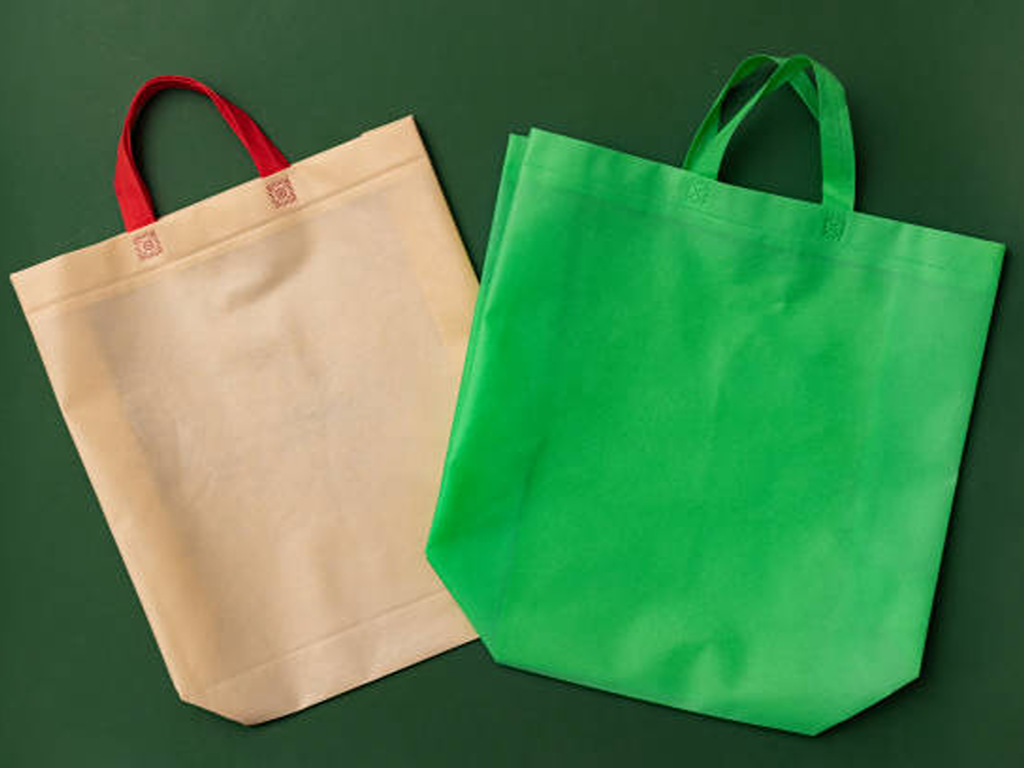
A non-woven bag is a reusable carrier bag made from non-woven polypropylene (PP) fabric. The material is textile-like, but it’s created by bonding fibers together through heat, chemical, or mechanical processes — without ever spinning yarn or weaving threads. Think of it this way: traditional fabric is built like a fishing net. You first spin fibers into thread, then weave those threads into cloth. Non-woven fabric skips both steps. It takes raw polymer fibers and bonds them directly into a sheet, much like pressing pulp into paper — except the result is soft, flexible, and strong enough to carry your groceries for years.
You’ve almost certainly held one. The reusable shopping bags handed out at supermarkets, the branded tote bags at trade shows, the insulated delivery pouches from food delivery platforms — the vast majority are non-woven polypropylene bags. They occupy a curious middle ground in the material world: they feel like cloth, drape like cloth, and can be printed like cloth, but they’re made from the same polymer family as your takeaway container. That’s not a deception — it’s the defining innovation of the non-woven category.
The name itself tells the story. “Non-woven” means exactly what it says: the fabric is never woven. In textile engineering, there are three fundamental ways to make a fabric — weaving (interlacing warp and weft yarns), knitting (interlooping a single continuous yarn), and non-woven processing (bonding a web of loose fibers directly into a sheet). That third path is what gives non-woven bags their unique combination of low cost, high strength, and fabric-like feel. It’s also why the industry term is “non-woven fabric” rather than “non-woven cloth” — “fabric” covers all fiber assemblies, while “cloth” implies traditional textile construction.
Understanding this distinction is the key to understanding everything that follows — why some non-woven bags last five years and others tear in a week, why the material is simultaneously recyclable and an environmental concern, and why the same GSM label on two different bags can mean completely different quality.
What Materials Are Non-Woven Bags Made Of?
The overwhelming majority of non-woven bags — roughly 80% or more of the global market — are made from polypropylene (PP). Polypropylene is a thermoplastic polymer derived from fossil fuels, selected for this application because it’s lightweight, hydrophobic (naturally water-repellent), chemically resistant, and relatively inexpensive to process. In bag-grade spunbond fabric, PP typically appears in weights ranging from 40 to 140 grams per square meter (GSM) — the single most important quality indicator in the non-woven bag industry.
GSM works like the thread count on a bedsheet or the gram weight of a T-shirt: the higher the number, the denser and more substantial the material. A 60 GSM non-woven bag feels thin and crinkly — acceptable for a lightweight giveaway bag that might be used a handful of times. An 80–100 GSM bag has the heft and drape of mid-weight fabric, suitable for standard retail shopping bags. At 120 GSM and above, you’re in premium territory — bags that feel substantial in the hand, hold their shape on a shelf, and survive hundreds of use cycles.
Beyond PP, several other materials appear in specialized non-woven bag applications:
| วัสดุ | แหล่งที่มา | Typical GSM Range | แอปพลิเคชันทั่วไป |
|---|---|---|---|
| โพลิโพรพิลีน (PP) | Fossil-based polymer | 60–120 | Shopping bags, promotional giveaways, grocery totes |
| Polyester (PET) / rPET | Virgin or recycled plastic bottles | 80–140 | Premium eco-branded bags, food packaging, medical supply pouches |
| Cotton / Jute Blends | Natural plant fibers, often blended with PP | 150–300 | High-end gift bags, luxury retail packaging |
| Nylon-Reinforced PP | PP fabric with nylon fiber integration | 100–200 | Heavy-duty industrial bags, construction material packaging |
PET non-woven bags, particularly those made from recycled PET (rPET), occupy a growing niche. Because rPET carries the “made from recycled bottles” narrative, it appeals to brands that want a stronger sustainability story than PP alone can provide. However, rPET non-woven fabric is typically more expensive to produce and slightly less soft to the touch than spunbond PP, which has kept PP firmly in the lead for mainstream applications.
A note worth emphasizing: PP as a material is technically 100% recyclable. The polymer chain can be re-melted and re-extruded multiple times without significant degradation. But the real-world recyclability of a non-woven bag depends entirely on whether your local municipal recycling system accepts it — and many don’t, because non-woven bags fall into the “soft plastic” category that requires separate collection streams from rigid plastic containers. This gap between technical recyclability and practical recycling infrastructure is a recurring theme that we’ll return to when we examine the environmental picture.
How Are Non-Woven Bags Manufactured?
Non-woven bag manufacturing happens in two distinct phases — fabric production and bag making — which may occur in the same facility or across two separate factories. Understanding this split is essential because it explains one of the most important quality dynamics in the industry: a bag maker who buys fabric rolls from a third-party mill has less control over material consistency than a vertically integrated operation that extrudes its own fabric. This is also where the difference between a bag that lasts and a bag that disappoints is physically determined — not in the brand name printed on the side, but on the factory floor.
Grasping the manufacturing process also gives you a lens for evaluating quality. Once you know what spunbond fabric looks like when it’s been properly thermally bonded versus under-bonded, or what a clean ultrasonic weld seam looks like versus one that’s been overheated, you can spot the difference between a well-made bag and a cheaply produced one at a glance.
Non-Woven Fabric Production: Spunbond, Meltblown, and Beyond
The dominant technology for producing non-woven bag fabric is the spunbond process, which accounts for over 90% of bag-grade non-woven material worldwide. It works like this:
Polypropylene granules are fed into an extruder and melted at approximately 230°C. The molten polymer is forced through a spinneret — a metal plate perforated with thousands of precisely machined holes, each 0.2 to 0.8 mm in diameter — producing a curtain of continuous filaments. High-velocity air quenches and stretches these filaments as they descend, drawing them down to a final diameter of 15 to 35 micrometers (roughly one-third the thickness of a human hair). The filaments land on a moving conveyor belt in a random, layered web pattern. This web then passes through heated calender rolls that press and partially melt the fiber contact points, bonding them into a cohesive fabric sheet.
The entire line runs at speeds of 100 to 500 meters per minute, depending on the fabric weight and machine configuration. The result is a continuous roll of spunbond polypropylene fabric — soft, breathable, and strong — ready to be slit into narrower rolls for the bag-making stage.
The meltblown process, a technological cousin of spunbond, produces much finer filaments — typically 1 to 10 micrometers in diameter — by blasting the molten polymer stream with high-velocity hot air at the die exit. This creates a dense web of microfibers with excellent filtration properties. In the bag world, meltblown fabric rarely appears alone; it’s more commonly sandwiched between two spunbond layers to create SMS (spunbond-meltblown-spunbond) composite fabric, used when extra barrier properties are required.
Other non-woven technologies like spunlace (hydroentanglement, where high-pressure water jets interlock fibers) and needle-punching (mechanical interlocking via barbed needles) are less common in bag production but appear in premium and specialty bags, particularly those using natural fiber blends where thermal bonding isn’t effective.
From Fabric Roll to Finished Bag: Cutting, Joining, and Printing
Once the fabric roll is ready, the bag-making process follows four sequential steps:
Step 1 — Cutting. Automated cutting tables, guided by digital patterns, slice through multiple layers of fabric simultaneously. The precision of this step determines whether every bag in a 50,000-unit order has the same dimensions — a tolerance of ±1 mm is standard on professional equipment.
Step 2 — Joining. This is where non-woven bag manufacturing diverges most visibly from traditional textile production. The dominant joining method is ultrasonic welding, not sewing. An ultrasonic welder operates at approximately 20 kHz — the vibrating horn presses two layers of PP fabric together, and the high-frequency mechanical vibration generates enough frictional heat at the contact point to melt and fuse the polymer. The result is a seam that’s often stronger than the surrounding fabric, created without thread, without needle holes, and at speeds of 5 to 15 meters per minute. For bags that do use thread stitching — typically cotton-blend or premium laminated bags — industrial sewing machines run at 8 to 12 stitches per inch with synthetic thread matched to the fabric weight.
Good ultrasonic weld = flat, uniform, and free of brown burn marks. Bad weld = discoloration, rough edges, or visible gaps. You can spot the difference in seconds — run your finger along the seam. Smooth means properly fused; gritty means the power or speed was off.
Step 3 — Printing. Three printing methods dominate, each suited to different order profiles. Flexographic (flexo) printing is the workhorse for large runs — it can lay down up to 10 colors at speeds of 100 to 250 meters per minute on non-woven fabric, using water-based or UV-curable inks. Screen printing delivers more saturated, opaque colors and is cost-effective for medium runs where a bold logo is the priority. Digital heat-transfer printing handles short runs and photorealistic designs that would be uneconomical to set up on a flexo press.
Step 4 — Handle Attachment and Quality Control. Handles come in three forms: die-cut (D-cut or W-cut shapes carved directly from the bag body, requiring no additional material), ultrasonically welded PP webbing (loop handles), or sewn cotton/nylon straps. After handle attachment, each bag passes through a quality control station — on premium lines, this includes automated counting, visual defect detection, and random-sample tensile testing — before being folded, counted, and packed into shipping cartons.
Types of Non-Woven Bags
The world of non-woven bags isn’t a single product category — it’s a family of designs, each optimized for different use cases. Choosing the right bag type comes down to three variables: how much weight you need to carry, what visual impression you want to make, and whether you need water resistance beyond what the base fabric provides. The three categories below cover roughly 95% of the bags you’ll encounter in the market.
D-Cut and W-Cut Bags — The Everyday Workhorses
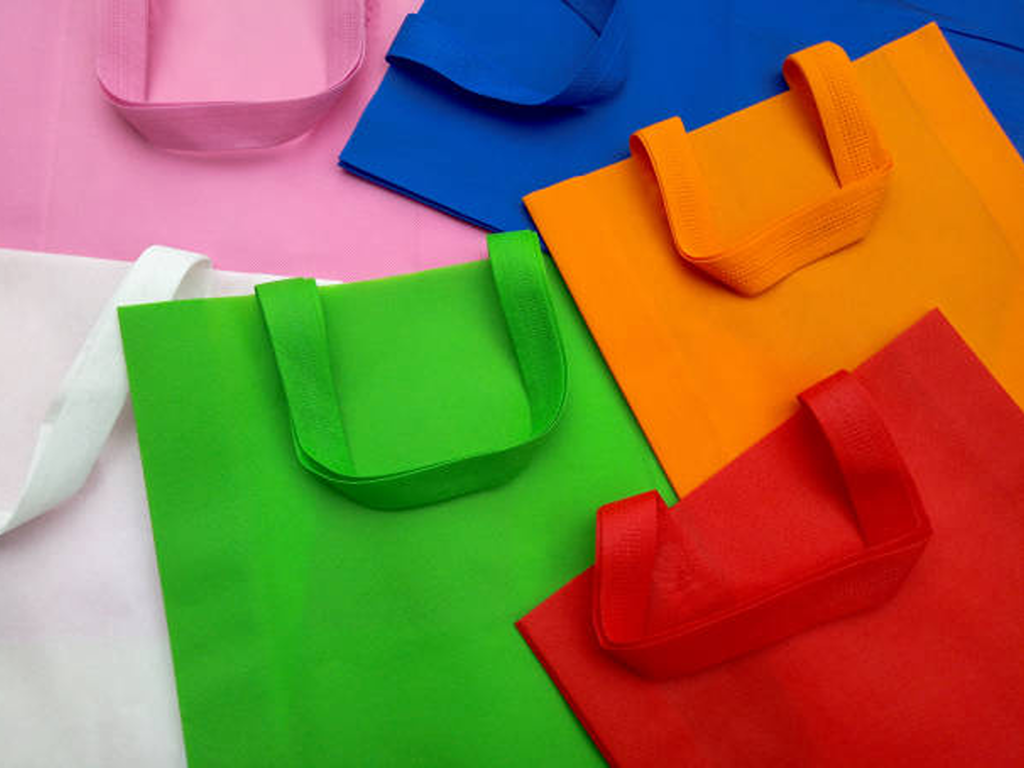
D-cut bags are the most common non-woven bag design by a wide margin, and for good reason: the handle is cut directly from the bag body, meaning zero additional material, zero additional labor for handle attachment, and the lowest possible per-unit cost. The “D” refers to the shape of the cutout — a rounded rectangular opening at the top of the bag that forms a built-in carrying handle. A well-designed D-cut bag has rounded corners on the cutout (reducing stress concentration and lowering tear risk by roughly 40% compared to sharp-corner designs) and sufficient material weight — at least 70 to 80 GSM — to prevent the handle from stretching out of shape under load.
W-cut bags (sometimes called U-cut bags) follow the same die-cut principle but with a vest-shaped handle profile that echoes the familiar shape of a plastic grocery bag. The deeper handle cut allows the bag to be carried over the shoulder, making them popular with clothing retailers, bookstores, and cosmetic shops. Typical D-cut bag dimensions run 30 × 35 × 10 cm (width × height × side gusset), with load capacities in the 3 to 8 kg range depending on fabric weight.
Loop Handle and Vest Bags — Upscale Look, Everyday Utility
Loop handle bags represent the aesthetic upgrade path. Instead of a die-cut opening, two soft PP webbing loops are ultrasonically welded or sewn to each side of the bag opening. The result is a more comfortable carry experience (the wider webbing distributes weight across the hand instead of concentrating it on a thin cut edge), a more polished appearance, and a significantly higher load capacity — 8 to 15 kg is typical. Add a bottom gusset (a folded-in expandable panel at the base), and the bag stands upright on its own, making it the go-to choice for retail brands, premium gift packaging, and corporate promotional events where the bag itself is part of the brand experience.
The quality-critical specification for loop handle bags is the handle attachment strength. A properly welded handle should withstand at least 50 newtons per centimeter of weld width before separating — in practical terms, the bag body should tear before the handle detaches. If a loop handle bag’s handle pulls clean off leaving the bag body intact, that’s a manufacturing defect, not a design limitation.
Vest bags are the lightweight variant — essentially a thinner, more economical version of the D-cut design, typically made from 50 to 70 GSM fabric. They’re the non-woven answer to the single-use plastic carrier bag: minimal material, minimal cost, designed for light loads and high-volume distribution.
Laminated, Gusseted, and Specialty Non-Woven Bags
Laminated non-woven bags take the base PP fabric and bond a thin polypropylene film to the surface — either through heat lamination (durable, permanent bond) or cold adhesive lamination (lower cost but prone to delamination over time). The result is a 100% waterproof surface with enhanced print vibrancy — colors pop against the glossy or matte film in a way that raw spunbond fabric can’t match. These bags dominate the cosmetics, wine and spirits, and luxury gift sectors, where visual presentation and moisture protection are non-negotiable.
Side-gusset and bottom-gusset bags incorporate expandable folded panels — typically 5 to 12 cm deep — that allow the bag to open into a three-dimensional rectangular shape. This makes them ideal for boxed products, wine bottles, thick catalogs, and any application where the bag needs to accommodate a structured object without distorting. E-commerce brands favor gusseted non-woven bags for premium packaging that doubles as a reusable branded item.
Specialty formats round out the category: drawstring closure bags for shoe storage and travel organization, zippered bags for cosmetics kits and document cases, and insulated thermal bags (with an added aluminum foil or foam layer) for food and grocery delivery. Each represents a variation on the same fundamental non-woven platform, proving the material’s adaptability across a remarkably wide application range.
Advantages of Non-Woven Bags
Five characteristics explain why non-woven bags have displaced single-use plastic carriers across much of the world’s retail landscape:
Durability and load capacity. A properly constructed 80 GSM non-woven PP bag comfortably carries 10 to 15 kg — the equivalent of six two-liter soda bottles — and can survive hundreds of use cycles without structural failure. This isn’t marketing hyperbole; it’s a function of the spunbond fiber network’s ability to distribute stress across thousands of bonded fiber junctions rather than concentrating it along discrete yarn paths as in woven fabric.
Water resistance plus breathability. This pairing sounds contradictory but is physically straightforward. Polypropylene has a naturally low surface energy (approximately 29 mN/m), which means water beads up and rolls off rather than wetting the surface. At the same time, the spunbond fiber web contains countless microscopic gaps between bonded filaments — large enough for air molecules to pass through, small enough that water droplets (held together by surface tension) can’t penetrate. The practical result: you can set a wet umbrella in a non-woven bag without the water seeping through, but leave the bag in a humid closet for a month and it won’t grow mold.
Customizability. Non-woven PP fabric accepts print with exceptional fidelity. Whether it’s a single-color screen-printed logo or a full-coverage flexo-printed photographic design, the surface holds ink well and presents a clean, professional finish. This has made non-woven bags the default promotional merchandise item at conferences, trade shows, and retail launches — they’re essentially walking billboards at a per-impression cost that’s difficult to beat.
Cost-effectiveness. At wholesale volumes (10,000+ units), a standard 70 GSM D-cut non-woven bag costs approximately $0.12 to $0.18 per unit at 2025 Chinese factory-gate pricing. A comparable canvas tote bag runs $2 to $5 — roughly 15 to 30 times more expensive — while offering perhaps double the durability at most. For businesses distributing thousands of bags, this cost differential is decisive.
Lightweight and packable. A folded non-woven bag occupies roughly the volume of a paperback book and weighs less than 50 grams. This portability — the bag lives in a glove compartment, handbag, or desk drawer until needed — is arguably the single most important driver of actual reuse behavior, and therefore of real-world environmental performance.
These advantages are real and well-documented. But they tell only half the story. The other half — the one that matters most if you care about the actual environmental outcome — depends entirely on what happens after the bag leaves the store.
You now understand what makes a great non-woven bag. If you’re sourcing bags for production, the right machinery partner is the difference between consistent quality and costly surprises.
Explore Bag Production SolutionsAre Non-Woven Bags Actually Eco-Friendly?
This is the question that sits at the heart of every discussion about non-woven bags, and the honest answer is more nuanced than either the “100% eco-friendly!” marketing claims or the “it’s just greenwashed plastic” dismissals would suggest. The environmental performance of a non-woven bag is not a property of the material — it’s a property of how many times you use it. Used enough times, it’s the best-performing reusable bag across every major environmental metric. Used once and discarded, it’s worse than the single-use plastic bag it was meant to replace.
The Reuse Threshold — What the Numbers Actually Say
The foundational study in this field remains the UK Environment Agency’s 2011 life cycle assessment of supermarket carrier bags (Report SC030148). Its headline finding: a non-woven polypropylene bag must be reused at least 11 times to have a lower global warming impact than a conventional single-use HDPE plastic bag. If a non-woven PP bag is used only once and then thrown away, its production energy consumption is 17.8 times higher and its carbon emissions are 16.7 times higher than the disposable bag it replaced. Eleven reuses is the break-even point.
A more recent life cycle assessment published in the Journal of Cleaner Production (Ahamed et al., 2021, Vol. 280) examined the Singapore context, where almost all municipal waste is incinerated in waste-to-energy plants rather than landfilled. In this scenario, the researchers found that a reusable non-woven PP bag only needed four reuses to outperform single-use HDPE — the energy recovered from incineration at end-of-life offset a significant portion of the production footprint. At 50 reuses, the non-woven PP bag’s global warming potential was dramatically lower than all alternatives tested.
The takeaway is clear: the environmental outcome is determined by user behavior, not material choice. A non-woven bag that lives in your car trunk and gets used three times a week for two years is an environmental win by any reasonable measure. A promotional non-woven bag handed out at a conference and tossed in the hotel room bin the next morning is an environmental loss.
Reuse a non-woven bag 11 times and it breaks even with single-use plastic.
At 50 reuses, its global warming impact is lower than cotton, paper, or biodegradable bags — by a wide margin.
Sources: UK Environment Agency (2011), Ahamed et al., Journal of Cleaner Production (2021)
Non-Woven vs. Cotton vs. Paper vs. Plastic — A Fair Comparison
If non-woven PP bags need 4 to 11 reuses to break even with single-use plastic, where do the other alternatives stand? A fair comparison using the same life-cycle yardstick reveals some counterintuitive findings:
| ประเภทกระเป๋า | Single-Use Carbon Footprint (kg CO₂e) | Reuses Needed to Beat Single-Use HDPE | Best-Case Scenario | Worst-Case Risk |
|---|---|---|---|---|
| Non-Woven PP (spunbond) | ~0.05–0.10 | 4–11 | Reused 100+ times; lowest lifetime impact among all options | Used once and landfilled; 17.8× worse than disposable plastic |
| Cotton Canvas | ~1.5–3.0 | 130–3,657 | Kept and used for 5+ years; natural fiber eventually biodegrades | Collected as “free conference swag” and never used; massive production footprint with zero payback |
| กระดาษคราฟท์ | ~0.08–0.15 | 3–43 | Recycled after use; paper recycling infrastructure is mature | Gets wet, tears, can’t be reused; higher transport emissions due to weight |
| Single-Use HDPE Plastic | ~0.003–0.005 | N/A (baseline) | Properly disposed to waste-to-energy facility | Littered into environment; marine pollution; 400+ year degradation timeline |
| Biodegradable / Compostable Plastic | ~0.04–0.08 | 3–10 | Industrially composted in controlled facility (requires infrastructure) | Sent to landfill — degrades no faster than conventional plastic in anaerobic conditions |
The surprise in this table is cotton. Despite its “natural fiber” reputation, a cotton canvas bag carries an enormous production footprint — cotton cultivation is water-intensive, fertilizer-dependent, and land-hungry. Research from the New Zealand Ministry for the Environment suggests a cotton bag may need anywhere from 130 to over 3,600 reuses to offset its production impact, depending on the specific agricultural practices and transport distances involved. A cotton bag treated as a long-term durable item (kept and used for years) can eventually pay back its environmental debt. A cotton bag collected as free merchandise and left unused in a drawer never does.
Paper bags fare better on biodegradability but worse on nearly everything else: they’re heavier (higher transport emissions per bag), they consume more water and energy to manufacture, and they tear easily, limiting practical reuse. The ideal paper bag is one that gets used a few times, then enters a recycling stream — but the “few times” part is harder to achieve in practice than the material properties suggest.
What Happens When You Throw It Away?
The end-of-life pathway is where the environmental story of any bag — non-woven PP included — reaches its conclusion, and the three possible destinations produce dramatically different outcomes.
Recycling — the best path, but rarely taken. Polypropylene is mechanically recyclable: it can be shredded, re-melted, and re-extruded into new products. But most municipal recycling programs are designed around rigid plastic containers (bottles, jugs, tubs) and don’t accept flexible “soft plastics” like non-woven bags. These require separate drop-off or collection schemes. A non-woven bag thrown into a standard blue bin has a good chance of being sorted out at the materials recovery facility and diverted to landfill or incineration anyway. The material is recyclable; the system often isn’t set up to recycle it.
Incineration — a reasonable outcome in the right infrastructure. In cities and countries with modern waste-to-energy facilities (Singapore, Japan, much of Northern Europe), incineration at 850 to 1,100°C converts PP into primarily carbon dioxide and water vapor, with the heat recovered to generate electricity. Polypropylene has a high heating value of approximately 46 megajoules per kilogram — comparable to diesel fuel — making it an excellent feedstock for thermal energy recovery. The ash residue is minimal and, in well-operated facilities, inert.
Landfill and litter — the worst outcome. In a landfill, deprived of UV light, oxygen, and the microbial activity that would degrade organic matter, polypropylene is remarkably stable. It can persist for decades to centuries without significant decomposition. If a non-woven bag escapes into the environment as litter, the story changes. Exposure to sunlight triggers photo-oxidation, breaking the long polymer chains into progressively shorter fragments. After about 90 days of continuous outdoor UV exposure, a non-woven PP bag starts to embrittle and fragment — but it doesn’t disappear. It turns into microplastic: invisible to the eye, persistent in soil and water. In some ways, that’s worse than the visible litter it replaced.
How to Assess Non-Woven Bag Quality
If you’re ordering non-woven bags — whether 500 for an event or 50,000 for a retail chain — knowing what separates a quality bag from a cheap one can save you from an expensive disappointment. Here are the four checks that matter most:
Check the GSM — but don’t stop there. GSM tells you the fabric weight, and as a rule of thumb: below 70 GSM feels disposable, 80 to 100 GSM is the sweet spot for standard shopping bags, and 100+ GSM is premium territory. But GSM is a weight measurement, not a strength measurement. A 100 GSM bag made from poorly bonded spunbond fabric will tear more easily than a well-made 80 GSM bag from a quality production line. Always request a physical sample before committing to a large order. Hold it up to the light — if you can see significant unevenness in the fiber distribution (dense patches next to nearly transparent ones), the fabric bonding is inconsistent, and the bag’s durability will be unpredictable.
Inspect the seams. On an ultrasonically welded bag, the weld line should be uniform in width, free of burn marks (brown discoloration indicates overheating), and lie completely flat. Run your finger along the seam — it should feel smooth, not rough or gritty. On a stitched bag, the stitch density should be 8 to 12 stitches per inch, with no loose thread ends and no puckering of the fabric along the stitch line. The seam is the most common failure point on any bag, and a visual inspection takes seconds.
Test the handles. Grab the handles and pull. Hard. A well-made bag will have handle attachment points that are stronger than the bag body itself — the fabric should begin to stretch or tear before the handle detaches. If the handle pulls cleanly away from the bag with minimal force, the ultrasonic weld was insufficient or the stitching wasn’t back-tacked. This “fabric fails before the handle” rule is the single most reliable field test of non-woven bag quality.
Evaluate the print. Scratch the printed surface gently with a fingernail — on a quality print job, nothing should flake off. Look at the edges of multi-color designs: clean, sharp transitions between colors indicate good registration; fuzzy or overlapping edges mean the press was poorly calibrated. On a solid-color print area, check for even ink coverage with no thin spots, streaks, or pinholes. For print durability, the industry benchmark is a 3M tape adhesion test (per ASTM D3359 cross-hatch method) achieving at least a 4B rating — but you don’t need a lab to spot a print job that’s already flaking in the sample.
The Manufacturing Side — How Bag Production Works at Industrial Scale
A modern non-woven bag factory doesn’t look much like a traditional textile mill. There are no spinning frames, no looms, no rows of sewing machines operated by workers. Instead, the production floor is organized around a series of automated lines, each centered on a non-woven bag making machine that takes a roll of spunbond fabric at one end and delivers finished, printed, counted, and stacked bags at the other — at a rate of 200 to 400 bags per minute.
The process runs continuously: an unwind stand feeds the fabric roll into the machine, where servo-driven cutting blades slice the fabric to shape with a positioning accuracy of ±0.1 mm. The cut pieces move through ultrasonic welding stations where the side seams and bottom fold are fused in a fraction of a second. If the bag design includes printing, an inline flexo printing unit lays down the artwork directly on the fabric before cutting — eliminating the separate printing step and dramatically reducing per-bag production time. Handle material (for loop handle models) feeds in from separate spools and is welded into place. At the exit end, an automated counter stacks the finished bags in preset quantities.
The difference between an outstanding bag and a mediocre one is determined at this machine level. A bag-making machine with precise servo control, consistent ultrasonic power output, and sharp, well-maintained cutting tools produces bags with uniform dimensions, clean seams, and predictable strength. The same GSM of fabric run on a poorly maintained or imprecisely controlled machine yields bags with wandering seam positions, inconsistent handle welds, and higher defect rates. The machine is the product — the operator mainly monitors and feeds material.
China dominates the global non-woven bag making machinery supply chain, with the Wenzhou-Ruian-Pingyang cluster in Zhejiang Province alone accounting for an estimated 70% or more of worldwide production. This concentration exists because the supporting ecosystem — polymer suppliers, precision machining workshops, ultrasonic component manufacturers, and flexo printing press builders — is all within a two-hour drive radius, enabling the kind of integrated, rapid-iteration manufacturing that’s difficult to replicate elsewhere.
For businesses looking to enter non-woven bag production, partnering with an experienced machinery manufacturer can make the difference between a smooth launch and months of costly equipment troubleshooting. Companies like Kete — which has supplied complete non-woven bag production lines to manufacturers in Kenya and other international markets, with equipment running reliably for over two years post-installation — offer end-to-end solutions spanning standalone bag-making machines to fully integrated printing-and-bag-making lines backed by CE and ISO 9001 certified manufacturing. For those evaluating production equipment, their bag-making machinery specifications and case studies are available online.
Ready to Start Your Non-Woven Bag Production Line?
Partner with Kete for CE-certified, ISO 9001 bag-making machinery backed by 30+ years of manufacturing experience. From standalone machines to fully integrated lines.
คุยกับวิศวกรเอกสารอ้างอิง
- UK Environment Agency. “Life Cycle Assessment of Supermarket Carrier Bags.” Report SC030148, 2011. https://assets.publishing.service.gov.uk/government/uploads/system/uploads/attachment_data/file/291023/scho0711buan-e-e.pdf
- Ahamed, A., Vallam, P., Iyer, N.S., et al. “Life cycle assessment of plastic grocery bags and their alternatives in cities with confined waste management structure: A Singapore case study.” Journal of Cleaner Production, Vol. 280, 2021.
- New Zealand Ministry for the Environment. “Environmental Pros and Cons of Alternatives to Single-Use Plastic Bags.” 2019.
- Kete Group. “Bag Making Machines.” https://www.ketegroup.com/bag-making-machine/
- Kete Group. “Case Studies.” https://www.ketegroup.com/case-studies/
- Kete Group. Homepage. https://www.ketegroup.com/