3월 18, 2026

Understanding Color Drift in Printing: Common Causes and Professional Solutions

소개

Precision is not just an objective in the strict world of industrial production, but a prerequisite. To the professional printer, color is the major language of brand identity; it is a language of quality, consistency and trust. But this linguistic purity is not an easy task to keep. Color drift: The gradual, usually unnoticed change of printed color over a production run towards its standard value is a major risk to operational efficiency and brand equity. In a world where consumers are very demanding, even a slight change in color can result in expensive rejections and wastage of resources.

This paper offers a critical framework to the comprehension of the processes of color drift and the professional measures that are necessary to reduce its effects.

What is Color Drift in Printing

To solve the issue, it is necessary to define the phenomenon technically first. Colordrift is the difference in chromatic output that is produced during the operation of a printing press at a manufacturing company. Drift is a time-varying variable, unlike a color error, which may be there on the first sheet. The difference between the approved sheet of the delta at the beginning of the run and the final product off the rewind or stacker is the delta.

This drifting drift is not often caused by one disastrous failure in the context of flexographic and gravure printing. Rather, it is typically an accumulative impact of microscopic alterations in the printing system. Similar to a slow-moving wave that changes a shoreline over hours, color drift subtly changes the visual borders of a project until the end product no longer occupies the same aesthetic space as the original. This drift is quantified in the CIELAB color space as a positive change in Delta E, and even a change of 2.0 or 3.0 can be perceived by the trained eye of a quality inspector or a discriminating brand owner.

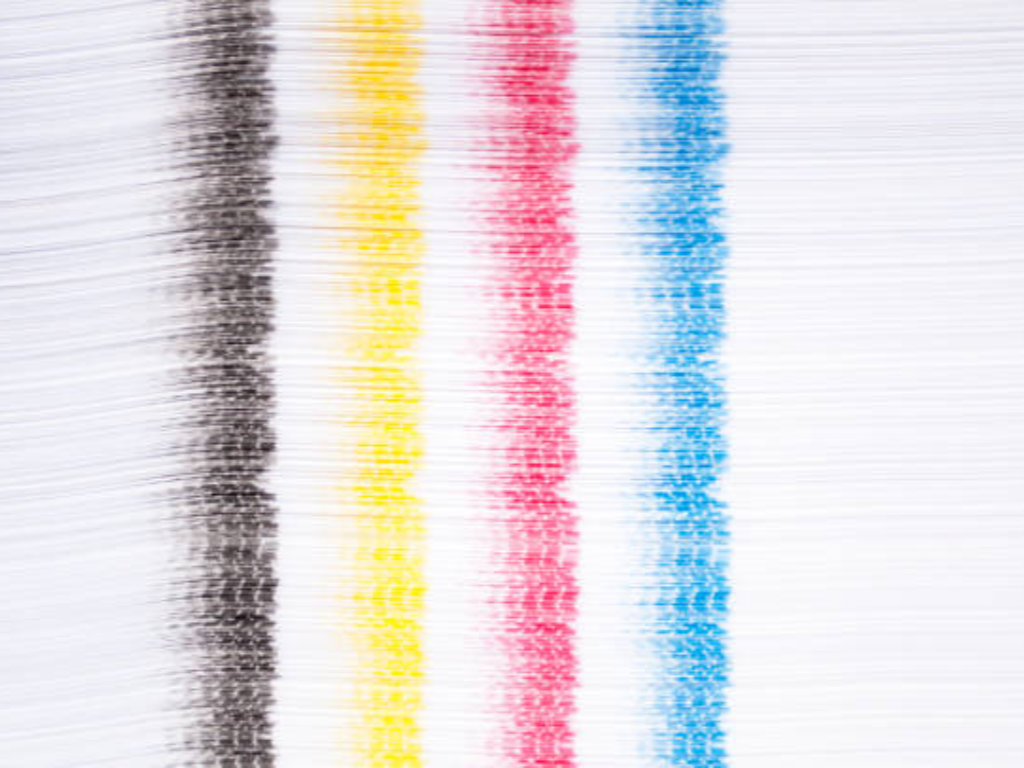
color drift 333

What Drives Color Drift? Analyzing the Core Technical Culprits

The causes of color drift are complex, and they lie at the crossroads of mechanical engineering, thermodynamics, and fluid dynamics. Through the classification of these drivers, we are able to start applying systemic controls.

Equipment Wear and Mechanical Fatigue

A printing press is a wonder of coordinated movement, yet all the moving components are governed by the laws of friction and entropy. The anilox roller is the core of the inking system in flexographic printing. The ceramic surface or the fragile walls of the cell may wear out in a microscopic way over a long run. Moreover, the doctor blade, which is the steel or plastic strip that cuts away the excess ink, is constantly abraded. The angle of contact with the anilox roller varies with the wear of the blade, and this may cause a minor increase in the volume of ink deposited on the plate.

The copper-plated and chrome-finished cylinders used in gravure printing are very durable, but not eternal. The transfer efficiency of the ink can be changed by mechanical fatigue in the bearings or slight changes in the pressure of the impression roller. When the pressure between the plate cylinder and the substrate changes by even a few microns, the net color density will change. This mechanical drift is the hardest to identify since it happens at the sub-millimeter level, and thus it needs stringent maintenance measures to be preempted.

Environmental Variables: Silent Disruptors

The printing process includes the live aspect of the pressroom atmosphere. Temperature and humidity are not neutral observers, but they are active participants in the chemistry of the run. A running press produces heat. This heat is passed on to the ink fountains, where solvent-based or water-based inks are evaporated. As the solvent evaporates, the concentration of the pigment rises, resulting in a more saturated and darker color, a classic example of color drift.

Humidity, in its turn, influences the substrate mostly. Paper is hygroscopic, which means that it absorbs and releases moisture depending on the air around it. When the humidity in the facility increases, the paper fibers swell, altering the surface energy and the manner in which it receives ink. In film printing, ink laydown can be influenced by static electricity, which is usually worsened by dry air. These environmental factors are silent disturbers, which require climate-controlled conditions and automated viscosity control systems to stabilize a baseline.

The Role of Substrate and Ink Consistency in Color Stability

The material science of the components themselves is beyond the machine and the environment. The canvas of the industrial process, such as a tablecloth, is the substrate, and its consistency is the most important. The difference in the white point of a paperboard or the transparency of a plastic film will instantly be reflected in color drift. When a new roll of material has a somewhat yellower base than the last one, the whole gamut of the printed image will be displaced, no matter how well the press is adjusted.

The consistency of ink is also important. Ink is often replenished in long-run packaging. Unless the fresh ink that is introduced into the fountain is exactly the same as the old ink that is already in circulation, there will be a drift. In this respect, the ink system is the blood of the process, and any contamination or variation in its composition is carried throughout the whole mechanical frame of the press. The pH of water-based inks and the resin-to-pigment ratios of solvent inks should be checked with obsessive accuracy. The pH change can alter the solubility of the ink and its capacity to move off the anilox onto the plate resulting in a loss of color density or a shift in color.

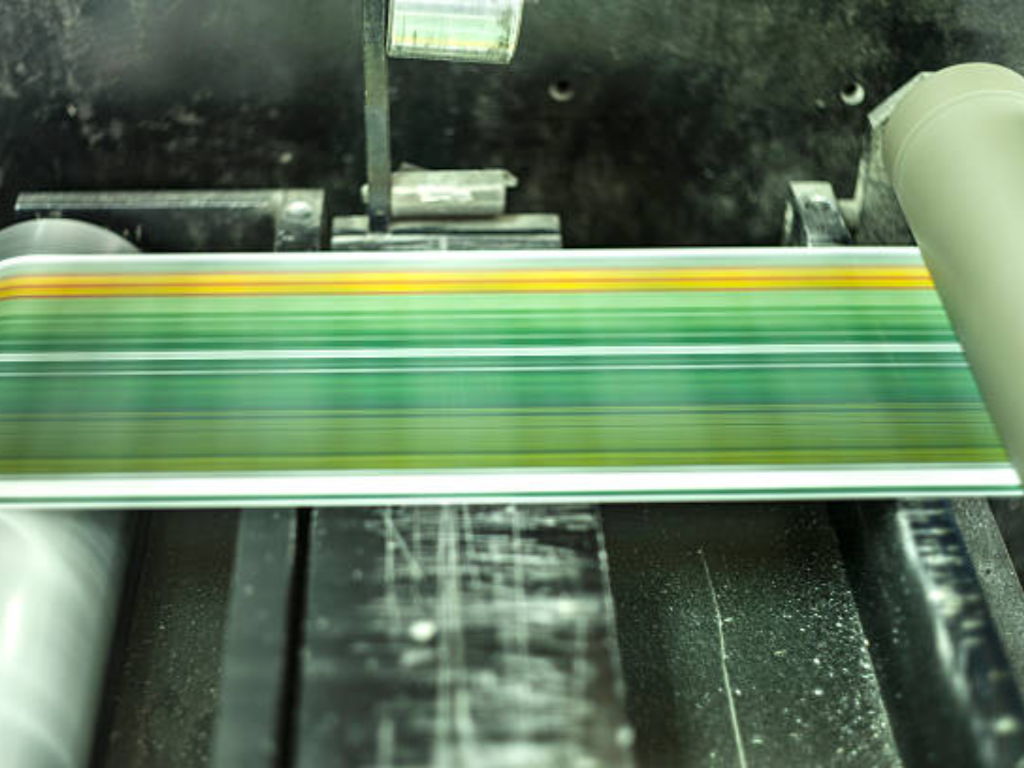
color drift 111

Professional Strategies for Monitoring and Measuring Color Variance

Modern quality control cannot be based on subjective visual inspection. The human eye is also prone to fatigue and chromatic adaptation, in which the brain adapts to changes in color with time. Color management in the profession needs objective and measurable data.

The standard of the industry is the application of spectrophotometers and the Delta E calculation. A spectrophotometer transforms color into a mathematical coordinate by measuring the spectral reflectance of the printed ink. In modern plants, the color measurement systems are used as inline systems that scan the moving web at high rates. These systems are real-time feedback and the operators can view a color performance trend line. When the Delta E starts to creep up to the tolerance limit (e.g., Delta E < 2.0), the operator can take corrective action before the product goes out of specification. This is the shift of the process of detecting errors to predicting drift, the mark of an advanced printing operation.

Best Practices for Effective Color Calibration and Management

Good management starts way before the press is turned on. It begins with the introduction of digital color standards. Replacing physical Pantone swatches, which themselves are subject to fading and drift, with spectral data files (e.g., CxF files) makes the target fixed.

Calibration should be considered as a cycle. This involves:

Fingerprinting the Press: Determining the baseline performance of the machine at a given condition.

G7 Methodology: This is the use of near-neutral calibration to make certain that gray balances are held, and this is where the color drift is usually first observed by the human eye.

Standardized Lighting: This is done to make sure that all visual assessments are done in a D50 lighting booth to remove metamerism (when colors appear different when viewed through various light sources).

Automated Viscosity Control: Implementing systems that automatically dose solvents or amines into the ink to keep the solids-to-liquid ratio constant.

color drift 222

How KETE Machinery Eliminates Color Drift at the Source

At KETE, we do not see color drift as an inevitable consequence of production, but as a technical variable that is to be neutralized systematically. Our engineering philosophy is based on mechanical integrity; we use high-mass, vibration-dampening frames to remove the structural oscillations that often impair registration and ink laydown.

We have outgrown the constraints of old gear-driven systems. KETE incorporates the use of multi-axis servo-drive technology, which allows microscopic control of tension and impression pressure, which do not change even when the press speed changes. This technical accuracy democratizes quality, enabling our customers—from the industrial hubs of New York to the creative printing sectors in Brooklyn—to attain the zero-drift consistency previously only available in costly, niche applications.

Also, the selection of a machinery partner is a strategic decision. KETE does not only sell hardware, but also a bridge to operational excellence. Regardless of whether your objectives are the sheer efficiency of high-volume 그라비아 or the quick changeovers needed in contemporary flexography, our professionals can provide the customized expertise that you need to match your investment with market needs. We would like to discuss with the KETE technical team how our specialized equipment can help save your overhead, improve the quality of your output, and bring your printing process to the next professional level.

Troubleshooting Checklist: 5 Quick Steps to Resolve Active Color Shifts

When an operator detects an active color shift during a production run, a systematic approach is required to identify the culprit without wasting excessive substrate.

단계Component to CheckTarget / Ideal StateCorrective Action
1잉크 점도Within ±1-2 seconds (Zahn Cup)Add solvent or fresh ink to balance solids
2닥터 블레이드Clean, sharp, correct contact angleClean or replace blade if “spitting” occurs
3Impression NipEven pressure across the webAdjust pressure to restore highlight density
4Substrate RollMatch to “OK Sheet” base colorVerify white point; adjust ink if substrate shifted
5SpectrophotometerProperly calibrated to white tileClean optics and re-zero the device

결론

To conclude, color drift is a natural problem in printing physics, but not an insurmountable one. It needs a comprehensive knowledge of the interaction of mechanical wear, environmental variations and material variations in the pressroom. With the shift in the mindset from a reactive approach to fixing the problem when it breaks to a proactive, data-driven approach, the printing companies can save a lot of waste and improve their reputation in the market. Long-term color excellence is a process of constant improvement–a process that depends upon the union of craftsmanship and machine accuracy. Ultimately, the objective is straightforward, namely, making sure that the millionth impression is as vivid and precise as the first one.

공유: 공유

목차

목차

연락하기

24시간 이내에 답변 드리겠습니다.

이 양식을 작성하려면 브라우저에서 JavaScript를 활성화하세요.
업로드할 파일을 이 영역으로 클릭하거나 끌어다 놓습니다. 최대 5 파일까지 업로드할 수 있습니다.

연락하기

24시간 이내에 답변 드리겠습니다.

이 양식을 작성하려면 브라우저에서 JavaScript를 활성화하세요.
업로드할 파일을 이 영역으로 클릭하거나 끌어다 놓습니다. 최대 5 파일까지 업로드할 수 있습니다.

*당사는 사용자의 기밀을 존중하며 모든 정보는 보호됩니다.