KO
KO  EN
EN  RU
RU  ES
ES  FR
FR  AR
AR  PT
PT  IT
IT  ID
ID  TR
TR  DE
DE  VN
VN  TH
TH  IN
IN 
If you’ve spent any time browsing Alibaba or Made-in-China for a 2 color flexo printing machine, you’ve probably seen prices ranging from $4,500 to $45,000 and wondered what exactly you’re comparing. The short answer: you’re not comparing the same thing at all. A 2-color machine for printing plastic shopping bags shares almost nothing with a 2-color machine for corrugated carton boxes. The price difference isn’t about “expensive vs. cheap.” It’s about completely different machines built for completely different jobs.
This guide covers what a 2-color flexo machine actually costs, what drives the price up or down, what hidden costs your initial quote won’t include, and how to evaluate a manufacturer before you send money overseas. Whether you’re a startup entering packaging printing or an established converter adding capacity, you’ll walk away with a clear picture of the real investment not just the sticker price.
What Is a 2-Color Flexo Printing Machine? (And Who Actually Needs One)
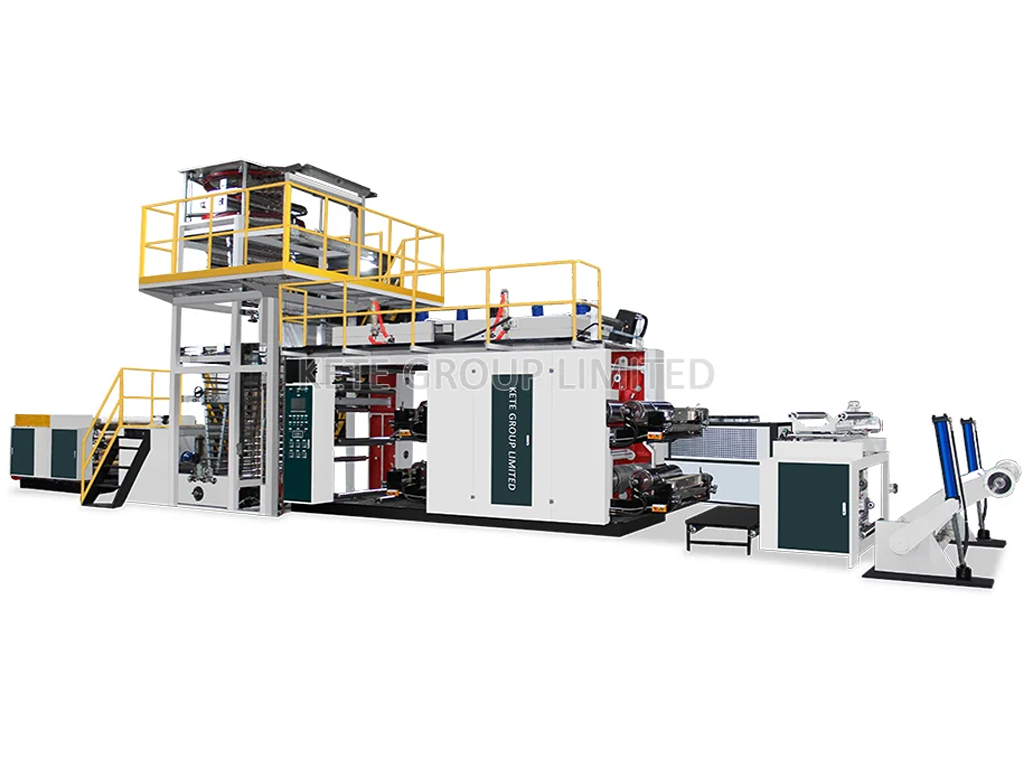
Let’s settle what we’re talking about before we get to the numbers. A 2-color flexographic (flexo) printing machine uses two print stations each with its own plate cylinder, anilox roller, and ink system to transfer two colors onto a substrate in a single pass. It’s the entry point into flexo printing: simpler to operate than a 4- or 6-color press, faster to set up between jobs, and significantly less expensive to buy and maintain.
Most first-time buyers don’t realize this until they’re deep into supplier conversations: the critical distinction isn’t brand. It’s what you’re printing on. The machine architecture – stack type, in-line, or central impression – is determined by your substrate, and the same “2-color flexo printing machine” label covers machines that share almost no components across different applications. Figure out your substrate first. Everything else – price, specs, supplier choice – follows.
For Plastic Bag and Film Printing
This is the most common entry point, and statistically where most readers of this article belong. If you’re printing logos, text, and simple designs onto plastic shopping bags, garment bags, food packaging film, or garbage bags, you’re looking at a stack-type flexo press the workhorse of the entry-level market.
Typical substrates include HDPE, LDPE, PE, PP, BOPP, and cellophane. These machines run water-based inks (increasingly the standard for food-contact packaging) and deliver printing speeds of 50-70 meters per minute on entry-level models, stepping up to 100-120 m/min on mid-range units with servo drives. Registration accuracy – how precisely the two colors align ranges from ±0.5mm on gear-driven machines (fine for simple logos) to ±0.15mm on servo-driven models (necessary for barcodes and fine text).
The print stations use photopolymer plates at a standard thickness of 2.38mm, mounted with 0.38mm double-sided adhesive tape. Ink is metered through ceramic anilox rollers typically laser-engraved at 200-800 LPI depending on the coverage needed – with enclosed doctor blade systems that reduce ink evaporation and keep the work area cleaner. These machines run standalone (roll-to-roll) or inline with a bag-making machine or film-blowing extruder for continuous production.
If your business prints supermarket shopping bags with a store logo and recycling symbol, a 2-color stack press is almost certainly the right starting point – and the rest of this guide is written with your use case in mind.
For Corrugated Carton Box Printing
This is an entirely different category that happens to share the word “flexo.” A 2-color machine for corrugated carton boxes is heavier, larger, and 3-5 times the price of a plastic film machine – but it’s not an “expensive version” of the same product. It’s a different machine for a different job.
These are typically in-line flexo printer-slotter-die-cutter combinations: the machine prints the box, cuts the slots, and die-cuts the shape in one pass. Print areas run up to 1,400 × 2,400mm. Speed is measured in sheets per minute (150-250), not meters per minute. The frame is heavy-gauge steel with hardened alloy steel gears it has to handle rigid board, not flexible film. If you’re comparing a $6,500 plastic film machine to a $30,000 carton box machine and asking why the price gap is so huge, here’s the answer: they’re as different as a motorcycle and a dump truck. Both have engines and wheels. The comparison stops there.
For Paper, Labels, and Non-Woven Bags
These three applications occupy the middle ground. Paper bag and paper cup printing uses machines similar to plastic film presses but often requires adjusted ink formulations for absorbency. Label printing happens on narrow-web machines (160-420mm width) – a specialized category with its own price logic. Non-woven bag printing requires inks formulated specifically for polypropylene fabric adhesion.
If your business falls into one of these niches, the pricing frameworks in the next section still apply – just know that your machine may sit toward the higher end of the plastic film price range, or require an application-specific configuration. When in doubt, tell suppliers exactly what you’re printing on, and let them spec the machine accordingly.
How Much Does a 2-Color Flexo Printing Machine Cost in 2026?
The price of a 2-color flexo machine is not a single number – it’s the product of three variables: what you’re printing on, how wide you need to print, and where the machine is manufactured. The table below gives you a clear starting point based on application type. All prices are FOB (Free On Board) from the factory gate – they do not include shipping, import duties, or installation.
| 애플리케이션 | Materials Printed | Typical Price (USD) | Typical Width | Common Machine Type |
|---|---|---|---|---|
| Plastic film & bags | HDPE/LDPE/PE/PP/BOPP | $6,500-$9,000 | 600-1,000mm | Stack type (YT series) |
| Corrugated carton boxes | Corrugated board (80+ GSM) | $20,000-$45,000+ | 1,400×2,400mm | In-line printer-slotter-die-cutter |
| Labels (narrow web) | Paper/film labels | $15,000-$25,000 | 160-420mm | Narrow-web in-line |
| Paper & non-woven bags | Kraft paper/non-woven PP | $8,000-$15,000 | 600-1,200mm | Stack or in-line |
These are marketplace reference prices drawn from publicly listed B2B platform data, not negotiated transaction prices. Your actual quote will depend on configuration, order quantity, and your negotiating position – but if someone offers you a 600mm film machine for $2,500, you should be asking what they left out.
How Print Width Affects the Price
Within the same application category, print width is the single biggest price variable. Taking the popular YT-series stack-type film press as a reference point:
- 600mm width approximately $6,500. Entry-level configuration with an 8 kW motor, weighing around 1,200 kg.
- 800mm width approximately $8,000-$9,000. Power steps to 10 kW, weight increases to roughly 1,500 kg.
- 1,000mm width approximately $10,000-$12,000. 12 kW motor, around 1,800 kg.
Each 200mm increment adds roughly $1,500-$3,000. That’s not because the manufacturer is charging you for “20cm more steel.” A wider machine needs larger-diameter rollers to prevent deflection, a more powerful motor to maintain tension across a wider web, a heavier frame to control vibration, and larger drying tunnels to cure ink across the wider surface. The entire machine scales up – it’s not just a stretched version of the smaller model.
For most startups printing standard shopping bags or garment bags, a 600mm or 800mm machine covers the vast majority of orders. Go wider only if you have confirmed customer demand for larger-format prints.
China vs. India vs. Europe How Manufacturing Origin Affects Price
The country of origin is the third major price dimension, and it’s one where the gap can be 3× or more for what looks – on a spec sheet – like the same machine.
Chinese manufacturers (concentrated in Wenzhou and Ruian, Zhejiang province) dominate the entry-level to mid-range market. The Ruian industrial cluster alone accounts for an estimated 70%+ of global flexo press exports in the $6,000-$25,000 range. The density of suppliers, component makers, and skilled labor in this region creates genuine economies of scale. A $6,500 YT-2600 from Wenzhou is not a “cheap knockoff” – it’s the product of a mature industrial ecosystem that has been building these machines for decades.
Indian manufacturers offer machines in the $3,000-$10,000 range, with labor cost advantages partially offset by reliance on imported core components (ceramic anilox rollers, servo motors, PLCs). The value proposition is strongest for buyers in South Asia and the Middle East, where shorter shipping distances and regional trade agreements reduce landed costs.
European brands (Comexi, W&H, Bobst, etc.) operate in a fundamentally different segment. Their machines rarely come in 2-color configurations – they target 6-10 color, high-speed, servo-driven CI presses in the $150,000+ range. For a 2-color entry-level buyer, European brands are not direct competitors to Chinese manufacturers. They’re serving different customers with different needs.
Key takeaway: A 2-color flexo machine from a reputable Chinese manufacturer in the Wenzhou-Ruian cluster costs $6,500-$9,000 for plastic film applications, $15,000-$25,000 for labels, and $20,000 $45,000 for corrugated carton boxes. These are FOB prices – your total landed cost will be higher.
5 Factors That Drive the Price of a 2-Color Flexo Machine
You’ve seen the price ranges. Now let’s get under the hood and understand why two 600mm machines for plastic film can be quoted at $6,500 by one supplier and $12,000 by another. Understanding these five factors lets you evaluate whether a higher quote is justified – or whether a lower quote is cutting corners you’ll pay for later.
Machine Hardware Factors Width, Automation, and Drying System
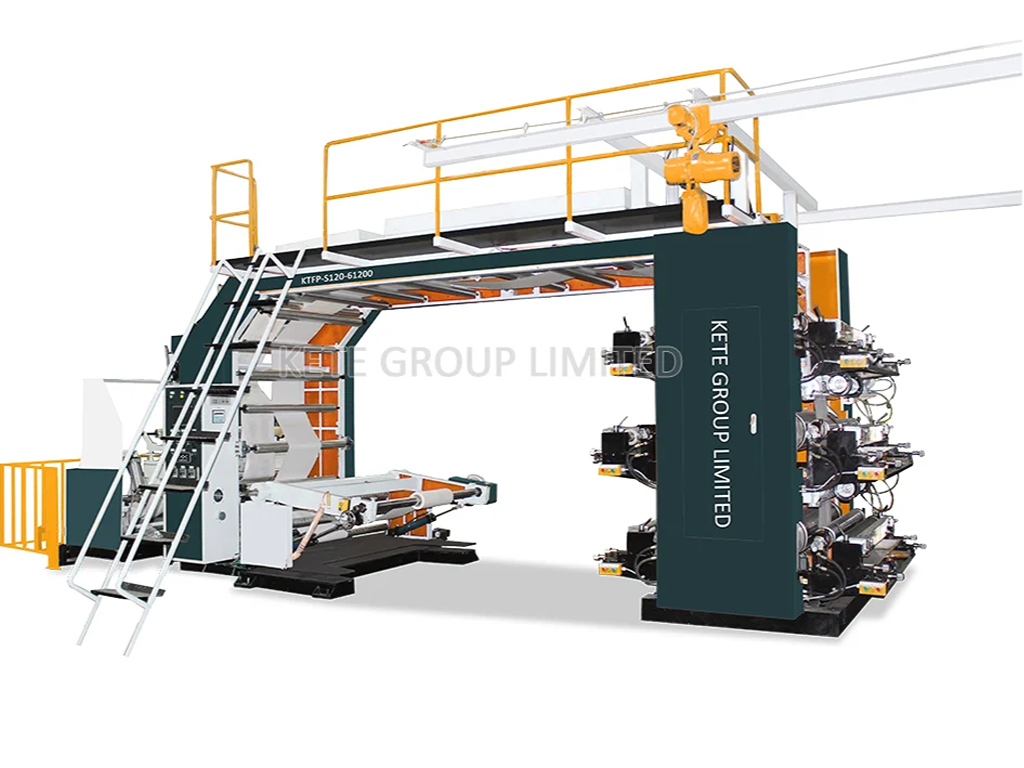
Three hardware choices account for most of the price variation between otherwise similar machines.
Print width we’ve already covered, but it bears repeating: each 200mm jump adds $1,500-$3,000 because the entire machine scales – not just the frame width. The rollers get thicker, the motors get bigger, the drying system extends, and the shipping crate gets heavier. If your market doesn’t demand wide-format prints, don’t pay for width you won’t use.
Automation level is the second major hardware cost driver. A manual 2-color press – where the operator adjusts registration by hand, lifts plate cylinders mechanically, and controls speed with a simple dial – sits at the bottom of the price range. Step up to pneumatic plate cylinder lift, and you add convenience. Step up again to servo-driven registration with PLC touchscreen control, and you add $2,000-$5,000 – but you also get ±0.15mm accuracy instead of ±0.5mm, one-touch job recall, and dramatically faster changeovers between print runs. The servo motor brand matters too: a Siemens servo costs 3-5× what a domestic Chinese servo costs, and that difference shows up directly in the quote.
Drying system is the third hardware variable – and the one first-time buyers most often overlook. A basic hot-air drying tunnel is standard on entry-level machines. Step up to infrared (IR) drying, and you add $1,000-$3,000 for faster curing at higher speeds. Go to UV curing required for certain non-porous films and specialty inks – and you’re looking at $5,000-$15,000 more. But UV isn’t just “adding a lamp.” You need a compatible ink system, reflectors, cooling units, and exhaust handling. The incremental cost is real, and it only makes sense if your customers require UV-cured prints.
Supply Chain Factors Components, Certifications, and After-Sales
Two machines can look identical from the outside and differ by $3,000-$5,000 based on what’s inside the electrical cabinet and what’s bundled with the sale.
Component brands are where manufacturers cut costs that buyers can’t see in a product photo. A ceramic anilox roller from a Japanese supplier lasts 10 million+ impressions with consistent ink transfer. A domestically-sourced ceramic roller may cost $200-$500 less but degrade faster, causing color drift that forces recalibration and wastes substrate. Electrical components follow the same pattern: Schneider contactors cost 3-5× what domestic alternatives cost. A Mitsubishi or Delta PLC costs more than an unbranded unit but gives you global serviceability. When comparing quotes, ask for the full component brand list – not just “Siemens motor” but “SIEMENS 1LE0 series, model X.” If a supplier won’t give you that level of detail, the savings in their quote probably come from components you’ll regret.
When comparing quotes, request a complete bill of materials with brand names and model numbers for every major component. The supplier that provides this level of detail is also the one that stands behind their machine’s build quality.
인증 add real cost – and real value. CE certification for the European market requires testing and audit by an EU Notified Body, typically costing $2,000-$5,000 per machine model. ISO 9001 is a factory-level quality management certification, not a per-machine cost, but maintaining it requires ongoing investment in processes and audits. A machine that ships with legitimate CE and ISO 9001 documentation has passed independent third-party scrutiny. A machine that ships with a “CE” logo but no Notified Body certificate number may not have passed anything at all.
After-sales service is the third factor – and the one that most directly affects your experience after the machine arrives. A supplier quoting $6,500 with “1 year warranty, remote support only” is selling a different package than one quoting $8,500 with “2 year warranty, free spare parts including international shipping, and an engineer dispatched to your factory for installation and training.” That $2,000 difference buys you months of faster ramp-up and a safety net when something goes wrong. We’ll return to this in the hidden costs section because this is where the real money is made or lost.
Hidden Costs: What Your Flexo Machine Price Quote Won’t Show You
Here’s a number that should reframe how you think about your budget: the machine itself typically represents only 50-65% of what you’ll spend to get your first saleable printed product out the door. The remaining 35-50% goes to things that most supplier quotes – and most buyer budgets don’t account for. These aren’t hidden because suppliers are dishonest. They’re hidden because they happen after the sale, in your factory, on your P&L.
Consumables You’ll Need from Day One Ink, Plates, and Anilox Rolls
Think of these as the industrial equivalent of printer ink cartridges: they’re not optional, they’re recurring, and over time they cost more than the machine itself.
잉크 is the biggest ongoing consumable. Water-based flexo inks cost $3-$8 per kilogram, and a machine running at production speed consumes roughly 10-20 kg per hour depending on coverage. An 8-hour shift at moderate coverage can burn through $200-$400 in ink alone. Over a month of consistent production, your ink bill lands between $600 and $1,200 – and that’s before factoring in the ink wasted during setup, color matching, and job changeovers. For solvent-based inks, the per-kg cost is higher ($4-$12/kg), and you’ll also need to budget for solvent recovery or disposal compliance.
Printing plates are your second recurring cost. Each color requires its own photopolymer plate, at $15-$40 per plate depending on size. For a 2-color machine, that’s two plates per design. If you’re printing for five different clients with five different designs, you need ten plates – roughly $150-$400 to get started. Plates wear out after 500,000 to 1 million impressions (sooner if your operator runs with excessive pressure), so budget for replacements as part of your per-job costing, not as a one-time expense.
Anilox rollers come with the machine (typically 2-4 rollers depending on configuration), but you’ll eventually need replacements or additional line counts for different print requirements. A replacement ceramic anilox roller costs $200-$800 depending on LPI specification and source. These rollers also need cleaning every 2-4 weeks for consistent ink transfer. An ultrasonic cleaning machine runs $15,000-$40,000 (most small shops outsource this at $200-$600 per cleaning cycle instead).
Additional consumables doctor blades ($10-$30 each, replaced monthly), double-sided mounting tape, cleaning solvents, and maintenance lubricants add another $100-$300 per month. None of these are large individually, but collectively they form the steady drip of operating cost that separates profitable print shops from struggling ones.
Infrastructure Costs Installation, Power, and Facility Requirements
Your machine doesn’t arrive ready to print. It arrives in a wooden crate, coated in anti-rust oil, needing to be positioned, leveled, connected, and commissioned.
Shipping and logistics are the first post-purchase expense. Sea freight from China to the Middle East, Africa, or Southeast Asia for a 20-foot container runs $800-$2,500 depending on destination and current freight rates. Add import duties (varies dramatically by country research your local HS code), customs clearance fees ($200-$800), and inland trucking from port to your factory door. For a $6,500 machine, total logistics can easily add $1,500-$4,000.
설치 및 시운전 is the second infrastructure cost – and the one with the widest range. If the manufacturer sends an engineer to your site for setup and training, budget $1,500-$3,000 (airfare, accommodation, daily rate). If you’re doing it yourself with remote video guidance, the cash outlay drops to near zero – but your ramp-up time stretches from days to weeks, and mistakes made during self-installation can create problems that take months to diagnose.
Power and utilities round out the infrastructure checklist. A 600mm machine draws 8 kW – you’ll need a dedicated circuit, a voltage stabilizer ($200-$800), and possibly a step-up or step-down transformer if your local voltage doesn’t match the machine’s requirement (most Chinese machines run on 380V/50Hz three-phase). You’ll also need a compressed air supply (0.6-0.8 MPa with a dryer/filter – budget $500-$2,000 for a suitable compressor). And you’ll need space: roughly 15-25 square meters for the machine itself, plus material staging, finished roll storage, and operator movement.
Ongoing Costs You’ll Face Training, Maintenance, and Downtime
The costs that don’t appear on any invoice are often the largest. A machine that sits idle costs you revenue. A machine that produces waste costs you materials and credibility. These ongoing costs determine whether your $8,000 investment pays for itself in 6 months or 18 months.
Training and the learning curve is the most underestimated cost. A new operator – even one with some printing experience typically takes 3-6 months to reach 85% efficiency on a new machine. During those months, expect elevated scrap rates (2-3× the steady-state level), more frequent stops for adjustment, and occasional jobs that need to be reprinted. The financial impact of this learning period can exceed $10,000 in wasted materials and lost production capacity – which is why manufacturers that include comprehensive on-site training in their package are delivering real value, not just a sales talking point.
Routine maintenance keeps the machine running but costs you operator time and scheduled downtime. Daily cleaning of anilox rollers, ink trays, and doctor blades takes about 30 minutes. Weekly checks on gears, belts, and safety devices take 1-2 hours. Monthly maintenance tightening bolts, replacing air filters, inspecting cables – takes half a day. Your annual spare parts budget should plan for $500-$1,500 covering doctor blades, bearings, sensors, and seals. The most common cause of unplanned downtime? Clogged anilox rollers accounting for roughly 40% of all stoppages – almost always preventable with disciplined daily cleaning.
Unplanned downtime is the silent profit killer. Industry data suggests first-year flexo presses experience 8-15% unplanned downtime – meaning 400-750 lost production hours annually. At a conservative $50-$150 per hour in lost output value, that’s $20,000-$110,000 in unrealized revenue. A machine that ships with responsive technical support, readily available spare parts, and clear troubleshooting documentation recovers from stoppages in hours. One that doesn’t can sit idle for days or weeks while you wait for a part to clear customs.
A well-maintained flexo press should serve you for 15-25 years. The difference between a machine that reaches year 15 profitably and one that becomes a source of frustration by year 3 comes down almost entirely to what the manufacturer provides after the invoice is paid. Look for suppliers who back their machines with at least a one-year comprehensive warranty, free spare parts replacement including international shipping for non-wear defects, and a documented installation and training program – either on-site with an engineer or through structured remote guidance with clear milestones. Some manufacturers, such as KETE, extend warranty coverage to two years on select models and include free pre-shipment sample testing using the customer’s own materials – a step that catches configuration issues before the machine leaves the factory, not after it arrives at yours. When you’re comparing quotes, factor the real value of these after-sales commitments into the total cost. A $2,000 price difference that buys you an extra year of warranty, free spare parts, and professional installation is almost certainly money well spent (KETE’s after-sales support program, customer installation cases).
How to Evaluate a Flexo Machine Manufacturer Before You Pay
You’ve done the pricing research. You understand the hidden costs. Now comes the part where most first-time buyers get nervous: sending tens of thousands of dollars to a manufacturer you’ve never met, in a country you may never have visited, for a machine you’ve never seen run. This section gives you a concrete, actionable framework for separating reliable suppliers from the ones that will go silent the moment your wire transfer clears.
Pre-Purchase Verification – 6 Steps Before You Send a Deposit
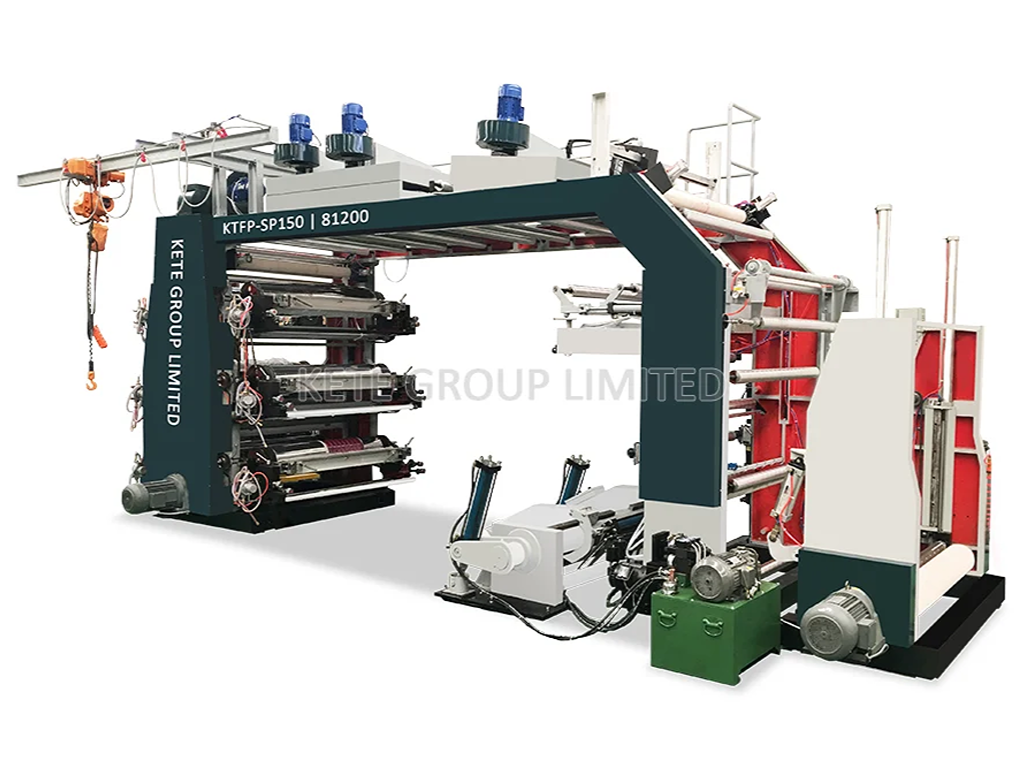
These six steps take a few days of effort and cost little or nothing. Skip any of them, and you’re gambling with your capital.
- Request a live video factory tour – not a recorded video. Anyone can stitch together footage of someone else’s factory. A real-time video call where you direct the camera “show me the assembly line, zoom in on that machine’s nameplate, walk me to the testing area” is the closest thing to an in-person visit. If a supplier hesitates, claims their factory “doesn’t allow video,” or keeps rescheduling, treat it as a significant red flag.
- Send them your material and ask for a test print on video. Mail a roll of the actual substrate you’ll be printing on – the specific HDPE film, kraft paper, or non-woven fabric your customers use. Ask the manufacturer to run a print test on that exact material and record the entire process, from loading the roll to inspecting the output. This verifies two things at once: that the machine can handle your real-world materials (not their optimized demo stock), and that they actually have a running machine to test on.
- Verify certifications with the issuing body. If the supplier claims CE certification, ask for the certificate number and the 4-digit Notified Body identification code. Legitimate CE certificates for machinery are issued by EU-recognized Notified Bodies – each has a unique 4-digit number you can look up on the European Commission’s NANDO database. For ISO 9001, ask for the certificate number and the certification body name, then verify both on the issuing body’s website. “We have CE” with no certificate number is not CE certification – it’s a logo on a brochure.
- Ask for customer references in your region. A supplier who has successfully delivered machines to customers in your country or neighboring countries has navigated your region’s import procedures, voltage requirements, and logistics challenges. Ask for at least two references and – this matters – actually contact them. A five-minute WhatsApp call with someone who bought the same machine 18 months ago tells you more than any sales conversation ever will.
- Test their technical responsiveness before you’re a customer. Send a detailed technical question – not a pricing question via email or WhatsApp. Ask about anilox roller LPI ranges for your specific substrate, or the required compressed air specifications for installation. Measure two things: how quickly they respond, and whether the answer is specific and technical or vague and sales-focused. A supplier who can’t give you a clear technical answer before you’ve paid won’t suddenly become more helpful after.
- Verify company history and trade record. Check how long the company has been registered on Alibaba or Made-in-China (5+ years as a Gold Supplier is meaningfully different from year 1). Search for their company name plus “complaint” or “scam.” Look for export shipment records if your country makes customs data publicly available. None of these individually are definitive, but together they paint a picture of whether you’re dealing with an established manufacturer or a trading company that rebrands other factories’ machines.
Red Flags – Warning Signs of an Unreliable Flexo Machine Supplier
Some warning signs should stop you in your tracks, no matter how attractive the price:
- Refuses live video verification. The single strongest predictor of problems. No legitimate manufacturer with a real factory has a reason to refuse a video call.
- Price is 30%+ below the market range. A 600mm film machine for $3,500 when the market range starts at $6,500 is not a bargain – it’s a machine with unbranded motors, metal anilox rollers instead of ceramic, and no post-sale support built into the price.
- Cannot produce a CE certificate number. A logo on the website costs nothing. A real certification costs thousands and leaves a paper trail.
- Answers technical questions with sales language. “Our machine is the best quality, very good price, many customers happy” is not an answer to “What’s the LPI range of the anilox rollers you use?”
- Demands 100% upfront payment. Industry standard is 30-50% deposit via T/T, with the balance due before shipment (or upon presentation of the bill of lading). 100% upfront eliminates your leverage.
- No customer references or refuses to share them. Every manufacturer with real customers has at least a few who will take a call. “Customer information is confidential” usually means “we don’t have satisfied customers.”
- Company registered less than 3 years + no verifiable factory address. Short company history alone isn’t disqualifying – but combined with evasiveness about the factory, it’s a strong signal of a trading intermediary with no quality control.
- Contract is vague on warranty terms, delivery date, and technical specifications. If the contract doesn’t specify exact model numbers, component brands, warranty duration (and what’s covered), and a delivery date with penalties for delay, it’s designed to protect the seller, not you.
8 Questions Every Buyer Should Ask Before Ordering
Save this list. Send it to every supplier you’re considering. The quality of their answers will tell you more than any brochure.
- “What is the exact model number and complete factory configuration list, with component brands and model numbers?” (Not “Siemens motor” – “SIEMENS 1LE0 series, specific model.”)
- “Can you print a sample on our material and record the full process on video, showing registration accuracy at multiple speeds?” (If they won’t, they either can’t or their machine won’t perform well on your substrate.)
- “What are your CE and ISO certificate numbers, and which Notified Body or certification body issued them?” (Write down the numbers. Verify them independently.)
- “What exactly does your warranty cover, for how long, and are spare parts shipped free of charge including international freight?” (Get the warranty terms in writing. “Free spare parts” means different things when you’re paying $200 to DHL a $15 bearing.)
- “What is your confirmed delivery timeline, and will you provide progress photos or videos during production?” (Standard production time is 30-40 days. If they quote 10 days, they’re either shipping from stock or cutting corners.)
- “Is installation support remote-guided or on-site? If on-site, what are the costs, and who covers the engineer’s travel and accommodation?” (Clarify this before you negotiate the price – not after.)
- “Can you provide an itemized list of core components with brand and country of origin – motors, PLC, anilox rollers, contactors, bearings?” (This list is your protection against post-deposit component substitution.)
- “Can you give me contact information for 2-3 customers in my country or region who bought a similar machine?” (Then call them. Seriously – call them.)
Two Colors or More? Deciding the Right Machine Capacity for Your Business
After everything you’ve read, you might be wondering: should I just go for 4 or 6 colors and skip the 2-color step entirely? The answer depends on your market, your customers, and your willingness to manage complexity – but for most first-time buyers, starting with a 2-color machine is the right call, not a compromise.
Stick with 2 colors if: your customer orders are primarily single or two-color work – supermarket bag logos, industrial packaging markings, simple brand prints with text and a logo. This describes roughly 40-60% of flexible packaging print demand in emerging markets, and a focused 2-color machine will produce this work faster, with less setup time and lower scrap rates, than a 4-color press running simple jobs. If your budget is under $10,000, a solid 2-color machine from a verified manufacturer will serve you far better than a stripped-down 4-color machine where corners were cut to hit a price point. And if you’re new to flexo printing, the learning curve on a 2-color press is dramatically shorter – your operator will be producing saleable output in weeks, not months.
Consider stepping up to 4-6 colors if: your customers are already asking for CMYK process-color work (photo-quality images, gradients, brand-color matching), your order volumes are stable and sufficient to keep a faster, more expensive machine fed with work, and you’ve verified – with actual purchase orders, not projections – that the market demand justifies the step up. A 4-color machine costs 60-100% more than a comparable 2-color unit, not just because it has two extra print stations, but because the entire machine is built to a higher specification to maintain registration across more colors at higher speeds. The scrap rate during the learning period is also 30-50% higher – more colors mean more things that can go wrong.
The smart path for most startups: start with a 2-color machine, prove your market, build your customer base, and generate cash flow. In 12-18 months, if demand warrants it, buy a higher-spec 4- or 6-color machine – and keep the 2-color machine running your simple, high-volume jobs. A 2-color press doesn’t become obsolete when you add capacity. It becomes your efficient, reliable workhorse for the orders that don’t need the big machine’s capabilities.
Whichever path you choose, the supplier relationship matters as much as the machine spec. A manufacturer that covers the full range – from 2-color entry-level presses through to 10-color high-speed CI machines gives you a growth path without switching costs. KETE, for example, manufactures across the entire color-count spectrum and also produces complementary bag-making and converting equipment, so when you’re ready to expand, you’re dealing with a familiar engineering team and a known quality standard rather than starting the supplier evaluation process from scratch. The machine you buy today should come from a company you can see yourself buying from again in two years (flexo printing machine lineup).
참조
- Made-in-China. “2 Color Flexo Printing Machine Product Listings.” 2026. https://www.madeinchina.com/
- IndiaMART. “Flexographic Printing Machine Listings.” 2026. https://www.indiamart.com/
- Machinio. “2 Colors PE PP Plastic Film Printing Logo Flexo Printing Machine.” 2026. https://www.machinio.com/
- KETE GROUP. “Stack Flexo Printing Machine Beginner’s Guide.” 2026. https://www.ketegroup.com/stack-flexo-printing-machine/
- KETE GROUP. “Services.” 2026. https://www.ketegroup.com/services/
- KETE GROUP. “Case Studies.” 2026. https://www.ketegroup.com/case-studies/
- KETE GROUP. “Flexo Printing Machine.” 2026. https://www.ketegroup.com/flexo-printing-machine/
- KETE GROUP. Homepage. 2026. https://www.ketegroup.com/
- PFFC Online. “The Hidden Cost of Manual Processes in Flexographic Printing.” https://www.pffc-online.com/
- Pinlong Machinery. “Budget-Friendly Options for 2-Color Flexo Printing Machines.” http://pinlongmachinery.com/
- Lisheng Machinery. “Disadvantages of Gearless Flexo Printing Press.” https://www.lishgmachine.com/